

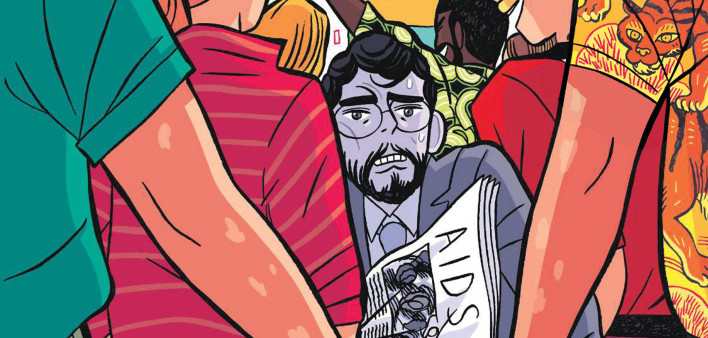
If journalism is the first draft of history, then it’s fitting that Randy Shilts remains a prominent figure in the story of AIDS. A reporter with the San Francisco Chronicle and LGBTQ publication The Advocate in the late 1970s and early 1980s, Shilts used his platform to warn of the emerging danger. It earned him no friends. With sexual liberation in full swing, no one wanted to hear about closing bathhouses and behaving like Puritans.
Shilts’s investigative reporting culminated with his 1987 masterpiece, And the Band Played On: Politics, People, and the AIDS Epidemic, in which he wove together diverse, complicated subjects—science, sex, government agencies, community organizations—into a dynamic and accessible narrative. It became a bestseller. And Shilts became a lauded and loathed star.
Critics decried what they called scare tactics and sensationalism, notably promoting the myth of Patient Zero, a Canadian flight attendant alleged to have knowingly spread the virus across North America. After Shilts sent the manuscript to his publisher, he learned that he, too, had HIV. He died of complications from AIDS in 1994 at age 42.
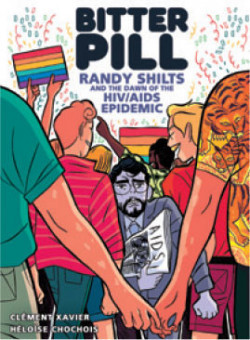
“Bitter Pill: Randy Shilts and the Dawn of the HIV/AIDS Epidemic”
Based in France, comic artist Clément Xavier is another gifted storyteller able to craft entertaining tales out of an overabundance of complex, nuanced history. His newest graphic novel is Bitter Pill: Randy Shilts and the Dawn of the HIV/AIDS Epidemic, with illustrations by Héloïse Chochois.
Xavier is a kindred soul of Shilts in that both are magpie storytellers, picking and choosing what best suits their narrative truths. For example, Xavier sprinkles digressive mini-stories titled “Tales From the Closet” throughout Bitter Pill to provide a larger cultural context, and Christopher Reeve’s Superman swoops in for surprising thematic effect.
“My job is to manipulate the reader—and honestly, I’ll do whatever it takes to tell a good story. That’s bad, I know, but it’s the truth (or maybe that’s just another lie—who knows?),” Xavier coyly states. “Anyway, what really speaks to me about Randy is that he’s constantly walking a tightrope. So am I, because I make graphic novels based on real events, and that means I have to follow a certain ethical code—otherwise, I’d be better off writing pure fiction.”
He continues, “Randy was a journalist, yes, but also one hell of a writer. His prose is phenomenal! So he straddled this murky in-between space. People even criticized him for using literary techniques in his reporting, like giving characters inner thoughts. ‘How could you possibly know what Harvey Milk was thinking, Mr. Shilts?’ But I’m a scriptwriter, so my imposture is intentional. It’s part of the contract with the reader: I’m not hiding it. To me, a lot of people who present themselves as journalists are really just writers who haven’t realized it yet. They’re telling stories. They should toss out their press credentials.”
Originally published in French, Bitter Pill arrives stateside in October courtesy of Abrams ComicArts. Here’s a sneak peek at this exciting work along with our interview with Xavier, who shares his unique introduction to Shilts and HIV history through director Gus Van Sant and COVID-19.
Below is an excerpt, followed by the interview:

In this excerpt from Bitter Pill, reporter Randy Shilts embarks on his first day at the San Francisco Chronicle, forced to work in a literal closet.Courtesy of Abrams ComicArts
How did you first learn about HIV?
I was born in 1981—the very same year that the first cases of what would later be known as AIDS would be officially announced in the U.S. In a certain way, I grew up with HIV as a continuous backdrop.
I didn’t experience the first years of the epidemic, but I grew up in its shadow. For my generation, HIV wasn’t a specific historical event: It was more of a diffuse threat, tied to sexuality. It showed up in prevention messaging, in public campaigns, in sex education. It was linked to danger, risk, death—but in an almost abstract way.
I knew that the disease had claimed countless lives, that it had taken artists, actors, intellectuals, an entire generation. But I couldn’t quite grasp the scale of the void it had left behind. Nor could I imagine that there had once been a “before.”
For my parents, who had lived through May ’68 [a period in France marked by strikes and upheaval tied to the sexual revolution], sexuality had been synonymous with emancipation. For my generation, it was associated with caution and fear. Condoms weren’t a choice—they were nonnegotiable. HIV wasn’t a crisis that had passed; it was a constant presence, almost eternal.
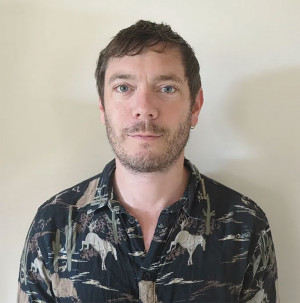
Clément XavierCourtesy of Abrams ComicArts
As I grew older, I began to understand the historical and cultural magnitude of the epidemic more fully, especially through the public figures it had touched. But I didn’t truly immerse myself in the history of HIV until much later, during the COVID pandemic.
COVID marked a turning point for me. Living through a global health crisis allowed me to grasp what collective shock can feel like in the face of an unknown virus: the anxiety, the conflicting hypotheses, the search for modes of transmission, the fear of contact, the stigma, the rumors.
AIDS was constantly invoked as a historical precedent. That was when I felt the need to return to that history. As I began researching it, I discovered not only a public health catastrophe but also a story of political neglect and stigma alongside one of struggle, activism, solidarity and, also, artistic creation.
Many POZ readers are long-term survivors of HIV. They’re familiar with Randy Shilts. How did you learn about him—in France, no less?
I discovered Randy Shilts indirectly, almost by accident, in a very particular context: the lockdown during COVID.
At the time, people were constantly talking about “patient zero.” I didn’t fully understand what the term meant. Out of curiosity, I did a quick online search, and very soon, I came across articles referring to other “patient zeros” in the history of epidemics, among them Gaëtan Dugas.
I remember the photograph that accompanied the article very clearly: a handsome young man, smiling, sitting on a swing. The article explained that he had been wrongly identified as patient zero for AIDS, and that the idea had spread widely after the publication of one of Shilts’s books.
I told myself that Randy must have been some kind of dreadful figure—a sensationalist journalist, willing to twist reality to manufacture a dramatic narrative.
I read a few articles about him out of curiosity. That’s when I was drawn in. First, by the man himself, then by the era.
The first thing that surprised me was learning that his work had inspired Gus Van Sant’s film Milk [the 2008 movie about gay politician Harvey Milk, who was murdered in 1978; Sean Pean earned an Oscar for the title role]. That movie left a deep impression on me with its political and emotional power. Discovering that Shilts was the author of the biography on which the film was based started to erode my initial judgment.
When I then dove into And the Band Played On, I encountered a writer of rare narrative ambition. His work stands on a knife’s edge between investigative journalism and literature. He constructs a sweeping, carefully structured, almost novelistic narrative to recount a very real catastrophe. To my mind, he belongs in the company of a Truman Capote or an Upton Sinclair—writers capable of turning reportage into powerful narrative art.
What ultimately struck me the most was the position he occupied as an openly gay journalist working at the heart of a crisis that was striking his own community, trying to sound the alarm at a moment of chaos, scientific uncertainty and political abandonment.
My swift initial reaction, which had been almost accusatory, gave way to a fascination with the complexity of the man and his time. What I discovered was not a simplistic narrative but a constant tension between responsibility, commitment, narrative ambition and historical urgency.
And it is precisely that tension—human, moral and political—that continues to fascinate me today.
Your graphic novel is not presented as a biography of his whole life. How did you decide what to focus on?
There are already remarkable biographies out there devoted to Randy Shilts (unfortunately, never translated into French). I hope this graphic novel will encourage readers to turn to those more comprehensive studies. [See the sidebar on page 31 for books by and about Shilts.]
What guided me was a narrative intuition.
In working on Shilts, I came across interviews in which he explains that for a long time he was unable to write the biography of Harvey Milk. He couldn’t find the right angle. Then he realized that he shouldn’t simply tell the story of a man but use Milk as a vehicle to tell the story of an era—the political emergence of the gay community in San Francisco.
Very modestly, and on an infinitely smaller scale, that is what I have tried to do in my own book.
What interested me most was his paradoxical position. Shilts is both a journalist and a member of the community directly affected. He stands at the heart of a terrible drama, confronted with a public health catastrophe that, in its early stages, was largely ignored because it struck individuals who were considered by the broader culture to be marginal or even undesirable. Unlike COVID, which was immediately perceived as a universal threat, AIDS was first seen as someone else’s problem.
This period crystallizes several fundamental tensions: the responsibility of the media, the implicit hierarchy of which lives are deemed worthy of attention and the difficulty of documenting a tragedy while it is still unfolding.
Dramatically and politically, it is a moment of rare intensity.
It’s that tension—between personal commitment, journalistic ambition and historical urgency—that drew me in. By focusing on this slice of his life, I was able to explore those questions in depth, rather than dilute them within the broader frame of an exhaustive biography.
Finally, how did your understanding of Shilts and his work change?
What changed for me was my understanding of the context in which he was working. He wrote And the Band Played On while the epidemic was still unfolding, as scientific knowledge continued to evolve, amid very real tensions within the gay community and while public authorities were slow to act. He didn’t have the historical perspective we have today. He was writing with urgency, in anger and, at times, in isolation.
I also became aware of the delicate position he occupied—that of an investigative journalist and a gay man working on a disease that was devastating his own community. That dual position placed him in a constant conflict: between community loyalty, journalistic rigor and the desire to sound the alarm as widely as possible.
I stopped seeing him merely as a controversial figure and began to regard him as a tragic figure of his time.
His historical importance became clearer to me along the way. He helped inscribe the epidemic into the American national narrative, to bring it out of silence. One can criticize certain aspects of his methods or some of the consequences of his work—and it’s healthy to do so—but it’s impossible to deny he shaped the way this story was told.
In working on this project about him, I moved from a swift judgment to a more nuanced understanding and perhaps a more human one.
Bookmarks
What to read by and about Randy Shilts
The Mayor of Castro Street: The Life and Times of Harvey Milk (1982)
Shilts’s biography of the gay civil rights leader killed in 1978 simultaneously tells the story of San Francisco’s emerging gay community. It was later turned into a documentary and, in 2008, the Oscar-winning film Milk.
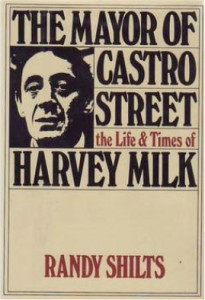
“The Mayor of Castro Street: The Life and Times of Harvey Milk”
And the Band Played On: Politics, People, and the AIDS Epidemic (1987)
Based on Shilts’s investigative reporting, this tome chronicles the unfolding of AIDS in the early 1980s and establishes the boogeyman Patient Zero. Science has since altered our understanding of the epidemic’s origins, but this bestseller transformed the public’s perceptions about HIV. In 1993, HBO released a star-packed film based on the book.
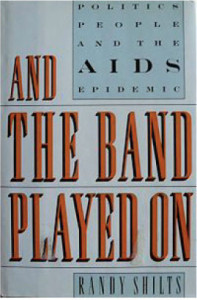
“And the Band Played On: Politics, People, and the AIDS Epidemic”
Conduct Unbecoming: Gays & Lesbians in the U.S. Military (1993)
Published when openly LGBTQ people were not allowed to serve, this book traces the history of queer people in the military, from Vietnam to the Persian Gulf War.
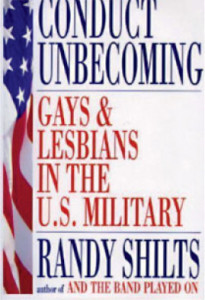
“Conduct Unbecoming: Gays & Lesbians in the U.S. Military”
Patient Zero and the Making of the AIDS Epidemic (2017)
In this account of the life of Gaëtan Dugas, the Canadian flight attendant maligned as Patient Zero, Richard A. McKay offers a corrective to the myth that Dugas knowingly transmitted HIV nationwide—an idea generated by Shilts.
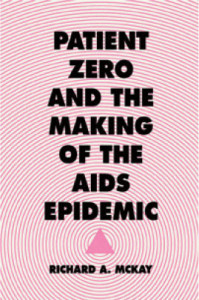
“Patient Zero and the Making of the AIDS Epidemic”
The Journalist of Castro Street: The Life of Randy Shilts (2019)
The late Andrew E. Stoner, PhD, published the first deep dive into the pioneering journalist.
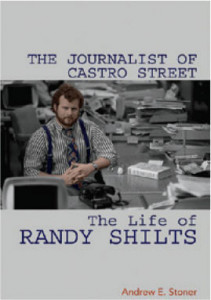
“The Journalist of Castro Street: The Life of Randy Shilts”
When the Band Played On: The Life of Randy Shilts, America’s Trailblazing Gay Journalist (2025)
Researcher and educator Michael G. Lee’s biography offers a more intimate look at Shilts by exploring his earlier life, relationships and legacy. Click here to read the POZ Q&A with Lee.
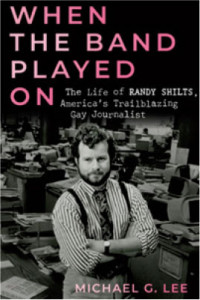
“When the Band Played On: The Life of Randy Shilts, America’s Trailblazing Gay Journalist”
Bitter Pill: Randy Shilts and the Dawn of the HIV/AIDS Epidemic (2026)
Clément Xavier’s graphic novel is based on real events, with illustrations by Héloïse Chochois.
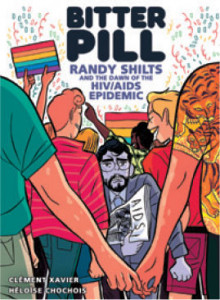
“Bitter Pill: Randy Shilts and the Dawn of the HIV/AIDS Epidemic”





Comments
Comments