

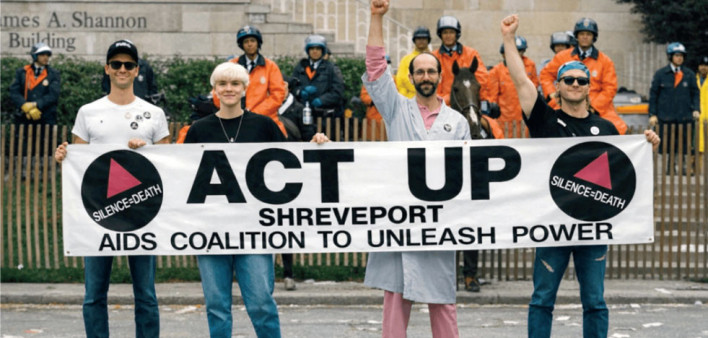
Based on the award-winning documentary of the same name, Small Town Rage: Fighting Back in the Deep South by David W. Hylan, EdD, who codirected the 2017 film with Raydra Hall, tells the story of ACT UP Shreveport and the activists who confronted fear, silence, discrimination and political indifference during the AIDS crisis in northwest Louisiana. Through oral histories, archival research, interviews and firsthand testimony, the book documents how a small group of activists in one deeply conservative Southern city organized protests, challenged institutions, educated the public and fought for dignity during one of the deadliest public health crises in modern American history. Below, Hylan answers a few questions about the book.
How did the documentary become a book?
While making the documentary, we quickly realized there were far more stories than could ever fit into a feature-length film. The documentary opened the door, but the book allowed for a much deeper exploration of the people, relationships, history, politics and emotional realities surrounding the epidemic in northwest Louisiana. Over time, it became clear that these stories deserved a broader historical record.
Why write this book now?
For many years, the stories of people living with HIV and AIDS in the Deep South were largely absent from the national conversation. Much of the public memory surrounding the early days of the epidemic focused on larger cities, such as New York and San Francisco, while smaller Southern communities were often overlooked. As debates surrounding LGBTQ+ rights, public health, censorship and historical memory continue today, it felt increasingly urgent to preserve these stories before more voices were lost.
Why Shreveport?
Shreveport represents a part of America that many people do not immediately associate with LGBTQ+ activism or AIDS activism. It was deeply conservative, heavily religious and politically resistant to discussions surrounding HIV and AIDS during the 1980s and 1990s. That is precisely what makes the story important. The people of ACT UP Shreveport organized, protested, educated, cared for one another and fought for dignity in an environment where silence often felt safer than visibility.
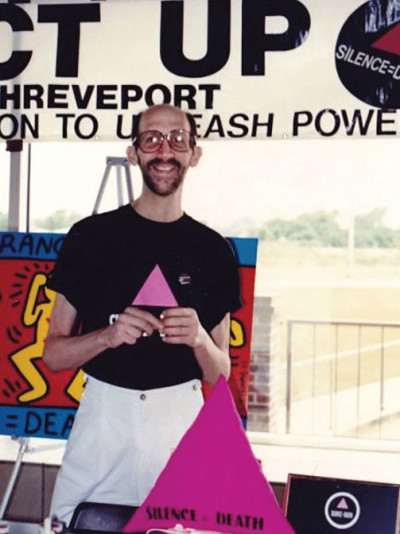
Chuck Selber staffs an HIV information booth in northwest LouisianaThe Small Town Rage Preservation Project Archive/Courtesy of Deborah Allen
What surprised you most while working on this project?
I was continually struck by the courage of ordinary people. Many of the activists were not seasoned political organizers. They were individuals trying to survive while confronting fear, stigma, rejection, illness and loss. Yet they still found ways to fight for themselves and for others. I was also surprised by how many stories had nearly disappeared from public memory entirely.
Why does this history matter today?
History shapes how communities understand themselves. The AIDS crisis changed countless lives, but many of the people who carried that history were never fully heard outside their own communities. Preserving these stories is about more than documenting suffering. It is about documenting resistance, humanity, survival, friendship, activism and the refusal to disappear quietly.
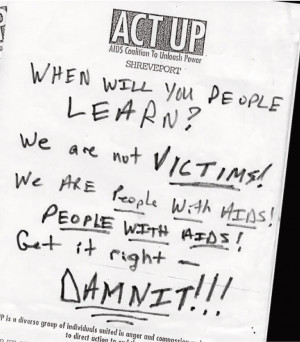
An ACT UP Shreveport protest flyer distributed outside the Shreveport TimesThe Small Town Rage Preservation Project Archive
What parallels do you see between the AIDS crisis and today?
The parallels are impossible to ignore. Questions surrounding public health, political division, misinformation, fear, LGBTQ+ rights and the policing of marginalized communities continue to shape public life today. One of the lessons of the AIDS crisis is that silence and stigma carry human consequences. The stories in Small Town Rage remind us what happens when communities are ignored, politicized or treated as disposable.
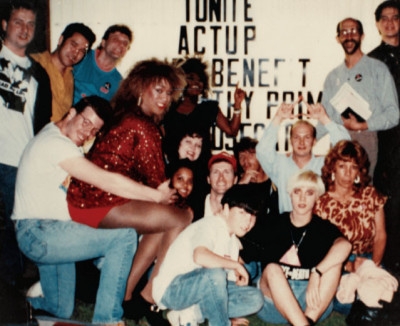
Members and supporters gather during a fundraising benefit at Enoch’s Pub and Grill in ShreveportThe Small Town Rage Preservation Project Archive/Courtesy Robert Darrow
What do you hope younger generations take from this book?
I hope younger readers understand that progress is never inevitable. The rights and visibility many people experience today were built through the courage of individuals who were often frightened, grieving, isolated and fighting systems much larger than themselves. I also hope readers recognize the importance of compassion, community and speaking out against injustice even when it feels uncomfortable or unpopular.
Did working on this project affect you personally?
Very much so. Revisiting these stories meant revisiting an era marked by fear, loss and silence, but also extraordinary resilience. Many of the people featured in the book were not simply historical subjects. They were friends, neighbors, activists, caregivers and individuals whose lives shaped the communities around them. Preserving their voices became deeply personal.
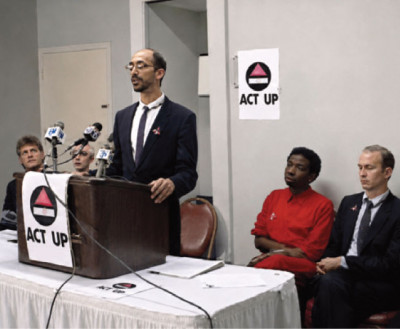
ACT UP Shreveport members hold a press conference demanding the resignation of the LSU Medical Center chancellorThe Small Town Rage Preservation Project Archive
What makes Small Town Rage different from other AIDS histories?
Many important books have documented the epidemic in major urban centers. Small Town Rage focuses on a part of the country that is often missing from those narratives. The Deep South had its own cultural, political and religious realities that shaped how HIV and AIDS were experienced and understood. This book helps expand the historical map of the epidemic.
What do you hope readers feel after finishing the book?
I hope readers feel the humanity of the people at the center of these stories. The book is certainly about activism and history, but it is also about friendship, grief, courage, humor, survival and love in the face of overwhelming fear. Above all, I hope readers remember the individuals who refused to disappear quietly.

David W. Hylan, EdDCourtesy of David W. Hylan, EdD




Comments
Comments