

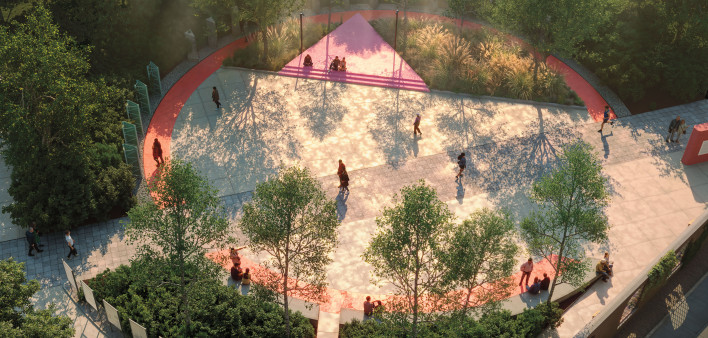
The Toronto AIDS Memorial began in 1988 as an insurgent space for grief. The names of people who died with HIV that year were hand-painted onto temporary panels and displayed at Pride festivities.
In 1993, a permanent memorial was constructed: a semicircle of concrete pillars with space for names to be engraved. Planners assumed the memorial contained enough room to accommodate HIV-related deaths for years to come. Sadly, they were mistaken. More than three decades later, the memorial is running out of room.
That reality has become entangled in a broader debate over the future of Barbara Hall Park, where the memorial sits, and a larger question about memory and public space. What should an AIDS memorial be in 2026? A place to honor the dead or something that also helps the public understand the ongoing story of HIV?
In 2023, the City of Toronto began consulting residents on redesigning Barbara Hall Park, located just off Church Street in the heart of the city’s historic LGBTQ neighborhood. The park is home to the AIDS memorial, a trans memorial and a children’s playground. It sits alongside The 519, a major hub for services for LGBTQ communities.
According to a city report, one motivation for the redesign is that the park is a “place where people sometimes feel unsafe.” The park has increasingly become a gathering place for people facing poverty, housing insecurity, the ongoing war on people who use drugs and other social challenges, creating competing visions for how the park should function.
While the memorial has run out of space to name the dead, the park has become a focal point in the debate about how best to support the living.
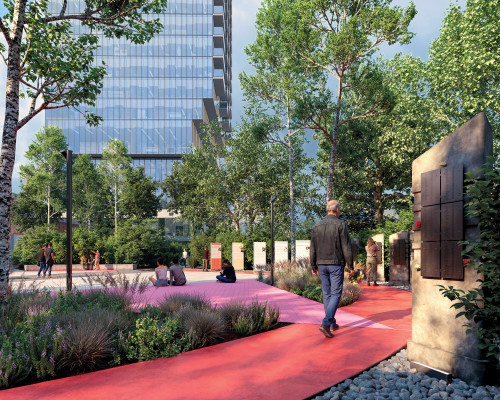
Rendering of Echoes, a proposed redesign of the Toronto AIDS MemorialNormandtheGang
Critics within Toronto’s HIV community argue that the city’s proposed redesign of the park diminishes the memorial’s visibility and significance. As Breklyn Bertozzi, executive director of the Canadian AIDS Society, told a reporter during an interview, the plans take “away from what is already there, in my opinion, and it wasn’t enough to begin with.”
Amid the controversy, a counterproposal has emerged. Known as Echoes, the plan was designed by a community member living with HIV named David, who is using only his first name due to the ongoing stigma felt by people living with HIV.
For David, the issue extends beyond preserving the existing memorial. “If the memorial doesn’t explain to the broader public why it’s here, it then faces a risk of further diminishment and removal in the long run,” he has argued.
His proposal would expand the memorial with additional commemorative pillars, a stage shaped like a pink triangle and 10 large-format panels intended to tell what he describes as the fuller story of the epidemic and the community response to it.
The proposal has attracted growing support. More than 60 organizations across Canada have endorsed Echoes, and the city has agreed to formally review the concept.
Whether Echoes ultimately moves forward remains uncertain. What is clear is that the debate surrounding Barbara Hall Park has become about more than a redesign. As Toronto considers the future of its AIDS memorial, it is also deciding how the history—and continuing reality—of HIV will be remembered in public space.

(map) Getty Images/miniature




Comments
Comments