

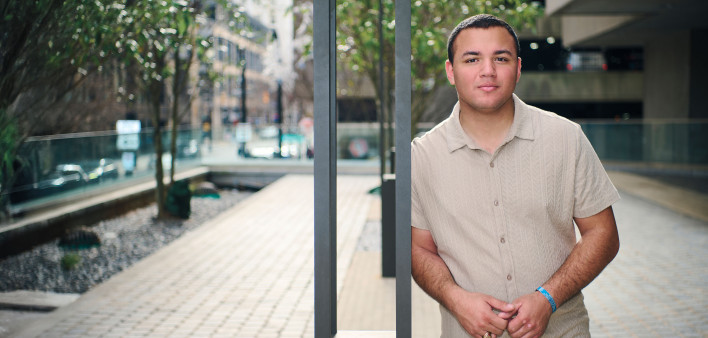
Isiah Wilkins, 24, is a state trooper in Temple, Georgia, almost an hour’s drive west of Atlanta. But what Wilkins really wants to do with his life is serve in the U.S. Armed Forces. “I’ve always wanted to be in the military,” he says. “My mom was an Army veteran. It’s about being part of something bigger than yourself and giving back.
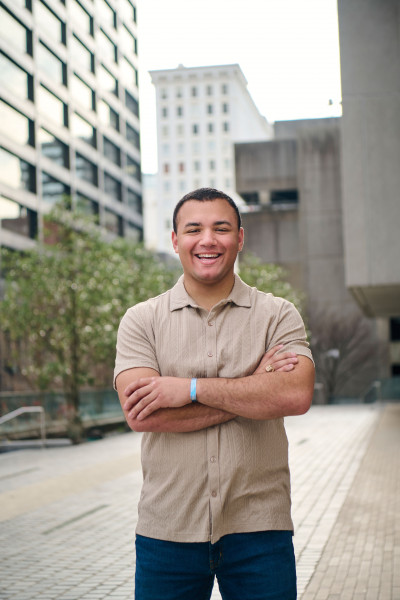
Isaiah WilkinsEley
At age 17, Wilkins was already on his way to getting his wish. He enlisted in the National Guard, and by age 19, he had completed a program at Georgia Military College. Afterward, he was accepted into a one-year preparatory program at West Point, the prestigious military academy. But after a standard physical screening process for the program, he was surprised to learn he was HIV positive and, hence, according to military policy, not fit for service. This was the case even though it has long been established that people with HIV on effective treatment are generally as healthy and fit as their HIV-negative counterparts and cannot transmit the virus to others sexually. Wilkins was disenrolled from the program.
Devastated by his disenrollment, Wilkins did some research and connected with Lambda Legal, the group that has long fought in court for the rights of LGBTQ people and people living with HIV. It turned out that Lambda had in 2022 notched a victory in a case on behalf of HIV-positive service member Nick Harrison. In Harrison v. Austin, a federal court ruled that service members living with HIV (usually those who became HIV positive after enlisting) who were undetectable could not be barred from commissioning as officers or being deployed—both key factors in military career advancement—solely on the basis of their HIV status. (The longtime prior policy had banned them from doing so.) The Department of Defense (DoD) under President Biden did not appeal the ruling, thus paving the way for its implementation.
With one victory under its belt, Lambda in 2024 took Wilkins’s case challenging the ban on enlisting people with HIV to federal court and won. But this time, Biden’s DoD, apparently wanting to keep such policymaking within the military and out of the courts, appealed the decision. Consequently, a three-judge appeals panel heard Wilkins’s case last December.
In February of this year, the panel—made up of one George H.W. Bush appointee and two Trump appointees—ruled against Wilkins, saying that the courts should defer to Congress and the White House on military matters. “We are deeply disappointed that the Fourth Circuit has chosen to uphold discrimination over medical reality,” says Greg Nevins, Lambda’s senior counsel and director of its Employment Fairness Project, of the ruling.
As POZ went to press, how Wilkins’s legal team will respond to the ruling—whether to ask for a full-panel hearing or appeal to the Supreme Court—remains to be discussed, says Scott Schoettes, one of his lawyers, who has been arguing in court on behalf of service members with HIV for many years.
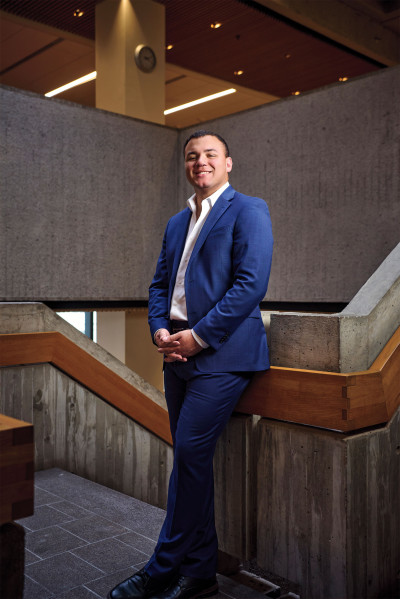
Isaiah WilkinsEley
Schoettes says he had a bad feeling about the case during oral arguments, because “it felt like the judges had decided—based on their own misconceptions about living with HIV—that the previous decision of this same court was wrong.”
So that’s the current situation regarding people with HIV and the military under President Trump and Secretary of Defense Pete Hegseth. Service members who are already enlisted are finally able to be made officers and deployed—with some exceptions and usually only after a lot of legwork on their part, as the 2022 ruling has not yet been codified in military guidelines. But as Wilkins’s case plays out, people with HIV are still banned from enlisting; in fact, in mid-January, the Pentagon announced that because it was expecting the appeals panel to rule against Wilkins, it was pausing the training of HIV-positive recruits.
“To me,” says Wilkins, “this indicates that it can be very difficult to get someone to change their opinion even when you present them with factual evidence.”
To be clear, living as a service member or veteran with HIV is a lot better today than it was decades ago. Back in the 1980s and early ’90s, living with HIV often meant suffering through a long period of physical decline, illness and eventually death—the main reason, along with the threat of transmission of the virus during active combat, that people with HIV were originally barred from enlisting. This was also why service members discovered to have HIV after they’d enlisted could not become officers or deploy.
But the advent of effective treatment in the mid-’90s, plus confirmation in the 2010s that folks with HIV who are undetectable cannot spread the virus sexually, lent fire to legal arguments against these bans—with the first major victory being Harrison’s in 2022.
Many military veterans with HIV today were diagnosed after completing their military service, meaning that at this point the only intersection of their HIV and the military is health care. It should be noted that many of these veterans and their advocates say that military-derived care for veterans—whether TRICARE for those who were eligible for retirement or the Veterans Administration (VA) for those who were not—is solid, serving more than 30,000 people with HIV, despite cuts and changes made to the VA by the Trump administration that critics say are harming or will harm veterans.
“Everything seems to be going well with health care,” says Cathy Marcello, senior vice president of advocacy and training for the Modern Military Association of America, which advocates on behalf of LGBTQ and HIV-positive service members and veterans. But she says other factors continue to make serving with HIV more difficult than it should be. Despite Harrison’s win, HIV will still be the factor that bars service members from some deployments (for example, if the host country bars people living with HIV). “This can impact promotions,” she says.
And the military still requires service members living with HIV to both inform their sex partners of their status and wear a condom—an antiquated rule that doesn’t factor in 21st-century science’s finding that people with HIV who are undetectable cannot transmit the virus sexually. Theoretically, says Marcello, “this could make a service member subject to prosecution for having consensual sex within their marriage.”
On top of that, under Trump and Hegseth’s leadership, the DoD has taken a rightward turn, with the military once again banning transgender members (as it did during Trump’s first term before Biden reversed it) and eliminating DEI (diversity, equity and inclusion) measures in the military as it has across the entire government and replacing them with rhetoric seeking to make the military more “masculine” and focused on a “warrior ethos.”
Such measures have likely chilled conversations by service members living with HIV about their experiences, says Marcello. (Indeed, calls for comment for this story via Marcello and others to several private groups of current and former service members with HIV yielded few replies, despite the option of talking anonymously.)
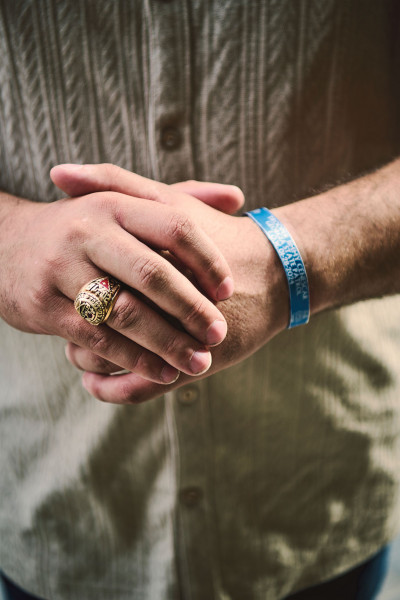
Wilkins wears his Georgia Military College ring and a bracelet in memory of fellow state trooper Jimmy Cenescar.Eley
In fact, she says, “there’s a real fear right now that [despite the Harrison ruling] active-duty service members will be the next group to be pushed out of the military.”
One former service member who talked with POZ is Dontá Morrison, PhD, 54, who directs community outreach and engagement at an HIV-specializing UCLA care center. Morrison was diagnosed with HIV five years after leaving the Air Force in 1994, which he says he did because it was stressful serving while hiding his sexuality under the military’s defunct Don’t Ask, Don’t Tell (DADT) rule for gay service members, which was repealed in 2011.
“I had to put on a different kind of face to survive in that heteronormative toxic environment,” he says, adding, “I was depressed when I left because I didn’t really want to leave.” Now, post-DADT, Morrison says, “I have resentment and sadness because I have openly gay [service member] friends married to their partners who got to retire with benefits post-DADT, but I missed out on all that.”
Nonetheless, Morrison says he receives good HIV care from the VA, although he hears from many fellow veterans that wait times, especially for mental health, can be very long.
When the military told Nick Harrison, currently a lawyer within the DC National Guard, that he could not be named an officer or deploy because of his 2013 HIV diagnosis, he knew he had to either fight back legally or move on from the military. “I’m a lawyer with an MBA, so I knew I could go out and make six figures,” he says. But, he says, what drove him to keep pursuing a legal challenge was “remembering that not every [service member living with HIV] has the options outside the military that I do.” He decided to fight not only for himself but also for his fellow military folks living with HIV. And he won his case.
Since doing so, he’s coached other service members living with HIV through the struggle to be commissioned and deployed, because despite the legal win, the military has yet to issue detailed guidance to commanders on how to proceed, leaving folks to advocate for themselves with their higher-ups. “I’ve told people that when their commanding officer says they have to wait for the guidance to tell them, ‘No, don’t wait—I want this now.’”
In a related but separate case, Kevin Deese, a former Navy midshipman, and an anonymous fellow plaintiff, reached a settlement with the DoD in 2024 that allowed them to be commissioned as officers despite their HIV-positive status. Currently in the Navy reserve in Buffalo, where he works for a bank, Deese, 34, looks forward to mobilizing at some point—even as he pursues a seat in the New York State Assembly.
Deese says he learned he was positive after a medical screening revealed he had a very low platelet count, prompting an HIV test. “I was told I’d graduate from the Naval Academy but not commission because the issue was black-and-white and I couldn’t get a waiver.” He was given a medical discharge in 2017.
But then came Harrison’s 2022 win, which applied to Deese and opened a path to his own legal challenge, which resulted in the settlement that allowed him to commission. “I wish I could’ve had my original goal of commissioning 10 years ago as a submarine officer,” he says, “but that wasn’t possible.”
Yet now, with the ban on commissioning and deployment for folks with HIV off the table, he says, “I’m finally going to be able to do the job I fought very hard to do.” Should he win his assembly seat and then be called up for service he says he’ll take a leave from the assembly to go and serve.
In the meantime, Deese plans to tell his story of successfully fighting back against the military on the campaign trail. “This is a scary time right now for many people in my district, and in the country, but courage is contagious,” he says—a fact he thinks his legal battle illustrates. “If I hadn’t done what I could when I had the chance to fight and then found out that someone else living with HIV came behind me [in the same situation], I wouldn’t have been able to live with myself.”
Will Isaiah Wilkins—currently the poster boy for all people living with HIV who want to enlist in the military—ultimately succeed, like Harrison and Deese? Only time will tell. He knows one thing for sure, though: what he’d say to the judges who presided at his recent hearing who questioned his ability to serve with HIV.
“If they had a family member living with HIV,” he says, “I’d ask them why they think that person shouldn’t be allowed to serve.” Because, he says, “HIV is a chronic, manageable illness that poses no real risk to anyone else.”
Key Dates for HIV in the Military
1985: HIV screening in the military becomes mandatory. A positive result is cause for an absolute bar from enlisting. For several years, those who test positive while serving are also ejected.
2022: Acourt rules that the military can’t block enlisted service members with HIV from being commissioned and deployed solely on the basis of their HIV-positive status (if their HIV is undetectable).
2024: A court rules that people cannot be barred from enlisting in the military solely because they have HIV.
2025: The Department of Defense appeals the 2024 ruling; arguments on both sides are made before a three-judge appeals panel.
2026: The panel, saying that the courts should defer to Congress and the White House on military matters, rules that people living with HIV cannot enlist in the military. At press time, a response to the ruling is undecided.


1 Comment
1 Comment