

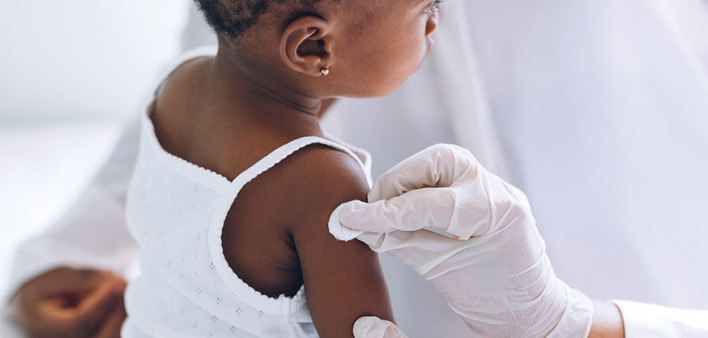
Measles cases are rising in the United States as vaccine hesitancy increases, and people with HIV may not be adequately protected. According to the Centers for Disease Control and Prevention, 2,280 confirmed cases were reported in 45 states in 2025, with more than 900 additional cases through late February 2026. Experts fear that recent changes to vaccine policy could lead to the loss of population protection against measles.
Measles is caused by a highly contagious airborne virus. The illness typically begins with flu-like symptoms, followed by a characteristic rash. While most people recover, some develop life-threatening complications. People with HIV—particularly those with a low CD4 T-cell count—are at greater risk for severe illness and death.
Federal guidelines recommend that all people with HIV should be assessed for measles immunity, meaning documented prior vaccination, a blood test showing adequate antibodies, past measles infection or being born before 1957, when most people were exposed and developed natural immunity. HIV-positive people ages 1 year and older without presumptive immunity who are on antiretroviral treatment and have adequate immune function should receive two doses of the combination MMR vaccine, which also prevents mumps and rubella. The vaccine is safe for HIV-positive people with a CD4 count of at least 200, or a CD4 percentage of at least 15% in young children. But because it contains weakened live virus, the vaccine is potentially dangerous for those with compromised immunity.
In a recent study, Hayden Andrews, MD, of the University of Texas Southwestern Medical Center, and colleagues reviewed medical records from more than 13,600 HIV-positive people receiving care at a large clinic in Dallas. Only 11% had presumptive immunity. Among the 311 people who received serology blood tests, 18% lacked adequate antibodies.
“Increasing measles immunity in people with HIV is essential given increasing outbreaks,” the study authors wrote. “While prior high levels of community immunity could offer protection to this vulnerable population, this can no longer be taken for granted.”


Comments
Comments