

Some CD4 T cells infected with HIV can transform into CD8 cells, making up a previously overlooked component of the viral reservoir. Most T cells carrying the CD4 receptor are “helper” cells that coordinate the immune response, while cells bearing the CD8 receptor are “killer” cells that destroy virus-infected and cancerous cells. Researchers compared T cells from people with acute HIV infection, people on antiretroviral treatment with viral suppression and HIV-negative blood donors. Unexpectedly, they found that a subset of latent CD4 cells can convert to induced CD8 cells. These primarily arose from regulatory CD4 T cells, which suppress excessive immune responses. An HIV accessory protein called Nef downregulates CD4 expression, while another called Vpr upregulates CD8 expression; both were necessary to reprogram T cells. Although HIV does not usually infect normal killer T cells, the induced CD8 cells harbored transcriptionally active viral RNA or intact proviral DNA with the potential to produce new virus, which has implications for functional cure strategies.
Advertisement
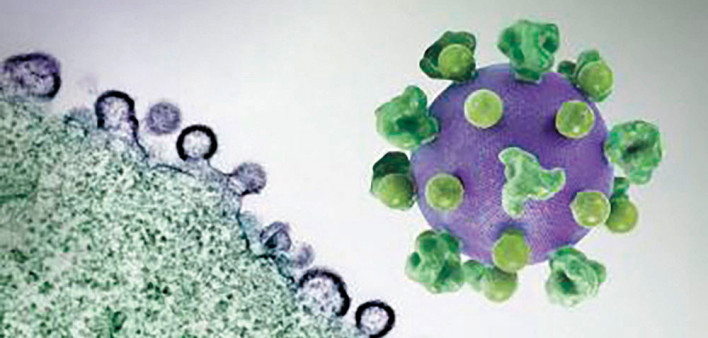
HIV virus particles (purple) budding and replicating from an H9 T cell (green) NIAID
Cure: HIV Converts T Cells
Some CD4 T cells infected with HIV can transform into CD8 cells.
Advertisement
Advertisement



Comments
Comments