

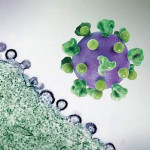
As traditional HIV vaccines have failed to offer protection, researchers have turned to more sophisticated strategies, such as training the immune system to produce its own broadly neutralizing antibodies (bnAbs). One promising approach uses viruslike immunogens, or engineered nanoparticles studded with multiple copies of HIV’s envelope protein. After showing that one experimental immunogen triggered production of bnAbs targeting HIV’s CD4 binding site, scientists at Scripps Research and the Swedish Karolinska Institute developed a new version that targets the apex, or tip, of HIV’s outer spike, which is nearly the same across circulating strains of the virus. For the first time, all six monkeys that received the vaccine series produced broadly protective cross-neutralizing antibodies against wild-type viral strains the animals hadn’t been exposed to. But much work remains before large human trials. Experts think that an effective vaccine may need to target more than one site on the viral spike to provide durable protection.
Advertisement

YouTube/National AIDS Memorial (Model(s) used for illustrative purposes only)
Prevention: HIV Apex Vaccine
All monkeys given a new series of vaccines generated antibodies capable of fighting multiple strains of HIV.
Advertisement
Advertisement



Comments
Comments