


There’s a quote going around on social media by legendary “pope of trash” cult filmmaker John Waters (Hairspray, Pink Flamingos, Cry Baby, etc.) from a recent episode of the HBO series, Finding Fire Island. Waters is talking about the early days of the AIDS epidemic, where he says that young people will never truly understand what it was like. Referring to the ‘80s and early ‘90s, he said, “If you’re older, you remember that, and you can never convey what that was like to young people.”
It’s true that living through the early AIDS years was a traumatic experience, and one that no one who didn’t live through it would ever truly understand. The fear of the mysterious, deadly virus, mixed up with rampant homophobia and other bigotry (both hidden and blatant), and the daily, sometimes hourly shock of finding out another friend was suddenly gravely ill or had died. Well, I wouldn’t wish that gruesome experience on anyone.
Though challenging and re-traumatizing, it’s terribly important, vital even, for those of us that Waters calls “old-school gays,”–I’m not sure how I feel about that label–to relay the stories of that time. It’s especially essential for LGBTQIA+ youth to know about those difficult days, so they realize not only the history, but also the power of our queer community. Because the story is also how we stood up and fought for ourselves, our friends, and chosen families. They also need to see and hear the beauty of our compassion and care for one another, at a time when society, government at every level, and even most media, kept their heads in the sand when it came to HIV and those affected by it.
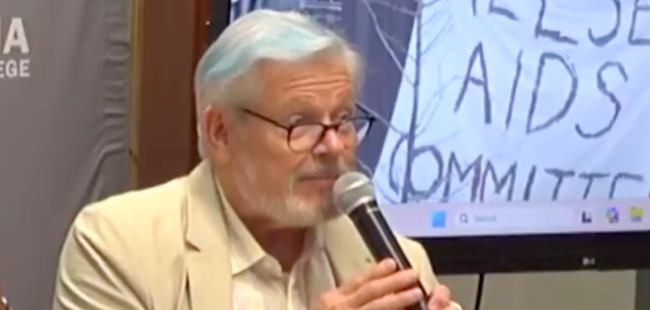
I was contacted last year by Stephen Petrus, Director of Public History Programs from the LaGuardia & Wagner Archives about being a part of the digital exhibit, “Panic, Politics and Policy: New York City during the AIDS Crisis, 1981 - 1996.” Actually, my personal archives chronicling my entire career, first as an activist and organizer and later in the New York City Council and New York State Senate, have been with LaGuardia & Wagner for some time. Stephen said that it was the processing of my personal archives that inspired this exhibit.
This user-friendly exhibit, which launched online on June 11, 2026 and is available indefinitely, is divided into six themes: Panic, fear, and confusion; Stigma and discrimination; Community caretaking; Diverse faces of the epidemic; The politics of public health; and Biomedical breakthroughs but limited access. Each topic is explored through oral histories by people who were there and lived through it, including GMHC co-founder Lawrence Mass, HousingWorks Co-Founder and CEO Charles King, myself, and many others.
This is a fantastic resource not only for the community, but also for colleges, universities, even high schools, to make the history alive and bring issues of life and death to people who didn’t experience it for themselves. It’s also a great reminder for the rest of us, how bigotry and hatred took a medical diagnosis and turned it into a punishment for communities already underserved and demonized. We’ve come a long way from those difficult days, and we can’t ever go back.
The current administration’s cuts to PEPFAR and the proposals to cut Medicare, Medicaid, and funding for HIV research, education, prevention, and care for people here in the US, will no doubt cause an AIDS Crisis revival. Those of us who are old enough to remember how it was the first time, need to make sure the young members of the queer community have access to all the information about the dawn of the AIDS pandemic.
Remember the famous line by George Santayana (sometimes attributed to Winston Churchill), “Those who cannot remember the past are condemned to repeat it.”
Click here to visit Panic, Politics and Policy: New York City during the AIDS Crisis, 1981-1996




Comments
Comments