

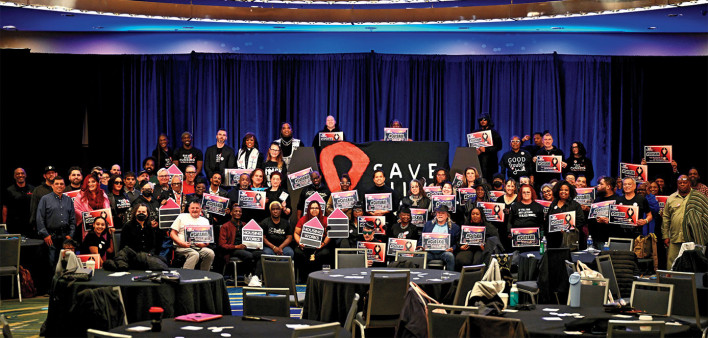
Long-term HIV survivors, health advocates, community health providers and faith leaders gathered in Washington, DC, on March 16 to hold a symbolic funeral protest and celebration-of-life service to sound the alarm over the growing instability in HIV prevention and care funding across the United States and the impact on America’s national health care infrastructure.
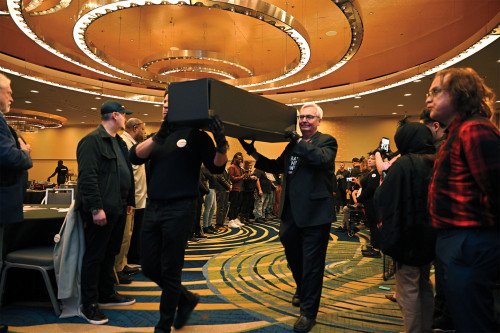
Save HIV Funding Campaign symbolic funeral protestCourtesy of Getty Image for Save HIV Funding Campaign/Shannon Finney
Organized by the Save HIV Funding Campaign and held at the Renaissance Arlington Capital View Hotel (host hotel for this year’s AIDSWatch conference), the demonstration used the imagery of a memorial service to warn that decades of progress in the fight against HIV could be reversed if critical prevention and treatment programs continue to face funding threats and policy instability.
Participants included the Reverend Elder Carmarion D. Anderson, minister for congregational leadership, United Church of Christ National Ministries; Jeremiah Johnson, cofounder of the Save HIV Funding Campaign and executive director of PrEP4All, who acted as “funeral director” for the day; and Maxx Boykin, campaign manager for the Save HIV Funding Campaign.
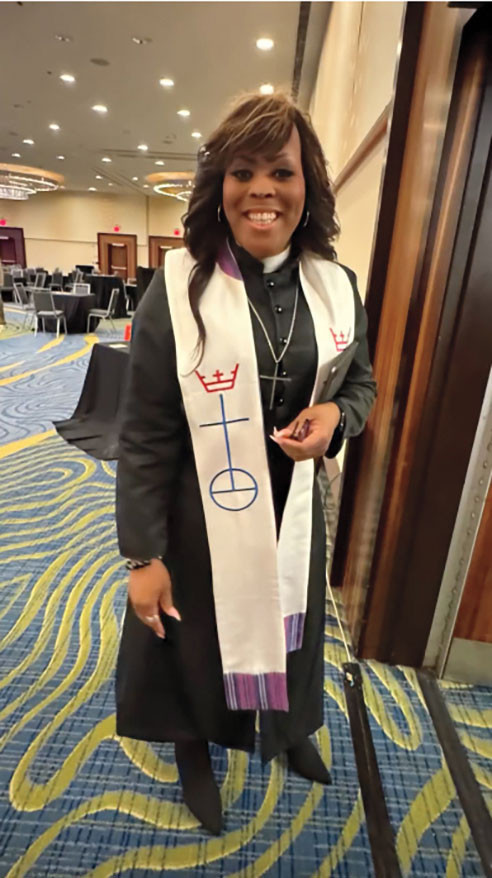
Carmarion AndersonCourtesy of Getty Image for Save HIV Funding Campaign/Shannon Finney
Speakers and living obituary readers included Kamaria Laffrey, co–executive director, SERO Project, in Florida; Barb Cardell, program director, Positive Women’s Network–USA, in Colorado; Aubrianna Escalera Naranjo, COO and president, Poder Unides Inc., in Georgia; Vincent Crisostomo, director of aging services, San Francisco AIDS Foundation, in California; Paul Aguilar, author and activist, in California; and Malcolm Reid, cochair, U.S. People Living with HIV Caucus, and founder and CEO, Unity Arc Advocacy Group, in Georgia.
Speakers emphasized that the systems supporting HIV prevention, treatment and care were built with bipartisan support over decades. They warned that weakening these programs not only puts vulnerable communities at risk but also dismantles a public health model pioneered by the HIV response that has guided how the United States responds to large-scale health emergencies.
Jeremiah Johnson shared remarks, saying in part: “We’re going to make sure that our policymakers hear us loud and clear: Do we invest in life, or do we invest in death? Do we invest in care, or do we invest in bombs? We have to save our care, save our prevention, save our research, save our housing. And we have to do it not just for those of us in America, but we have to do it globally.”
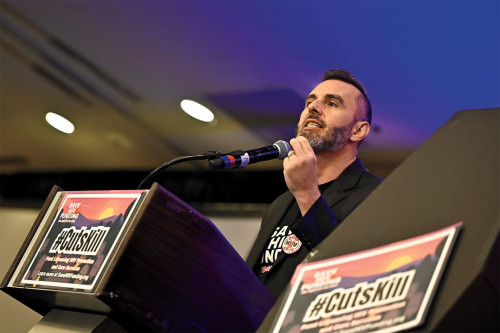
Jeremiah JohnsonCourtesy of Getty Image for Save HIV Funding Campaign/Shannon Finney
The gathering brought together advocates, community members and people directly impacted by HIV policy decisions. Participants highlighted concerns about recent funding instability affecting programs that provide prevention services, treatment access and medication assistance for people living with HIV.
Reading a living obituary of himself, Malcolm Reid said: “Malcolm’s death was not inevitable. It was planned. It was engineered. Treatment worked when it was uninterrupted. Viral suppression was not a miracle. It was access plus consistency plus trust. When the system broke that trust, when it replaced clarity with confusion, it did not merely create inconvenience. It created funerals.”
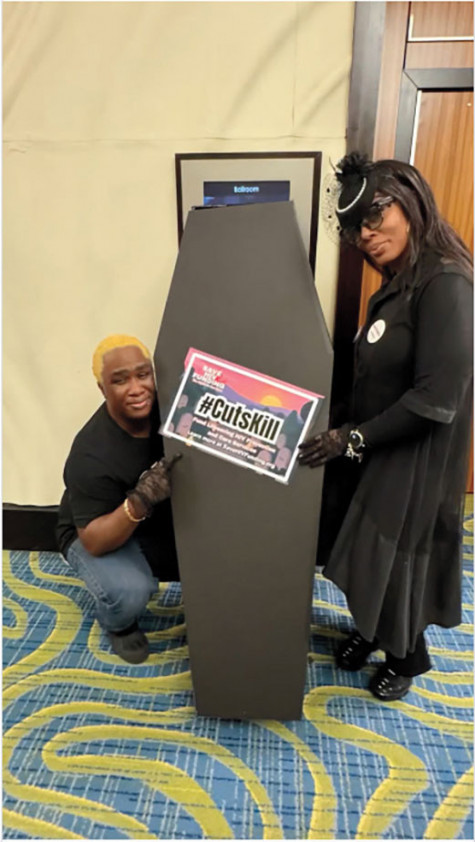
Save HIV Funding Campaign symbolic funeral protestCourtesy of Getty Image for Save HIV Funding Campaign/Shannon Finney
The celebration-of-life program included remarks from advocates, community leaders and public health voices, along with readings and a musical/gospel element honoring the generations of activists, caregivers and providers who built the modern HIV response infrastructure.
Advocates warned that weakening federal HIV programs could reverse decades of progress made in reducing new HIV cases and expanding treatment access.


Comments
Comments