


In April, in advance of the 2026 summer reading season, The New York Times published “The 5 AIDS-Era American Novels to Read First” by respected critic Mark Harris. According to him, to read these books, published between 1988 and 1993, “is not only to learn about an era and culture that may now feel distant but to understand the necessity of creating art amid crisis.”
Despite his worthy picks—Second Son (1988) by Robert Ferro, Eighty-Sixed (1989) by David B. Feinberg, A Home at the End of the World (1990) by Michael Cunningham, Was (1992) by Geoff Ryman and Martin and John (1993) by Dale Peck—readers might quibble about what is missing, such as classics like Invisible Life (1991) by E. Lynn Harris and People in Trouble (1990) by Sarah Schulman. Nonetheless, the point is that reading books about HIV and AIDS is as necessary as ever.
To complement his novels, I offer five recent nonfiction books on HIV and AIDS. Together, these books make for inspiring and informative summer reading.
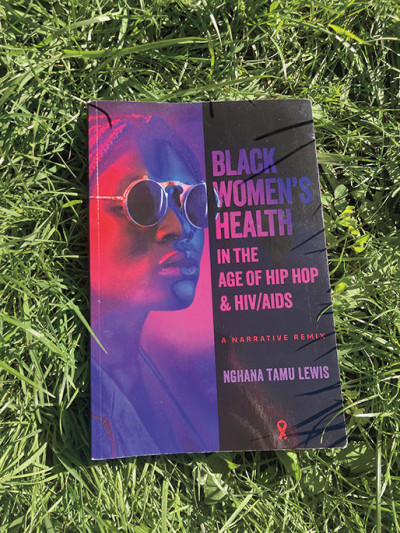
“Black Women’s Health in the Age of Hip Hop & HIV/AIDS”Ted Kerr
Black Women’s Health in the Age of Hip Hop & HIV/AIDS
by Nghana tamu Lewis
When it comes to women, music and HIV, Gen Xers and music fans alike may be familiar with TLC’s 1995 chart-topper “Waterfalls,” Salt-N-Pepa’s 1991 hit “Let’s Talk About Sex” and their 1992 follow-up, “Let’s Talk About AIDS”—all classics to get a rooftop dance party going. Less known are rapper Sister Souljah’s novel The Coldest Winter Ever, the groundbreaking AIDS episodes of the sitcom Girlfriends and the off-Broadway drama In the Continuum by Nikkole Salter and Danai Gurira. These landmark yet underappreciated works are key examples of what Lewis calls “hip hop feminist states of mind.” With HIV and AIDS long disproportionately impacting Black women, these works use hip-hop as a method of community storytelling and popular education, sharing lifesaving information and bearing witness to Black women woefully underserved by the medical establishment and mainstream media. The book expands what many readers know about the cultural response to HIV and AIDS and deepens appreciation of hip-hop as a community health resource.
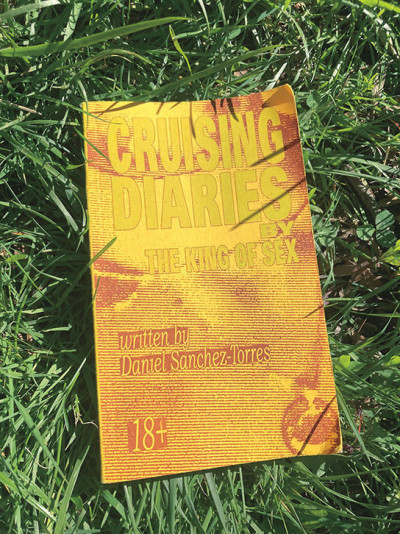
“Cruising Diaries by the King of Sex”Ted Kerr
Cruising Diaries by the King of Sex
by Daniel Sanchez-Torres
Toss this book, some sunscreen and your bikini bottoms into a tote, because Cruising Diaries is the beach read of the season. In this compact volume, writer and curator Daniel Sanchez-Torres takes readers on a sexy and moving journey of self-discovery as he explores the limits and possibilities of his King of Sex persona. We meet the men he is intimate with and the one or two who broke his heart while also getting snapshots of his life inseparable from his sex life: being let go from a job after his boss’s inappropriate behavior, moving back into his parents’ house around the start of the COVID-19 lockdown and understanding his life as a person living with HIV alongside the cultural phenomenon of AIDS. Had Cruising Diaries been merely a fun romp, it still would have made the list for its punchy writing and interwoven playlist. What makes it so compelling, though, is its moving mix of erotics and frivolity—an important combination in the pursuit of pleasure. Sanchez-Torres has crafted a book that bridges Harris’s list—consisting primarily of memoirs of young men facing premature death—with contemporary writers like Brontez Purnell, Mattilda Bernstein Sycamore and Steven Reigns.

“Machineries of Similarity and Difference: AIDS from Its Research Infrastructures”David Ribes
Machineries of Similarity and Difference: AIDS from Its Research Infrastructures
by David Ribes
A somewhat surprising summer tradition has emerged. For the last few years, every July 3, my timeline fills with people reposting the now-infamous 1981 New York Times headline: “Rare Cancer Seen in 41 Homosexuals.” Many people, as I have learned, first read that headline at or on their way to the beach and count the moment as their introduction to what would come to be known as HIV and AIDS. In his book, sociologist Ribes shares a parallel story. While the media and the public were slowly learning about the unfolding crisis, researchers were launching the Multicenter AIDS Cohort Study (MACS, pronounced “max”), an epidemiological study of gay and bisexual men. MACS, which ran from 1983 to 2019, predates the term “HIV” and inspired the Women’s Interagency HIV Study (WIHS, pronounced “wise”), which debuted a decade later. Both studies—along with an additional one focused on scientists—are Ribes’s focus. Through examining these research projects, an understanding emerges not only of how information about HIV and AIDS has been gathered across time but also of the role that objects of study play in shaping an epidemic and our understanding of it. It is not the lightest reading you will do this summer, but it will be among the most engrossing.
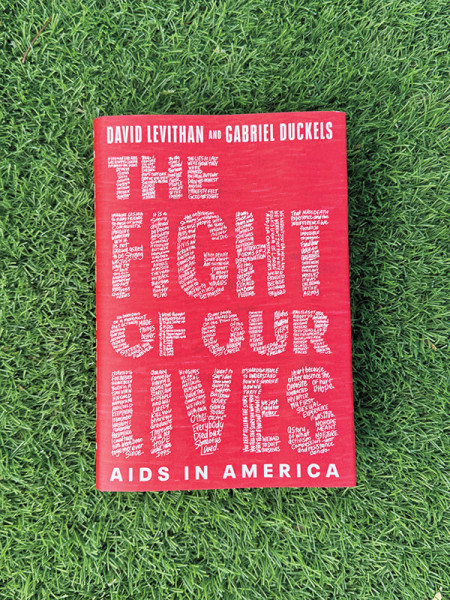
T“he Fight of Our Lives: AIDS in America”Jennifer Morton
The Fight of Our Lives: AIDS in America
by David Levithan and Gabriel Duckels
As a celebrated and prolific writer, David Levithan knows the power of young adult fiction. Here, Levithan and writer and scholar Gabriel Duckels, PhD, have produced a refreshing history of HIV and AIDS. At its core, The Fight of Our Lives consists primarily of portraits of young people who have lived—and in many cases died—with HIV. Throughout, there are timelines, illustrations and transcripts. It is a readable mosaic that, in the best way, mirrors the unfolding and ongoing crisis: a powerful assemblage of facts, feelings, loss and inspiration. Stories of well-known figures like Ryan White and poems by celebrated author Danez Smith appear alongside stories that deserve more attention, such as that of Derinthia Williams, one of the more than 10,000 people in the United States who have lived with HIV since birth. Key to the book’s success is how unburdened it is by refutation. Unlike academic or mainstream trade titles that wrestle with the AIDS narratives that came before,The Fight of Our Lives makes good use of recent research and recalibration of AIDS history—evident in an early chapter focusing on Robert Rayford, the 16-year-old who is the earliest confirmed person with HIV in the United States. This book ensures that the memory of those with HIV will remain.
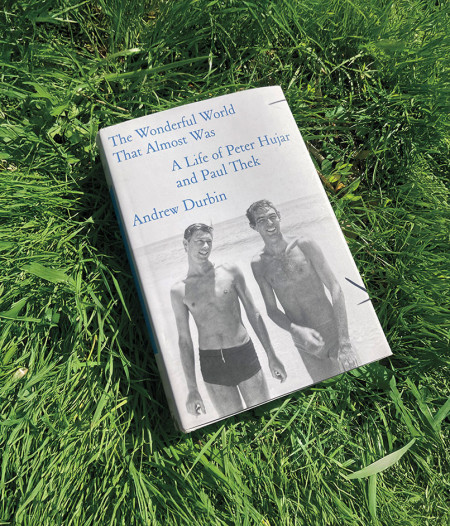
“The Wonderful World That Almost Was: A Life of Peter Hujar and Paul Thek”Ted Kerr
The Wonderful World That Almost Was: A Life of Peter Hujar and Paul Thek
by Andrew Durbin
There is an act of care at the heart of this multifaceted memoir that anyone who has spent time in the archives will appreciate. So often, one wonders about the post-humous well-being of a long-dead figure whose life can seem more vivid than one’s own—a ghostly, sometimes ghastly parasocial connection in which one may fear the dead are lonely. Thanks to Durbin, such concerns are easy to set aside. He pairs photographer Peter Hujar, a growing subject of archival affection, with the somewhat lesser-known yet equally deserving artist Paul Thek—both of whom died with HIV less than a year apart. Billed as a dual biography, the book feels to me more like a single biography of a complex relationship between two people. At its core is the connection between Hujar and Thek: peers, friends, intimates and more enmeshed in an emerging art world of their making and a dying world in which they were early casualties. At gatherings in parks and at backyard BBQs, this well-written, often unexpectedly romantic and in-depth yet breezy page-turner will have people talking all summer.
Special Mention
Going somewhere fun this summer? Need something to read while you travel?
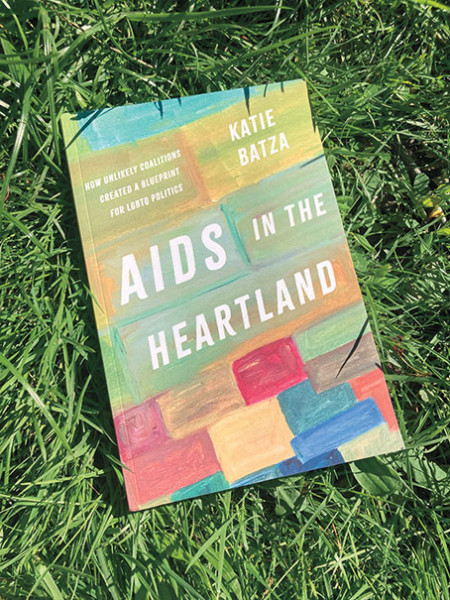
“AIDS in the Heartland: How Unlikely Coalitions Created a Blueprint for LGBTQ Politics”Ted Kerr
From Vice to Nice: Midwestern Politics and the Gentrification of AIDS by Rene Esparza and AIDS in the Heartland: How Unlikely Coalitions Created a Blueprint for LGBTQ Politics by Katie Batza are two recent academic books tackling lesser-known yet vital stories about how HIV and AIDS helped shape Middle America. Read the review by Scott Stern covering both in The New Republic: “How the Heartland Responded to AIDS and Shaped Queer Politics.”
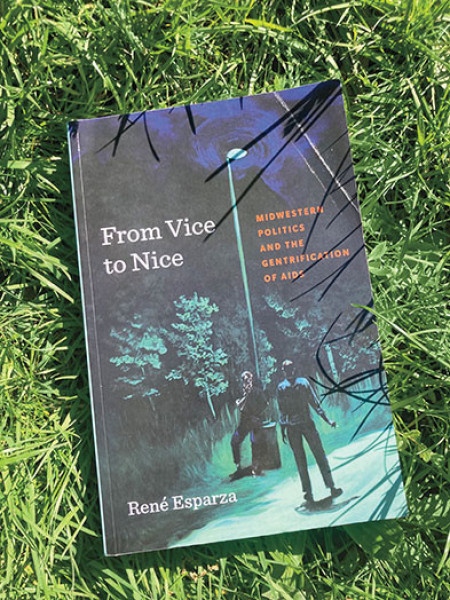
“From Vice to Nice: Midwestern Politics and the Gentrification of AIDS”Ted Kerr
The crisis is ongoing and so is the literature. There has never been a better time to read about HIV and AIDS. Want more suggestions? Check out the often-updated, nonexhaustive list curated by WWHIVDD (What Would an HIV Doula Do?): “Since 2020: Over 100 Books About AIDS.”


Comments
Comments