

President Trump’s decision to dismantle the U.S. Agency for International Development (USAID) left the future of numerous federally funded HIV research projects unknown. Among those in jeopardy was an HIV vaccine trial based in South Africa led by infectious disease specialist Linda-Gail Bekker, PhD.
After grieving the loss of U.S. funding and frantically applying for grants, the project received support from the South African Medical Research Council and the Gates Foundation. These grants were only one twentieth of the $45 million promised by USAID, but the vaccine trial, now pared-down, will continue.
“It’s a bare-bones version,” said Bekker in an interview with NPR. “We will still get the answer, but it’s going to cost us time—years, which is not trivial because people are getting infected with this virus constantly.”
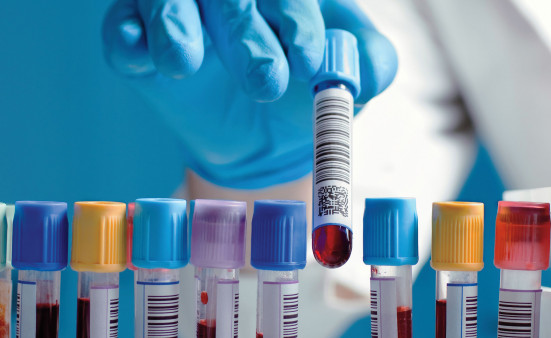
To contribute to HIV research, over a hundred South African women who live in communities with a high prevalence of HIV have for decades been donating blood and cell samples to researchers at the University of Witwatersrand, hoping to do their part to end the epidemic. From these samples, virologist Penny Moore, PhD, and her team identified a broadly neutralizing antibody, or an antibody that can fight multiple type of HIV.
The goal of the present trial is to figure out how to coax the human immune system to produce broadly neutralizing antibodies more easily.
This clinical trial’s first roadblock was funding, but the real hurdle is beating the virus. Despite decades of effort and billions of dollars, no HIV vaccine candidate to date has been successful, so researchers have turned to more sophisticated approaches. Generating an effective immune response against HIV has proved to be very difficult, especially via a one-shot regimen. What’s more, it is unlikely that a more complex vaccine regimen would be easily distributed throughout the communities most affected by HIV, especially if the vaccine must be refrigerated or delivered over a course of multiple injections.
Nonetheless, after a year of delays, the new trial is underway at various research facilities throughout South Africa.
“This is a great opportunity for South Africa to prove that we can do things in South Africa for South Africa with South African financing,” said Amelia Mfiki, community liaison officer for the vaccine trial, in an interview with NPR.
To learn about the specifics of the HIV vaccine trial, read “IAVI Announces First Vaccinations in a Phase I Trial of a Promising HIV Vaccine Approach.”
And for a collection of similar articles on this topic, click #HIV Vaccine. You’ll find headlines such as:
- “Last Large HIV Vaccine Trial Halted” (about the PrEPVacc trial in 2023),
- “Another HIV Vaccine Fails in Large Trial” (about the Mosaic study in 2023) and
- “Researchers Take Next Steps Toward an HIV Vaccine” (a roundup from 2025 about novel vaccine approaches).


Comments
Comments