


Cleve Jones had had enough. After watching the tumultuous first year of the second Trump administration with incredulity and disgust, the long-term survivor of HIV and iconic AIDS figure was dumbstruck when, in late 2025, the administration announced that it would not observe World AIDS Day, marked each December 1. It was the first time the event was ignored by any White House since the first annual commemoration in 1988.
“We were just beginning to understand how many hundreds of thousands of people were going to die due to the cuts to USAID,” says Jones, referring to the U.S. Agency for International Development, a global humanitarian program that included foreign aid to treat and prevent HIV. “And then World AIDS Day is coming, and we get this petty, stupid response from the White House. It really got under my skin. It didn’t inflict the sort of quantifiable damage that budget cuts are doing to our world and our country, but it just underscored the cruelty of this administration.”
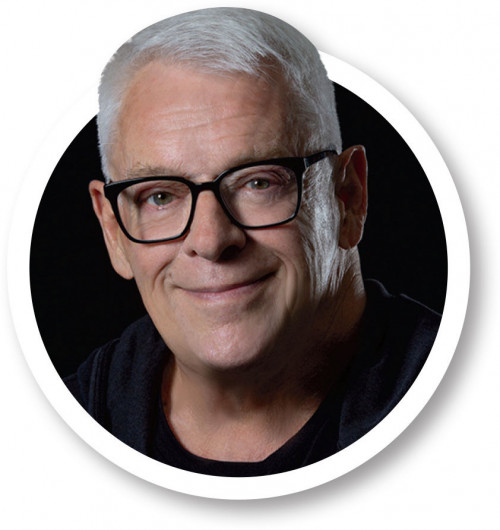
Cleve JonesCourtesy of Cleve Jones
The World AIDS Day insult was particularly stunning to Jones, who has devoted his life to raising public awareness of the plight of those living with HIV and the high death toll of the pandemic. In 1985, he was already thinking about how to honor those lost to AIDS when he conceived the AIDS Memorial Quilt during a candlelight vigil in San Francisco honoring his slain mentor Harvey Milk. The AIDS Quilt, as it became known, would go on to literally cover the National Mall at an event in Washington, DC, and to be regularly displayed across the country.
Channeling his fury, Jones did what he has always done: He started to organize. And soon, a big idea emerged.
The first person Jones called was his friend Sean Strub, a fellow long-term survivor and activist and the founder of POZ magazine.
Strub had been feeling a shared sense of frustration over how to meaningfully respond to the continued damage inflicted on public health programs—not to mention the dismantling of the legacy of progress that he and Jones, along with so many other advocates, had created for future generations.
“I’m always happy to hear from Cleve,” Strub explains. “The World AIDS Day thing was like, How much worse can they get? There are budget cuts we haven’t even begun to feel the impact of, and this was before ADAP [AIDS Drug Assistance Program] funding in Florida was cut [see page 16 for more]. This is existential. We want everyone to be healthy, not to disadvantage segments of society. Everyone should agree on that.”
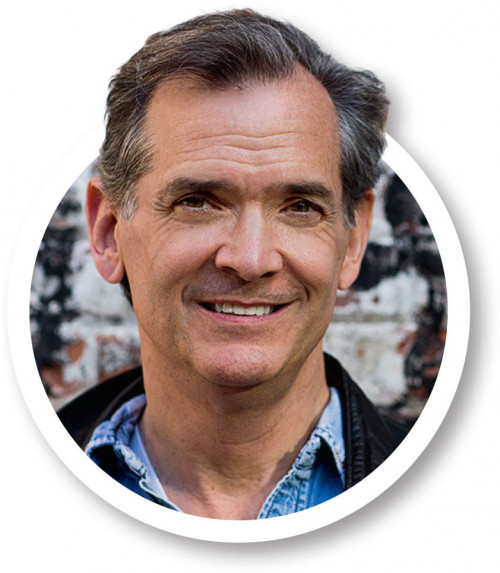
Sean StrubBill Wadman
“I had been wrestling with what to do,” Strub says. “You can only sign so many checks or show up for rallies. I felt like we needed something big that could transcend party lines. This can’t be simply a ‘Trump is awful’ message but more of a constructive vision.”
A certain grim milestone also loomed ahead on the calendar. Looking toward it, a plan took shape.
The first report about what would become known as AIDS was published 45 years ago, on June 5, 1981. In the report, which ran in the Morbidity and Mortality Weekly Report (MMWR), a Centers for Disease Control and Prevention periodical, lead author Michael Gottlieb, MD, detailed strange symptoms, including crashing immune systems, among five young gay male patients. The date is widely viewed as the official start of the AIDS pandemic.
“I read that MMWR report,” Jones remembers. “Within five years, everyone I knew was dead or dying. Those of us who lived through that era have a responsibility to step up. I’m old, and I’m tired, but I’m going to fight like hell to make sure the same mistakes are not repeated. The failures killed the people I loved the most. I’m still angry about it.”
“An estimated 45 million people will have died in the 45 years we have dealt with HIV and AIDS,” Jones adds.
Jones and Strub knew that June 2026 would be significant in another critical way. It’s the month during which the most primary elections will be held for the upcoming 2026 midterms. One way to make a tangible difference this election cycle, the pair realized, would be to motivate voters to focus on their pocketbooks and their access to health care and medications.
Jones and Strub immediately began work on a document—at once a manifesto and a sign-on vehicle for others to join the effort. They reached out. They made more calls. No one said no. They got feedback on their document from diverse perspectives.
The result is Seven Days in June: Health Is Primary, a decentralized, grassroots campaign laser-focused on the issues of affordability and health care, dual issues that have galvanized special elections during the last year and served as linchpins for successful campaigns across the political spectrum. (See the “Seven Days in June” sidebar on page 30 to read the document in full.)
Among the list of ideas the document includes—such as demanding clear commitments from candidates and participation in town halls, demonstrations and social media campaigns from June 1 to 7—is a request for people to gather at sunset on Friday, June 5, for a candlelight vigil “to honor those already lost and the millions more who will certainly die if funding is not restored.”
In strategizing with others, including civil rights leader Nadine Smith of Color Of Change and Cecilia Chung of the Transgender Law Center, Jones and Strub understood early on that the campaign should be broad-based, weaving in health and affordability concerns that personally impact a wide swath of the electorate.
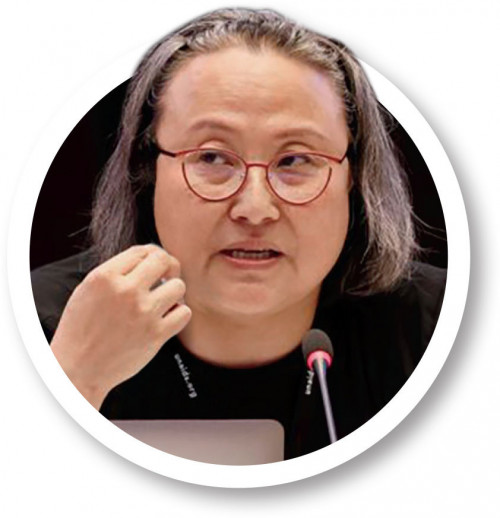
Cecilia ChungCourtesy of Cecilia Chung
“Both Cecilia and Nadine emphasized that Health Is Primary couldn’t just be about HIV, even with cuts to PEPFAR [the President’s Emergency Plan for AIDS Relief] and USAID,” says Jones. “With recent advances with treatment as prevention [also called Undetectable Equals Untransmittable, or U=U], we were on the brink of victory. Instead, we are on the precipice of another wave of illness and death. So it’s about HIV, but this situation illustrates a much larger problem nationally and globally.”
“When we consider 45 million deaths,” Chung adds, “we cannot forget how the United States has stopped providing global resources, like USAID. What we are fighting for is not just the survival of the community in the United States but also globally. We have that responsibility. This campaign is perfect timing for a new call for action that includes global aid, research and treatment options for everyone.”
The advocacy effort has grown legs quickly. “Health Is Primary is becoming something enormous,” Strub observes, “with no single organization behind it, totally decentralized, with no money being raised for it. Just good old-fashioned organizing, getting broad input into the document and working our networks and our networks’ networks. I’m more exhilarated than I have been in a long time.”
Though cooked up by two long-term survivors of HIV, the broadness of the campaign is essential to its success, both Jones and Strub emphasize. “When the major deep cuts to Medicaid kick in after the elections this fall,” Strub warns, “local communities and health care systems will be devastated.
Passed by Congress last year, Trump’s “Big Beautiful Bill,” which masks ugly budget realities, intentionally delayed cuts to Medicaid and other social safety net programs until after the midterms this year. The cynical political strategy hasn’t been overlooked by Jones and Strub.
“I’ve spoken to people on the San Francisco Board of Supervisors who simply don’t know what kind of money they will have to work with,” Jones says, listing the many ways the cuts will affect average Americans. “Yes, HIV and AIDS programs will be affected. And Black mothers are more likely to die in childbirth, 17 veterans commit suicide every day, Veteran Administration (VA) hospitals are being defunded, clinics are closing, whooping cough is rising, childhood cancer research is slowing and women in this country often have to drive hundreds of miles to see an obstetrician. Not to mention health insurance premiums are going up.”
One aspect of Health Is Primary that particularly excites Jones is the involvement of organized labor, another cause to which Jones has devoted much of his life. He believes passionately that unions are essential to the conversation about health care and affordability.
“My connection with unions goes back to Harvey Milk, who created the first significant alliance with labor unions and the LGBTQ community through the Coors beer boycott of the 1970s,” Jones explains. “I have a half-century history of working with labor, and for the past 20 years, I have been on the staff of UNITE HERE, representing workers in the United States and Canada with affiliates around North America.”
“The American middle class exists because of the labor movement lifting workers out of poverty so they could purchase homes and put their kids through college. Workers who are unionized engage in collective bargaining to win contracts that include health insurance. So this question of affordability is of critical importance to the labor unions today.”
When UNITE HERE political director Susan Valentine reached out to Jones to say she wanted to help, it became the first union to sign on to Health Is Primary. And then it was as if a dam burst. Other unions began immediate talks to join, including the Service Employees International Union (SEIU), the largest in the country, and National Nurses United. The organizational bandwidth of these unions will help ensure the exposure and success of Health Is Primary.
“We want this to be broad enough and local enough that an American Legion Hall is comfortable hosting a town hall on what is happening at the VA,” Strub says. “We need to find out how these policies will impact service providers and agencies, hospitals, prisons, the Indian health agencies, all across the board. We were intentional about not calling for a national march on Washington. We want attention on the local level, where these cuts will be felt and where the organizing must take place to influence the November election.”
At press time, organizations that had joined the Health Is Primary effort include NMAC and the San Francisco AIDS Foundation (SFAF), whose executive director, Tyler TerMeer, PhD, has some experience wrangling with the current administration.
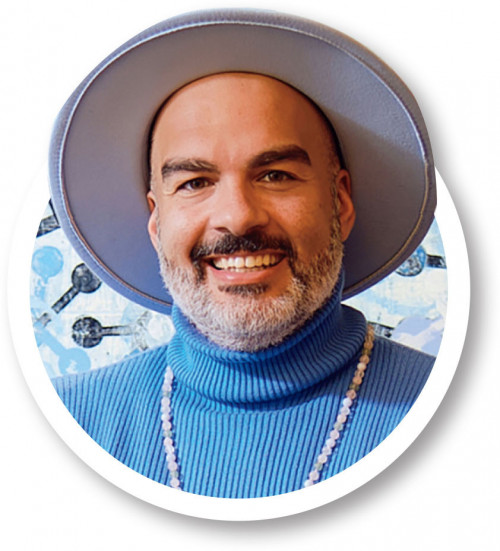
Tyler TerMeerCourtesy of Tyler TerMeer
“I keep coming back to this thought that help should never be up for debate,” TerMeer says. “SFAF received letters from the government saying that because we were providing services to trans folks and grounded in diversity, equity and inclusion, that we needed to stop that and wash that language from our website.” So SFAF filed a lawsuit against the Trump administration that is ongoing. “We filed our suit because our values weren’t up for sale and our mission wasn’t up for negotiation. That’s what’s resonating with me now.”
“When Cleve came to me,” TerMeer continues, “it felt like it was coming from the same place as in the early days of the movement, the same urgency, the same moral clarity, the refusal to accept that preventable suffering is OK.”
“The HIV movement has taught us so much about values,” TerMeer adds. “We have to fight for each other, and we have to show up for each other. We don’t have to accept a system designed to treat people as disposable. Health Is Primary is about asking the country to remember that.”
“The question isn’t whether we know how to save lives,” TerMeer says. “The question is if we have the courage to do it.”
Go to SevenDaysInJune.org for more information.
A National Call to Elevate Health as a Governing Priority
By the Seven Days in June Campaign
The health of Americans is on the ballot in 2026. Medical research, affordable access to health care and treatment and strong public health systems are fundamental to our quality of life, economic stability, work-force strength and national security. Health is not a niche issue. It touches every person, family, employer, community and local economy.
Doriot Kim
When health systems are underfunded or destabilized, people suffer, families are driven into bankruptcy, communities lose services and the nation becomes less prepared for the next crisis. Gutting global health infrastructure exacerbates political instability and threatens U.S. security interests. This weakens our nation’s global influence and does nothing to reduce the federal deficit.
Budget cuts to Medicaid, the Centers for Disease Control and Prevention and the National Institutes of Health are threats to the health of all Americans. Many cuts passed by Congress last year will not go into effect until after this fall’s election, when they will cause severe local economic damage, the loss of over a million jobs, billions in reduced tax revenues and lost state GDP.
Seven Days in June: Health Is Primary is a decentralized, grassroots-driven campaign to focus local media attention on how funding cuts, as well as policy and regulatory changes, will devastate local communities. From June 1 to 7, thousands of local organizations and activists will demand candidates for federal and local office in 2026 to clearly articulate how they will:
- Improve affordability and access to care and treatment;
- Sustain and strengthen biomedical research;
- Protect and modernize domestic and global public health infrastructure;
- Provide stability for seniors, veterans, rural communities, people with disabilities, working families and others reliant on accessible, affordable health care.
Local groups and advocates will organize town halls, panel discussions, candidate forums, demonstrations, marches, rallies, vigils, interfaith services, social media campaigns and other tactics as appropriate for their organizations and communities.
Our goal is to establish a civic expectation that health must be treated as a core governing responsibility, regardless of ideology or party. Working together, we can build a healthier nation.
Nina Uy
Why This Moment Matters
Across the country, chronic diseases are affecting more Americans and account for the majority of U.S. health spending. Preventable conditions are too often detected late, compounding costs and suffering. Preventable disease outbreaks have reemerged as vaccination rates have declined.
Strained public health workforces and disease surveillance systems are already near a breaking point. Reductions in biomedical research funding slow innovation and threaten future advances in prevention and treatment. Community hospitals and safety-net providers face mounting financial pressure.
Chaotic and inconsistent health investment carries real consequences. Short-term politics should not undermine long-term health security.
Sponsors of this initiative include:
- Organizations, leaders and advocates focused on heart disease, cancer, diabetes, HIV and AIDS and other chronic or life-threatening conditions;
- Human rights and civil rights leaders;
- Public health officials, health care workers and medical professionals;
- Biomedical research institutions, academics and scientists;
- Labor and workforce leaders;
- Faith communities and faith-based service providers;
- Senior, veteran and disability advocates and organizations;
- Hospital and health system leaders;
- Business and civic organizations.
Health is not ideological. Health is primary.
Here’s What You Can Do:
- Endorse the Seven Days in June: Health Is Primary campaign;
- Organize or cosponsor town hall meetings with health department officials, agency heads, service providers and elected officials to examine the impact of health cuts on your local communities;
- Demand clear and specific commitments from those running for office to protect and strengthen America’s health systems through candidate forums, questionnaires and published scorecards;
- Participate in rallies, demonstrations, AIDS Memorial Quilt displays, social media campaigns as appropriate for your organizations and communities;
- Celebrate your local health care heroes, the hard-working people whose skill and compassion are the backbone of America’s health care system;
- Reaffirm the centrality of compassion, empathy and service as core values of every faith tradition through interfaith solidarity;
- Gather at sunset on Friday, June 5, for a candlelight vigil to honor those already lost and the millions more who will certainly die if funding is not restored.


Comments
Comments