

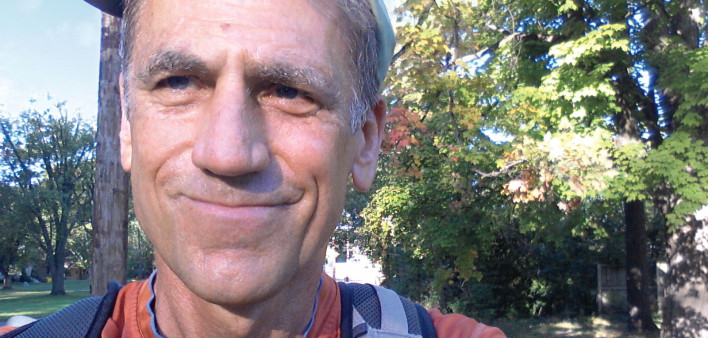
In my memory, I can still see myself walking slowly south down Michigan Avenue on that cold, windy spring day in Chicago, like a lost little boy in a big city, my feet moving but my body frozen in fear from what was printed on that piece of paper in my pocket: my full name, James Michael McColly, and that dreaded word underneath: positive.
For those of us who live with HIV, there is the life before we found out and the life we must choose to live every day thereafter. As survivors, many of us carry a burden of profound grief. Anger, too, can haunt us. But there are gifts bestowed on us from the wisdom of suffering that we must learn to share.
When I discovered I had contracted HIV, I was performing a monologue in a small theater in Chicago. Devastated, sickened by the drugs I was taking, terrified I was going to fall apart onstage, I sat behind the curtain and called forth the faces of all the people I could imagine—friends, family, students, coworkers and all the people I’d lived with as a Peace Corps volunteer in Senegal. Though I went blank one night and had to be handed my script, I managed, and the show went on.
I often think that having to perform that show, having to entertain and make people laugh, was critical for my survival—not only in those first days of my diagnosis but also for the years that have followed.
Teaching, writing and performing would be a way to survive, to heal, to give back. And for 25 years, this is what I did.
My first book was a collection of essays by immigrant students that I gathered while teaching English as a second language—poignant and sometimes painful stories of walking through jungles and deserts, surviving in small boats at sea, fleeing men with machine guns, watching families get tortured and working humble and dangerous jobs in Chicago.
My second book, The After-Death Room, chronicles my journey from Africa to Asia to America reporting on the creative and dedicated work of AIDS activists, doctors and traditional healers. From orphanages and clinics in South Africa to brothels and back alleys in Thailand, to prisons and homeless shelters in the United States, to temples and hospitals in India, I recorded hundreds of stories of dying people who did not have access to the very pills in my own pocket.
Eventually, to my surprise and anger, I realized that though my writing and teaching were of benefit to others, they had become a shield for me to hide behind, a way for me to avoid the corrosive shame and sadness I’d been carrying all these years from before my diagnosis.
How is it that we can spend a lifetime trying to be compassionate and caring for others and yet neglect ourselves?
Both before and after I contracted HIV, I had taken refuge by hiking in natural landscapes. It was a hobby I inherited from my parents, but I’d never understood how beneficial it truly was—not only for my physical and emotional well-being but also for my spiritual health. I hiked for adventure and to exercise, but I didn’t realize I was letting my body be soothed and nurtured by nature’s beauty and wonder.
Then, a few years ago while hiking in Scotland and England, I began to experience various emotions and physical sensations, feelings both of joy and grief, especially when I spent long days on my feet. My body seemed opened and energized in a way I’d not felt since I was a boy. My legs eagerly wanted more. Getting back on a plane and returning to Chicago felt like torture.
When I got home, I made up my mind that I didn’t have to stop walking. I could listen to my body’s desire and walk across Chicago. And so I did.
Taking off from my apartment, I walked 63 miles along the shores of Lake Michigan, through the city and the polluted industrial lands of Indiana, and ended up at America’s most urban of national parks, the Indiana Dunes—ironically, the place where I used to hike when I’d first learned of my HIV diagnosis.
Though I didn’t realize it, I had made a spiritual pilgrimage of sorts, letting the land, with all its wounds and beauty, carry and hold me and educate and inspire me as I walked mile by mile through this metropolis, the very place where I have lived and worked and no doubt will die.
With intention, we need not travel far to feel our legs firmly on the ground, our minds awakened by perception and our hearts animated by the miracles of nature and human creativity. Wherever we are, we can set out and find salvation in the world below our feet.
What three adjectives describe you?
Addictive, empathetic, adventuresome.
What is your greatest achievement?
Publishing three books: The World Is Round, The After-Death Room and Walking Chicago’s Coast.
What keeps you up at night?
The cowardly and greedy behavior of those in power.
If you could change one thing about living with HIV, what would it be?
Erasing the stigma and misinformation people have about it.
What is the best advice you ever received?
Read widely and learn another language.
What drives you to do what you do?
Love.
What is your motto?
“Carpe diem.”
If you could be any animal, what would you be? And why?
An eagle or hawk to fly and to float above the earth on the wind.
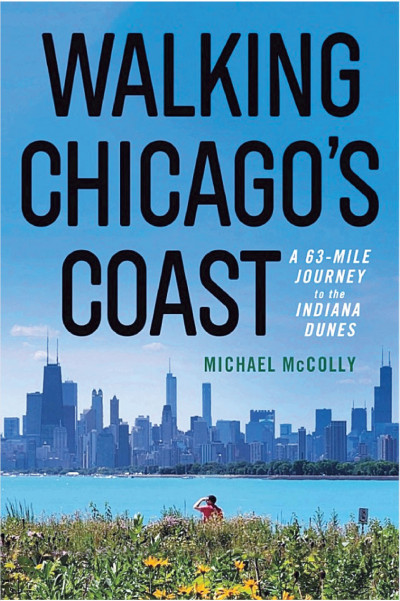
“Walking Chicago’s Coast”Courtesy of Michael McColly
Click here to purchase a copy of Walking Chicago’s Coast.
Read other POZ Stories or share your own at poz.com/stories.


Comments
Comments