

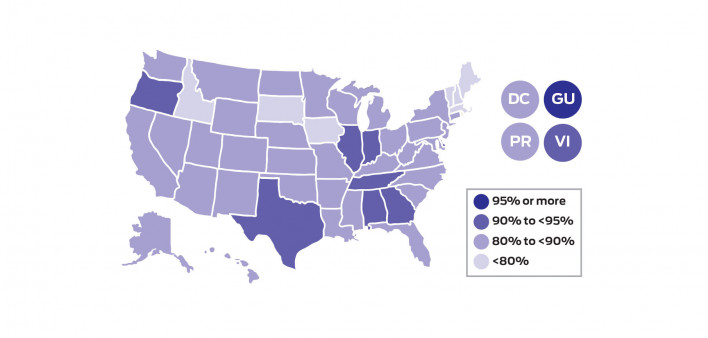
New data from 2024 show that over 90% of clients in the federal Ryan White HIV/AIDS Program reach viral suppression. In other words, their viral load is undetectable. Nationally, about 67% of people diagnosed with HIV were undetectable in 2023.
According to the new 2024 Ryan White HIV/AIDS Program Annual Data Report, the “continued, steady improvements in viral suppression could be due to innovations in care delivery, such as rapid antiretroviral therapy (ART) or new medication options (e.g., two-drug combinations, long-acting injectable medications).”
The report shows that 47% of Ryan White clients are 50 or older, 75% are members of racial or ethnic minorities and nearly 50% are covered by Medicaid and/or Medicare. Of note, the report did not include data on LGBTQ people—including transgender people—who are living with HIV and receiving Ryan White support, although this population is disproportionately affected by the epidemic.
In 2024, a total of 601,853 clients received services from providers funded by Ryan White—the most ever served in the agency’s 35-year history, according to a press release about the report. This accounts for over half of people diagnosed with HIV in the United States.
The federal Ryan White HIV/AIDS Program provides HIV services for low-income people by funding cities, counties, states and local community- based organizations that provide HIV care, treatment, prevention and essential services.
Despite successes highlighted throughout this latest report, the Trump White House and Republican leaders in Congress aim to gut federal HIV funds.
The Ryan White HIV/AIDS Program launched in 1990 after Congress passed the Ryan White Comprehensive AIDS Resources Emergency (CARE) Act. The program is administered by the Health Resources and Services Administration (HRSA).
“For 35 years, HRSA’s Ryan White HIV/AIDS Program has transformed HIV from a death sentence into a manageable chronic condition by ensuring access to comprehensive care, medications and essential support services nationwide,” said HRSA administrator Thomas Engels in a press release. “Today’s data underscore the critical role of the Ryan White HIV/AIDS Program in improving health outcomes in communities across the country.”



Comments
Comments