

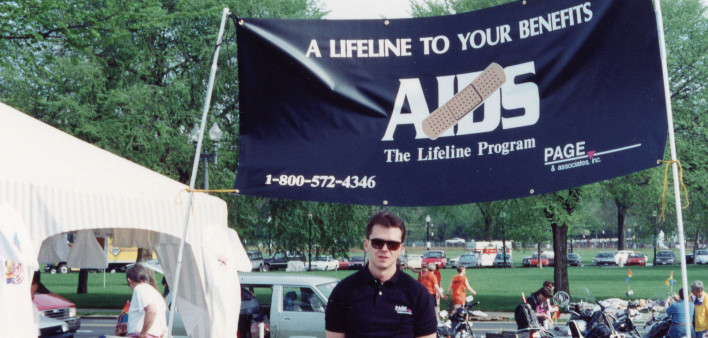
At one time, an AIDS diagnosis was more than just a health issue—it was a major financial hit. Between potentially losing work and having to pay for medications and other bills, people with AIDS often faced financial problems on many fronts. Viatical settlements, arrangements in which an investor paid cash (a percentage of the full death benefit) for the life insurance policy of a person with AIDS and received the full payout upon the person’s death, became one potential Band-Aid solution to AIDS-related money woes. Matt Nadel’s new film, Cashing Out, part of The New Yorker Documentary series, available on YouTube, highlights the experience of people who accessed these settlements as well as those who were unable to.
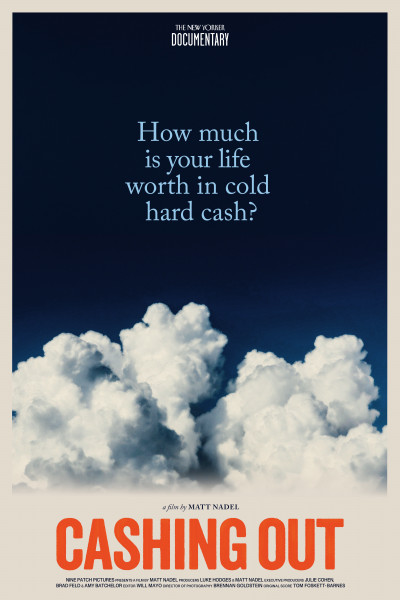
Promotional poster for “Cashing Out”Courtesy of Matt Nadel
For Nadel, viatical settlements were not only a peculiarity of AIDS history but also a part of his family history. Nadel began making the film after he learned that his father was an investor in viatical settlements. Nadel spoke to POZ about the “moral responsibility” he felt upon learning that he was a beneficiary of the profits from these settlements and why this film serves as an indictment of our public health system. This interview has been edited and condensed for length and clarity.
When did you first hear about viatical settlements?
It was 2020, back home in Florida in the early days of COVID-19. People were just starting to talk about a vaccine. I was out on a walk with my dad, and I said, “Obviously, I want there to be a vaccine, but I can’t help but chafe at the fact that some executives at pharmaceutical companies are going to make a ton of money off of this pandemic that has robbed so many people of so much.” And my dad was like, “What do you mean?” I was like, “Why such a defensive response?”
He shared that he was involved in this industry as an investor. Frankly, my initial response was disgust. I was like, “How could this happen? That’s so ghoulish.” He said, “A lot of people really needed the money,” and “It’s not all bad.” I was like, “OK, you’re just trying to protect your own reputation.”
I started doing my own research. I read a bunch of the coverage of this industry in the gay rags from the ’80s and ’90s and watched archival footage. It became clear to me that this wasn’t just a story of pure evil but that the government was giving people so little that people were clinging to whatever options they had to access resources, dignity and joy. I thought, OK, there’s some genuine moral ambiguity here. But also, I would like to spend my time exploring it as part of a personal reckoning process. I did interviews with more than a dozen people who had interacted with this industry, and among them were Scott Page, Sean Strub and Dee Dee Ngozi Chamblee. Meeting them was when it became clear that there needed to be a film.
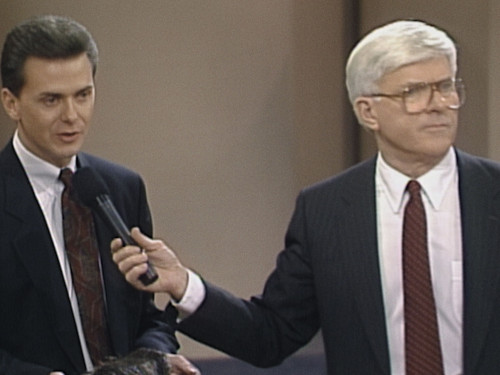
Scott Page (left) on “The Phil Donahue Show”Courtesy of Matt Nadel
How did you find them?
I spoke to lots of people I could track down who appeared in old news coverage. I found Scott [who used a settlement to provide for his partner and is now an expert in the field] because he appeared in an old Donahue episode. Sean was mentioned in an article in POZ. [Strub founded POZ magazine using money from his viatical settlement.] Dee Dee obviously did not come up in my search for stories around viatical settlements because she could not access one. That’s her role in the film. It became clear to me that there’s a bigger question: What is this country doing that to have some dignity, people need to sell their life insurance to live? What do people who don’t have life insurance policies then do?
When I spoke with Dee Dee, she said, “I had this whole fantasy of what I would do if I had the money. I was going to go to the beach and wait out these days, and the pain of it wouldn’t even be able to affect me. And it was seeing that other people got to realize those fantasies and that I didn’t that was part of what motivated me to stand up and start fighting.”
The fact that this Industry had sort of played a role In her fantasy life and then played a role in motivating her to pursue activism, which, of course, culminated in her becoming the first Black trans woman ever honored at the White House—I was like, “You need to be in this movie.” [In 2011, Chamblee was honored as a Champion of Change by President Obama.]
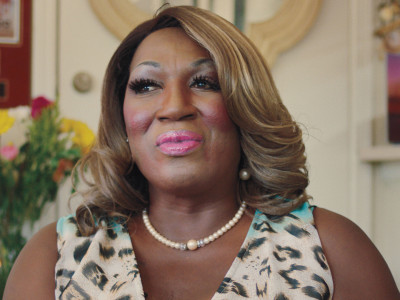
Dee Dee Ngozi ChambleeCourtesy of Matt Nadel
How did you balance the historical aspects of the film with the personal story about your family?
For me to make this film and not let the audience know about my personal connection would be dishonest. Scott, Sean and Dee Dee were showing up with total vulnerability, sharing with me so indiscriminately, so vulnerably, so beautifully in such detail about incredibly difficult parts of their lives. For me to turn around and say, “Well, I’m going to protect my privacy, because I don’t want the world to judge me” or “I want to preserve my own reputation as an objective storyteller” would have felt totally wrong. I don’t believe that there is such a thing as an objective storytelling standpoint. We all come at these questions about America and about history from our particular positions, so let’s just disclaim it.
After your research, in editing the film, did you come to a thesis about viatical settlements?
Going in, I did not have a thesis, and that is rare for me. I went in feeling suspicious. Then I met Scott and was feeling like, What do I do with the disgust that was my initial reaction to this industry now that I know that it actually did help some people?
I say in the film that I think this industry was a net good at a time when people were so desperate for this kind of help, whether it be to buy medication or pay rent or because they knew they were going to die. To go on one last vacation and just experience joy at a time when the world told them joy shouldn’t be available to them, that really matters. I don’t want to sit on this decades-later high horse and be like, “Capitalism: bad!” but also capitalism: bad! The fact that this industry had to exist in the first place—that is the object of my disgust. This history serves as an indictment of our public health system that had to come to this, that people had to cash in on their life insurance to live.
For the film, you spoke to people who sold their policies. Did you try to get people on camera who had bought policies, aside from your dad?
I tried to find them in the preinterview process, and I did not have a lot of luck. I understand why: A lot of those folks did not have a very emotional connection to this industry. It was marketed to them as an investment. That’s when I turned to the archive. I did not have a hard time finding people who were willing to go on camera and complain in the ’90s, when it was much less out of fashion to appear frustrated that folks with HIV hadn’t died.
How willing were you to implicate yourself or your family in terms of having benefited from viatical settlements?
I was reluctant, but I felt like I had a moral responsibility. Those profits trickled down into my life. I am a beneficiary. And I’m also a gay man who benefits every day from activists and from people living with HIV who submitted their bodies to science and screamed in the streets and fought for an accelerated drug approval process.
I am a beneficiary of their work. I was reluctant, but it felt like this is such a small submission of my privacy compared to the incredible bravery that Scott, Sean and Dee Dee displayed by participating in the film, but also the incredible bravery that people with HIV have displayed for so many decades fighting for basic human rights.




Comments
Comments