

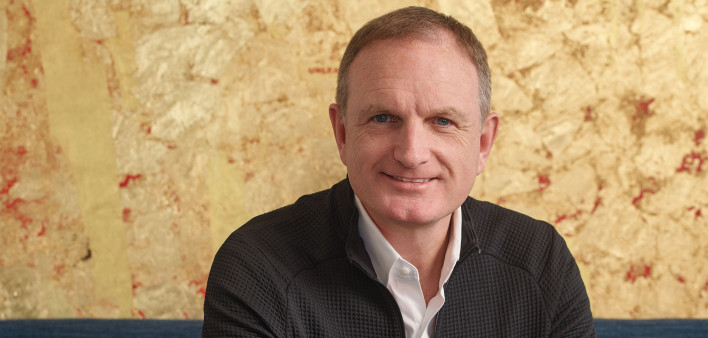
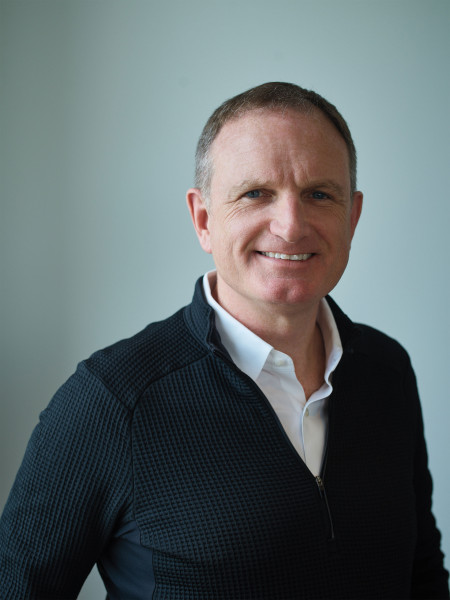
In 2026, Kyle Clifford became the first openly HIV-positive chief executive officer of amfAR, The Foundation for AIDS Research. Since the early days of the epidemic, amfAR has championed public policies and funded scientific breakthroughs that have improved and saved countless lives worldwide. As amfAR’s new CEO, Clifford will not only continue to build upon the organization’s legacy of action on behalf of and in support of people living with HIV, but he will also lead amfAR in the next leg of the marathon that is finding a cure for HIV.
Kyle CliffordBill Wadman
“Now is not the time for us to slow down or pull out of the race,” says Clifford. “It is time for us to gather the resources we have and truly come together in these challenging times, continue to stand shoulder to shoulder together as a community and finally finish the job.”
amfAR was born of conversations between friends Mathilde Krim, PhD, and Joseph Sonnabend, MD, about a mysterious disease affecting young gay men in the United States that emerged in 1981. In 1982, a Centers for Disease Control and Prevention (CDC) report named the disease acquired immune deficiency syndrome, or AIDS, but at the time, government officials barely addressed the disease’s growing death toll.
In 1983, Krim, a researcher at New York’s Memorial Sloan-Kettering Cancer Center, and Sonnabend, an immunologist and physician, along with AIDS activist Michael Callen and others, founded the AIDS Medical Foundation (AMF) in New York. It was the first private organization in the world dedicated to raising funds to support scientific and medical research on AIDS. Two years later, AMF merged with the National AIDS Research Foundation, which had been incorporated in California in August 1985, to form the American Foundation for AIDS Research. Krim and Michael Gottlieb, MD, an author of the CDC’s first report on AIDS, became amfAR’s founding chairs; actress-turned-activist Elizabeth Taylor joined them as founding national chairman.
Krim and Taylor were among the first people to visit Capitol Hill and advocate for people living with HIV and AIDS. As a result, amfAR was instrumental in establishing early HIV legislation, such as the HOPE Act (the first comprehensive AIDS legislation), as well as AIDS-related legislation like the Ryan White CARE Act and the Americans with Disabilities Act in 1990.
As the first person living with HIV to helm amfAR, Clifford represents the progress that has been made regarding the virus.
Born and raised in Ireland, Clifford, who came out as gay at age 19 in the early 1990s, grew up amid the HIV epidemic and experienced firsthand the devastation, loss and fear that AIDS wrought in his own community.
Clifford was diagnosed with AIDS on Christmas Eve, 2012, by the family doctor in his hometown. The news came as a shock, as he had not felt at all sick. He heeded his doctor’s advice and got on medications, accepted support from his community and found comfort in established HIV resources, like POZ. Over time, he became obsessed with the search for a cure; one organization that kept coming up in his research was amfAR.
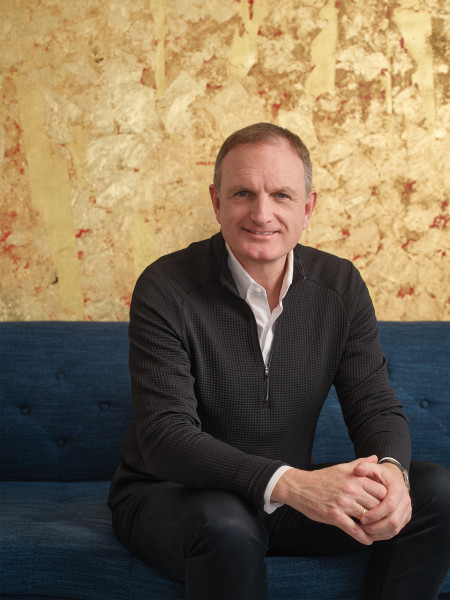
“I am an HIV-positive man who is lucky to be alive because of organizations and the activist community that were fighting to find the solutions and treatments that were provided to me when I got my diagnosis,” says Clifford.
Years later, while living and working in New York City, where only his doctor and his husband knew he was HIV positive, a headhunter reached out to Clifford about a role at an organization funding research for people with compromised immune systems. His interest piqued, Clifford had some follow-up conversations that confirmed his hope: the immune-compromised people in question were HIV positive, and the organization was amfAR.
“I knew amfAR for funding very unique research,” says Clifford. “I identified way back then with amfAR as an organization playing a role in trying to find solutions for a person like me who was newly diagnosed.”
In 2020, Clifford—after having worked at the Ireland Funds, a global philanthropic network that raised over $650 million to benefit more than 3,200 organizations in Ireland and beyond—became amfAR’s chief development officer, a position he maintained for five and a half years. After former CEO Kevin Robert Frost retired, in March 2025, the board of trustees named Clifford as his successor.
On World AIDS Day 2025, Clifford came out in an even bigger way, sharing his HIV status in a heartfelt video where he expressed how advances in research thanks to organizations like amfAR had transformed his life.
“I wanted it to be known to the HIV-positive community, but also to the people, activists and researchers who played a role in fighting the epidemic, that the next leader of amfAR was committed to the fight and would wake up every day with one goal: to finish this job and make AIDS history,” he says. “For me, this is deeply personal and deeply gratifying. It is a responsibility I take very seriously.”
The search for a cure has come with tremendous challenges, such as the millions of lives lost to HIV, policy shifts and funding cuts.
In 2025, the U.S. government terminated or froze over 7,800 biomedical and behavioral research grants funded by the National Institutes of Health and the National Science Foundation. Indeed, the Trump administration’s proposed 2026 budget cut their funding by $32 billion.
As a nonpartisan biomedical research organization funded entirely by private philanthropy, amfAR is able to continue to fund novel HIV research. Following the lapse in federal funding, the organization issued a call to action to reengage existing contributors and invite new donors to fund groundbreaking science through amfAR. The support base has been overwhelmingly responsive.
The Trump administration also cut international HIV aid by dismantling the U.S. Agency for International Development (USAID) and the U.S. President’s Emergency Plan for AIDS Relief (PEPFAR), both of which provided HIV treatment and prevention services to developing countries. The CDC and the Department of Health and Human Services also face budget cuts that may harm people living with HIV who rely on federally funded services domestically and internationally.
Since it operates independently of state and federal funding, amfAR has earned a reputation in Washington, DC, for providing high-quality data on the impact of budget cuts and policy changes in the form of reports that show decision-makers the direct impacts of changes to public policies.
“Whether it is with this administration or future administrations, we allow data to be our voice,” Clifford says.
amfAR is unique among research organizations in that researchers can share their innovative ideas directly with the organization and get their projects funded in three to four months. The idea is that amfAR can launch projects that may then secure larger institutional funding.
“For us, it is about ensuring that a rigorously reviewed, smart idea with the right researcher gets funded,” says Clifford.

Kyle CliffordBill Wadman
Since its creation, amfAR’s primary purpose has been to find a cure for HIV.
In 1986, amfAR awarded $1.5 million in grants for experimental HIV research. With its first international research grant in 1987, it funded a landmark study in Kenya showing that HIV can be transmitted from women to men. The organization’s early funding laid the foundation for our understanding of HIV and AIDS today. By 1990, amfAR had established a nationwide community-based clinical trial network with 16 sites across the country, including HIV hubs in New York City and San Francisco.
Among various other scientific breakthroughs, amfAR contributed funding to research that led to the development of four of the six major classes of antiretroviral drugs that revolutionized HIV treatment, helping people achieve viral suppression and reducing AIDS-related deaths. These drugs also help prevent HIV transmission from mother to child, a mode of transmission that has been nearly eliminated in many parts of the world.
Over time, as the needs of people living with HIV have evolved, so has amfAR. Today, amfAR funds cutting-edge research projects that focus on other conditions, including cancer, hepatitis, kidney disease and more. In fact, amfAR-funded research by longtime grantee Drew Weissman, MD, PhD, led to the development of mRNA COVID-19 vaccines. The organization has other exciting projects in the pipeline, including one focusing on aging with HIV as well as an Alzheimer’s research project and a cancer research initiative.
“The work we do impacts every household here in the United States,” says Clifford.
Over 41 years, amfAR has raised $950 million and funded more than 3,800 research grants worldwide. Clifford is hopeful that in his lifetime, a range of easy-to-access and easy-to-administer cures will become available to a global population.
amfAR’s naming its first openly HIV-positive CEO is a testament to the work of the advocates, scientists and healthcare providers that have led the organization for the last four decades. Under Clifford’s leadership, amfAR will continue to fund the science that can transform lives.
To those facing a new HIV diagnosis Clifford says, “Have comfort in knowing you are not alone. There is a tremendous amount of support out there for when you are ready to lean into that. The support is there, and everything is going to be OK.”

Doriot Kim
2026 amfAR Fundraising, Research and Policy Initiatives
The nonprofit organization continues to advance scientific discovery.
Every year, amfAR, The Foundation for AIDS Research, holds five major fundraising galas across the globe to bring together science and culture, generate funding for biomedical research and remind people of the need to stay focused on finding a cure for HIV. In March 2026, amfAR held its fifth annual fundraising gala in Palm Beach. Hosted by actress Christie Brinkley at the home of philanthropists Anne and Chris Flowers, the gala featured presentations to honorees, a live art auction and performances from Grammy Award winners John Legend and Gloria Gaynor. This year, the event raised $3.4 million, bringing the event’s grand total raised since its launch in 2022 to nearly $20 million. Kyle Clifford, amfAR’s CEO, addressed attendees.
“When I was diagnosed [with HIV], I was fortunate to walk out of that doctor’s office with treatment options. But I also walked out with something just as important, something I would argue is of equal or greater value: hope. Hope that researchers, somewhere, were working to find a cure. That is what amfAR provides,” says Clifford.
Thanks to decades of groundbreaking research on antiretroviral therapies, people with HIV are living longer than ever, and amfAR continues to fund scientists’ research concerning how HIV interacts with the biology of aging. In March, amfAR’s vice president of research, immunologist Andrea Gramatica, PhD, sat down with neuroscientist Kelsey Hopland, PhD, amfAR’s program officer, to discuss the current understanding and future research of HIV and neurodegenerative conditions, like Alzheimer’s disease.
The duo called for the development of a coordinated initiative focused on HIV and neurodegeneration to understand how cognitive and biological changes evolve. Using modern computational approaches, like machine learning, in groups of people living with HIV and Alzheimer’s, Gramatica says researchers can identify patterns over time to answer fundamental questions about aging and cognitive decline. This exciting scientific area sits at the intersection of research on immunology, virology, neuroscience and aging.
amfAR continues to react to the ever-changing global landscape. In September 2025, the United States government released the America First Global Health Strategy, which outlined plans to decrease foreign aid to the President’s Emergency Plan for AIDS Relief (PEPFAR) and announced bilateral health cooperation agreements known as memorandums of understanding (MOUs) with Ethiopia, Kenya, Liberia, Mozambique, Nigeria, Rwanda and Uganda to in-crease their domestic health spending. In April, amfAR responded with a report titled Unmeasurable and Unaccountable that outlined problems with the MOUs, in-cluding flawed metrics and a lack of transparency in data.
“PEPFAR is our country’s most successful global health program because of its transparency, target-setting and organizational structure. Gutting what made the program impactful will squander millions of U.S. taxpayer dollars and may place just as many lives at risk,” says Greg Millett, vice president and director of policy at amfAR.
Later in April, amfAR launched a $2 million AI-enabled study to map the small proportion of latently infected cells, known as the HIV reservoir, that persist despite treatment and enable the virus to rebound when a person stops antiretrovirals. The HIV reservoir can contribute to chronic inflammation, cardiovascular disease, cancer and neurodegeneration. The HIV Immune Atlas Study will use AI to sequence and analyze cells and tissues that make up the viral reservoir, like those in the gut, lymph nodes and brain.
amfAR has a history of supporting early-career scientists. Most recently, it announced a new class of recipients of the highly competitive Mathilde Krim Fellowship in Biomedical Research. The fellowship provides scientific investigators $180,000 in funding for unique research on HIV prevention, treatment and cure strategies over the course of two years with the possibility of $50,000 in additional future support.
This year’s recipients include Delphine Depierreux, PhD, of Fred Hutchinson Cancer Center in Seattle; Ebony Gary, PhD, of The Wistar Institute in Philadelphia; and Shalini Singh, PhD, of Northwestern University in Chicago. Previous Krim Fellows have cited the award as critical to jump-starting independent careers in HIV research.




Comments
Comments