

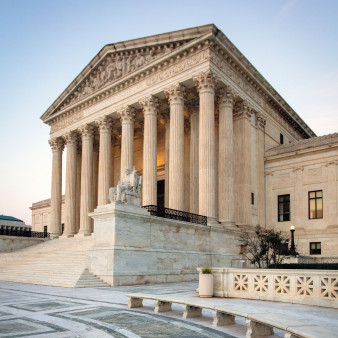
The Trump administration continues to make cuts that threaten the lives and health of people living with or at risk for HIV, but decisions in two Supreme Court cases that preceded Trump’s second term will also have an impact.
In the Kennedy v. Braidwood ruling, announced in June, the justices voted 6–3 to uphold a mandate for insurance coverage of prevention services, including HIV pre-exposure prophylaxis (PrEP), hepatitis C testing and cancer screenings. Under the Affordable Care Act, insurers are required to cover services recommended by the U.S. Preventive Services Task Force (USPSTF) at no cost. In 2022, conservative businesses in Texas challenged the PrEP mandate on religious freedom grounds, arguing that because USPSTF panel members are not appointed by the president or confirmed by the Senate, the coverage requirement is unconstitutional.
HIV and LGBTQ advocates generally hailed the ruling as a victory, but it comes with a caveat. While the justices ruled that the USPSTF’s structure is constitutional, they said that the Secretary of Health and Human Services—currently Robert F. Kennedy Jr.—has the power to appoint and remove USPSTF panel members and veto their recommendations. This means Kennedy could replace members with ideological allies, as he recently did with the Advisory Committee on Immunization Practices, which makes vaccine recommendations.
In a second decision, the Supreme Court ruled 6–3 that states can block Medicaid payments to Planned Parenthood. Although best known for its abortion services—federal funding for abortion is already banned—the nonprofit organization is also a major provider of HIV testing, sexually transmitted infection treatment, cervical cancer screening and other health services, especially for low-income people and those in rural areas. Around 40% of people living with HIV rely on Medicaid.


Comments
Comments