

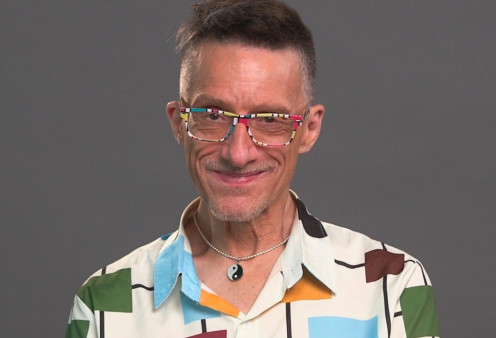
Paul Aguilar has been living with HIV for 38 years and on disability since 2005. So he was shocked to learn that the Social Security Administration was suddenly cutting his disability benefits and claiming that he must pay back $200,000—due in 30 days.
“The fact that they cut off my medical care scares me more than anything else,” Aguilar, an advocate and long-term survivor who lives in San Francisco, tells ABC7 News (watch the segment below). “If I can’t access my medical care, it means I can’t access my medications, which means eventually my HIV…will spiral out of control and I could be dead in a year or two.”
Aguilar, 61, has retained a lawyer and reached out to legislators, ABC7 News reports. He has also requested a waiver with Social Security. His doctor, renowned HIV expert Monica Gandhi, MD, confirmed to the news channel that he should have been receiving the benefits for his health condition.
Aguilar added, “Given my disability, I wouldn’t be able to do a 40-hour a week job—there’s just no way. I’m physically unable to do so.”
And yet the letter from Social Security says he shouldn’t have received disability money from 2014 to 2025.
Social Security wants my dear friend ( I am also his doctor) to pay back $200K? He is an AIDS activist and awesome! This is a mistake. He was the Grand Marshal of the PRIDE Parade 2 years ago & I was honored to be on the with him and his Mondrian outfithttps://t.co/q3MUk4Sb9O
— Monica Gandhi MD, MPH (@MonicaGandhi9) April 4, 2025
Aguilar suspects his problems can be traced to Elon Musk’s so-called Department of Government Efficiency (DOGE) and related efforts to shut down and streamline numerous programs and services. For more on that topic, see “HIV Activists March in NYC to Protest “Death by 1,000 Musk Cuts” and “HIV Groups React to Federal Funding Cuts, Mass Layoffs.”
“I have worked over the years but faithfully reported my earnings as I was instructed, including being part of California’s Working Disabled Program,” Aguilar told the Bay Area Reporter, explaining that he started working in 2022 because he thought it wouldn’t affect his disability.
According to the newspaper, someone earning $1,550 a month or more risks losing their Social Security disability benefits. Aguilar said he earned an average of $2,200 a month last year but that his rent at Marty’s Place—which provides housing for people with HIV—was $1,200 a month without a subsidy. (A low-income housing cooperative, Marty’s Place is currently fighting to say open.)
“I’m an almost 62-year-old man living on a fixed income in the most expensive city in the United States to live in, and they’re cutting off my income,” he said to ABC7 News. “That’s frightening!”
Aguilar is no stranger to battling for his rights. A longtime HIV activist, he was honored as the Lifetime Achievement Grand Marshal for San Francisco Pride 2023. In 2022, the annual POZ 100, which that year celebrated Latino advocates, featured Aguilar on its list.
He has avidly supported HIV research. In recent years, he participated in a University of San Francisco study focused on monthly injections as a replacement for daily antiretroviral pills to treat HIV. In fact, he was featured earlier this month in a feature on long-acting injectables. For more, see “Rethinking HIV Treatment After 30 Years of Pill.”
The 2022 POZ 100 profile on Aguilar reads in part:
A published writer, videographer and artist, Paul Aguilar is a third-generation San Franciscan of Mexican descent who was diagnosed with HIV in 1988 at age 25. He has long been a committed HIV and AIDS advocate and service worker. He volunteered at the Shanti Project for many years and is a member of the HIV Advocacy Network and chair of the HIV Caucus of the Harvey Milk LGBTQ Democratic Club. He’s also a resident and board member of Marty’s Place, the only self-governing affordable housing cooperative for people living with HIV and AIDS in the United States.



4 Comments
4 Comments