

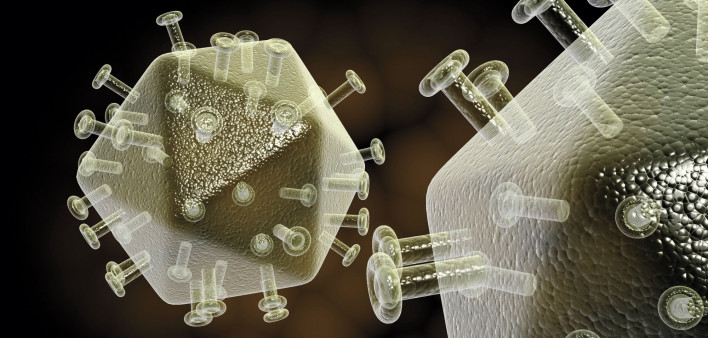
Left untreated, people with HIV almost always develop progressive illness as the virus destroys their CD4 T-cells, leaving them susceptible to opportunistic infections and cancers. HIV inserts its genetic blueprints (known as a provirus) into the DNA of human cells and establishes a viral reservoir that is unreachable by antiretroviral drugs and usually invisible to the immune system. But a small proportion of people—thought to be less than 1%—are so-called elite controllers who naturally control the virus without antiretrovirals.
Over the years, scientists have described several dozen cases of elite control, in which people maintain an undetectable viral load and remain healthy without antiretroviral treatment, and even a few cases of exceptional elite control, in which people seem to have naturally eliminated the virus. Researchers recently reported one such case in The Lancet HIV.
José Benito, PhD, of the Autonomous University of Madrid, and colleagues described the immunological, virological and clinical characteristics of the apparent exceptional elite controller, a 48-year-old Indian woman who was first diagnosed with sexually transmitted HIV-1 in 2002, after her partner was diagnosed with HIV and PCP pneumonia.
These were compared with characteristics of her partner—a 58-year-old Indian man who presumably had the same strain of the virus—as well as a cohort of elite controllers (people with at least three consecutive undetectable viral load measurements during a year or more of follow-up without antiretroviral therapy), a group of long-term elite controllers (people who maintained viral control and did not experience significant CD4 cell decline for a minimum of 10 years) and a group of HIV-negative blood donors.
Despite not receiving antiretroviral therapy, the woman maintained an undetectable plasma viral load and a stable CD4 cell count for 22 years, and she never developed any symptoms or clinical manifestations related to HIV. Her Western blot tests were reactive only to the gp41 and gp160 HIV envelope proteins but not the p24 capsid protein that is usually detectable during early infection.
Intact HIV DNA was undetectable in resting memory CD4 cells and peripheral T follicular helper cells that make up the viral reservoir. Provirus sequencing revealed only 0.82 HIV genomes per million CD4 cells, but all were defective; no replication-competent virus was detected.
Compared with the other elite controllers, the woman showed increased expression of several microRNAs and messenger RNAs with anti-HIV activity. She also had well-preserved T-cell function, with low expression of markers of cell exhaustion (PD-1, TIM-3, CTLA-4 and TIGIT), apoptosis (CD28 and CD95) and senescence (CD28 and CD57) as well as more active natural killer cells. Finally, she had lower levels of several inflammatory biomarkers, including D-dimer, TNFR1 and VCAM-1.
“Functional cure is an uncommon but feasible outcome of HIV-1 infection,” the study authors concluded. “Our findings encourage the search for therapeutic strategies that could enable people with HIV-1 to reach this level of functional cure.”
This new report adds to the handful of cases in which individuals—mostly women—may have eliminated the virus without antiretroviral treatment. California resident Loreen Willenberg, who acquired HIV in 1992, may be the first person cured of HIV without a bone marrow transplant, as she has maintained control of the virus for decades without antiretrovirals, and researchers have been unable to find any intact virus in more than 1.5 billion of her cells. (Read POZ’s profile of Willenberg in the March 2021 issue.) In 2021, researchers reported that an Argentine woman dubbed the Esperanza Patient had no evidence of intact HIV and may have achieved a natural cure, despite only taking antivirals for six months during pregnancy.
Such individuals appear to have unusually potent CD8 killer T-cell and natural killer cell responses. In some cases, latent HIV blueprints seems to be sequestered in parts of their genome where they can’t be used to produce more virus. While such cases are rare, they offer clues that may one day help researchers develop a more widely applicable functional cure.
Click here for more news about HIV cure research.



Comments
Comments