

In 2001, POZ columnist and AIDS survivor Joe Westmoreland, then 45, published the moving and vivid Tramps Like Us, a lightly novelized memoir of gay Midwestern kids in the 1970s who flee abusive homes, first to New Orleans, then San Francisco, where they dance all night to disco and punk rock, do every drug and have every kind of sex imaginable, discover who they are and knit together a family that descends from joy into caretaking and grief as AIDS engulfs them.
The book’s original publication was overshadowed by 9/11, but it was reissued in 2025. In July, Tim Murphy talked with Westmoreland, now 69 and a decades—long New Yorker, about the book and its revival for Murphy’s Caftan Chronicles Substack, which features long-form interviews with notable older gay men. Below is a brief excerpt.
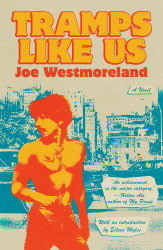
The cover of the 2025 reissue of Tramps Like UsCourtesy of Joe Westmoreland
Joe, congrats on the reissue of your book. How did this reboot happen?
My friend Eileen Myles, the poet, had been after me for a while to get the book out again, but I have a lot of health issues and didn’t have the energy to start shopping it around. So right after COVID lockdown, Eileen took the book to their agent and to the young gay editor Jackson Howard at Farrar, Straus and Giroux. They both emailed me and said they loved it and wanted to work with me.
What did Jackson say about the book?
That he thought people his age could relate to it because even though it was a different time, the core issues—moving to big gay cities from the Midwest and making friends—were the same. He said that a lot of young people don’t know a lot about what AIDS was like.
What was it like going from the 1970s into the AIDS era?
We started hearing about this new disease in the early 1980s, but we felt we didn’t do whatever gave it to you, like poppers or going to bathhouses. But by 1983 or 1984, a lot started happening fast, and we didn’t have time to think. We just had to deal with what was going on. Doctors would tell us that they knew about as much as we did, which was nothing.
What was a typical day like for you at that time?
I went to work every day [as a word processor]. My coworkers knew my friends were sick and would hear me on these intense phone calls. Also, my friends and I started doing drugs a lot more. That’s how we dealt with it. We’d go from hanging out and getting high to sitting by the hospital beds of our friends. There was a lot of confusion and emotions.
The book Is so detailed. Did you keep a diary all those years?
No. Some of it is fictionalized. In the years it takes place, I kept a sporadic journal. Even today, songs that remind me of that time and place can trigger a PTSD memory. That’s why I put all the songs we were listening to back then into the book.
How long did it take to write?
Close to 10 years. When I worked as a word processor, I’d get home around midnight and write for an hour or two. Then, after I moved from San Francisco to New York City, my CD4s dropped low enough for me to have an AIDS diagnosis, so I went on disability and joined The Writers Room, which is where I wrote most of it.
What was the writing experience like?
Like there was this story in me that had to come out. I would write in my journal for 20 or 30 minutes, fall asleep for about 10 minutes, then wake up and start writing, then edit. A couple times at The Writers Room, I cried all night, time traveling back to what I was writing about.
The drug-use scenes are by turns euphoric, comradely, surreal and upsetting. When you all are shooting up heroin together, it’s so cozy and intimate and yet so sad.
We were actually using clean needles and supplies before AIDS hit. Still, we knew about AIDS but didn’t believe it would happen to us. People were still going to the baths and not using condoms. People didn’t change their behavior immediately. Often, we asked, “Should we be doing this?” Then we’d say, “Fuck it. I want to get high, and we probably have [AIDS] already.”
What do you think when you look back on nights like that?
Looking back, maybe we didn’t need to do all those drugs to have that intimacy. But we were trying to dull the pain. Where the book ends, I go to Los Angeles, get pulled over for drunk driving, wind up in Alcoholics Anonymous and stop drinking and doing drugs.
Have you been clean and sober since?
I basically haven’t had a drink since 1987. I used to go to 12-step meetings all the time. I recently started going again to one meeting that I like. I’ve been so sick the past decade that sitting in a meeting was often hard to do. I had liver cancer, and the tumor burst, and I was in a hospital for three weeks. Thankfully, I didn’t need chemo, but prior to that, in 2007, I had colon cancer with both surgery and chemo. So my immune system is pretty run down. In 2019, I had a heart attack. The liver cancer also came back, and they had to cut out part of my liver. Then I caught norovirus, which really almost did me in.
How are you feeling now?
Better than in a long time. But I have a lot of fatigue. And I’m on a dozen pills. With sickness, you have to put your mind aside and let your body do what it has to do.
Do you want to still be writing?
I’m doing a little bit. Last summer, I wrote the afterword for the new edition because they wanted to know what happened between when the book came out in 2001 and today. So I wrote every day for a few hours.
I love your relationship in the book with your Midwest childhood friend, Ali, and how you are simultaneously best friends, brothers and lovers until he dies of AIDS.
His real name, which he gave himself, was Qalbee. We would have sex. We weren’t boyfriends but were so close that other people thought we were.
You were so young when you hit the road. Did you have a strong sense then of living this amazing bohemian life?
No! I wanted to go to college, but my dad wouldn’t sign a loan for me to go anywhere else. So well, fine, let me take off then, I thought. But there were times standing on the side of the road hitchhiking where I thought, Other kids my age are in college right now—I wonder what that’s like.
How many of the real people you based characters on died?
About half. Ali and Felipe both died in 1986, and James died in 2000. But a few of the girls in the book I’m still in touch with.
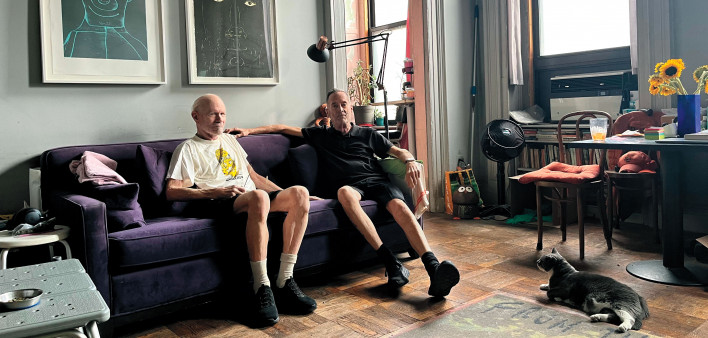
You’re in a long-term relationship with the artist Charles Atlas.
I met him a week after I moved to New York City, but we didn’t start seeing each other until a couple years later. And we’ve lived together now since 1990 on West 14th Street.
What do you want to prioritize with the rest of your life?
I would love to finish book No. 2. It’s a big mess right now. It’s about my hospital experiences but also life in New York City and reasons why I keep going.
What is a daily source of happiness for you?
My cat, Vivian. Charles will be working on his video stuff, and I’ll be listening to music, and Vivian is sleeping in her box, and everything’s quiet and OK, and that’s what I love. And the book has made me think about that—it’s about looking for my home. And now I’m here, I’m in it and I don’t want this to change.



Comments
Comments