

In February 1987, I was 31 years old and living in Cincinnati with my partner of 12 years. His name was Kenn. We were not part of the bar scene that defined many gay men—our world was quieter, shaped by couples, routines and a life that felt settled. AIDS was something we read about in The Advocate and, eventually, on the cover of Time magazine. It was serious, frightening, but it was happening somewhere else.
Then Kenn got sick. The exhaustion came first. Not ordinary tiredness, but something deeper, as though his body had begun to struggle against an invisible weight. It quickly worsened. Breathing became something that required effort he could no longer sustain. He was admitted to the ICU with pneumonia. He needed a ventilator to breathe for him. Standing at the window outside his room, listening to the rhythmic push of that machine doing what his lungs could no longer manage, I understood that the distance between my life and the epidemic was gone.
After his parents arrived, the hospital’s attention shifted in ways that were difficult to ignore. In 1987, I had no legal standing, no formal place in the decisions being made. I stood in the hallway while conversations happened inside the room—voices I could hear but was not invited to join, decisions being made about a life I had shared for 12 years.
His doctor chose a different path. He told me that Kenn had given permission for his medical status to be shared with me. Then, he quietly explained the truth: Kenn was HIV positive and had developed AIDS.
He also told me something else. I needed to be tested as soon as possible
The words did not arrive with drama. They entered the room the way medical facts often do—plain, direct, leaving no space to misunderstand. Until that moment, illness had still existed inside uncertainty. Now it had a name.
I went to the health department alone.
The waiting area felt like any other government office—functional, impersonal, designed for process rather than comfort. The seats were hard and unforgiving. The room was almost empty. The quiet felt unusual, almost out of place, as though I had arrived after something had already ended.
Beneath the fluorescent lights, the terrazzo floor carried the dull shine of countless layers of wax, polished over time into a surface that reflected light without warmth. The air was stale, carrying the faint chemical scent of the mop water as janitors began their evening rounds in the hallway. I found myself looking at that floor more than anything else, as if focusing on something solid might steady the moment. I was there to be tested. Nothing in the room acknowledged what that meant.
The exam room felt cold. Not only in atmosphere but in temperature—the kind of February chill that lingers inside an old building where heat never quite reaches the walls. Two chairs stood against the wall. A narrow metal table. Concrete block walls carrying a muted sheen. Above, a single fluorescent fixture cast flat light across the space. There was nothing on the walls. No window. Nothing to look toward except the moment that had brought me there.
A man entered and asked me to roll up my sleeve. I turned my head slightly away. He worked with quiet efficiency—needle, vial, gauze, the sharp scent of alcohol. The motions were practiced and unhurried, the routine of someone who had done this countless times. I felt the quick stick of the needle, sharp but brief. Then it was over.
When the blood draw was finished, he reminded me that I would need the number I had been given in order to receive the results. Without it, the test could not be matched to me. I tucked it carefully into my wallet, aware only that it mattered, not yet understanding how much.
I did not realize I would have to wait two weeks to return for the answer. The length of that waiting was something I could not yet imagine. I tried not to dwell on the test.
Life continued in the narrow space between not knowing and what might soon be known. Kenn was no longer in intensive care, but his hospital room was marked with a biohazard warning. Each visit required a gown, gloves and a mask—a small ritual that made the illness feel both clinical and unreal. The paper gown crinkled with every movement. The mask made my own breath feel close and warm.
I kept going to work during the day and returned to the hospital in the evenings. The rhythm formed almost without thought. Work, then visit, then home, then morning again.
The future waited in two places at once: in the hospital room, where he lay recovering or failing, and in a laboratory somewhere, where a small vial of my blood was being turned toward an answer I could not yet face.
I returned to the health department alone, again in the evening. The building was the same. The waiting area was the same. Even the examination room felt unchanged. Only one thing was different. This time, an answer was waiting.
During the two weeks since the test, I had tried not to dwell on what the result might be. Yet somewhere beneath that effort, a quieter understanding had already formed. I had begun to accept that the outcome would most likely be positive. Acceptance, however, did not quiet the anxiety. It only made the waiting more precise.
The man who entered the room that evening was not the same one who had drawn my blood. I do not remember his name or even his role. I remember only that he began by saying he was sorry. Then he told me I was HIV positive.
The words were simple and direct. I cannot recall anything that followed with clarity. Part of me was still listening, but another part had already begun to drift somewhere quieter, farther away from the room.
I felt myself pulling away from the conversation, wanting only to leave the room, the building, anything that would place distance between me and the words I had just heard.
I walked out into the February cold, the air sharp against my face after the sealed warmth of the building, carrying a truth that had no visible form. I thought briefly about going somewhere for a drink—somewhere loud enough to interrupt my thoughts.
Instead, I went home.
His parents were in the den watching television. I said hello, nothing more, and did not linger. The spare bedroom had already become mine during the difficult months before. I went there quietly, closing the door behind me, carrying news that no one else in the house yet knew.
The night passed without acknowledgement for what had changed. It was only another evening, moving forward in silence. I lay awake with my thoughts. I was not afraid—at least not in any immediate way. There was no space yet to consider what my own diagnosis might mean. Kenn was still in the hospital, still not out of the woods, and whatever future waited for me felt secondary to whether he would survive.
In the days that followed, I returned to the hospital carrying knowledge that no longer belonged only to me. I was standing beside his bed when the moment came. He asked the question that opened the door I had not yet known how to enter. I told him about the test and what it had shown. I told him I was HIV positive.
He received the news with a calm acceptance that held, beneath its surface, a quiet sense of remorse. There was no anger, no blame, no visible collapse into fear. Illness had already carried us too far for those reactions to matter. What remained was something quieter and more difficult to name—a shared recognition that whatever future waited ahead would now include us both, bound in ways neither of us had chosen.
Silence settled between us, carrying more weight than anything we might have said. I remember only the look of sorrow on his face—an expression that seemed to hold regret, understanding and a future neither of us could yet see.
Nothing about the uncertainty had changed. But from that moment on, we faced it together.
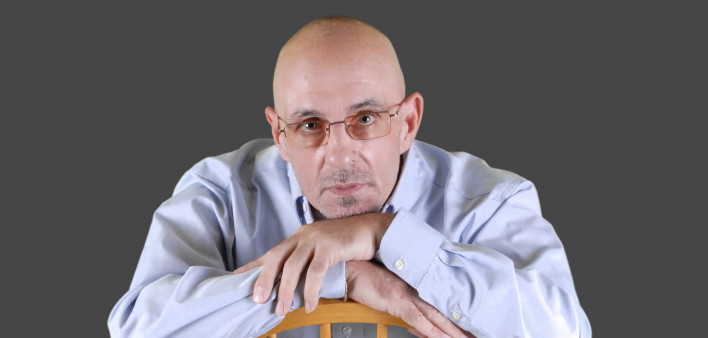
Eric Novak has lived with HIV since 1984. He is an advocate with the AIDS Clinical Trials Group (ACTG) Community Advisory Board and the author of the memoir A Life Never Promised: A Long-Term Survivor’s Story of HIV and Resilience. He lives in Columbus, Ohio.
What three adjectives best describe you?
Resilient, courageous, engaged.
What is your greatest achievement?
Being a long-term HIV survivor.
What is your greatest regret?
Not traveling more.
If you could change one thing about living with HIV, what would it be?
The stigma.
What is the best advice you ever received?
Never give in and never give up.
What person in the HIV community do you most admire?
Dr. Fauci.
If you had to evacuate your house immediately, what is the one thing you would grab on the way out?
The cats.




2 Comments
2 Comments