

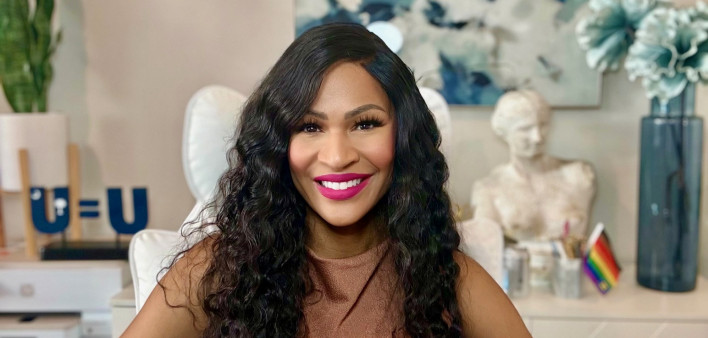
The new year definitely means a new start for Monique Carry, PhD, MA, who on January 1 became the acting executive director of Prevention Access Campaign (PAC). The powerhouse nonprofit helped confirm and then broadcast the fact that people living with HIV who achieve and maintain viral suppression through adherence to treatment don’t transmit HIV to others through sex, a fact better known as Undetectable = Untransmittable, or U=U.
Thanks to PAC, which Bruce Richman launched as a grassroots campaign in 2016, U=U has become a global movement, transforming what it means to live and love while HIV positive.
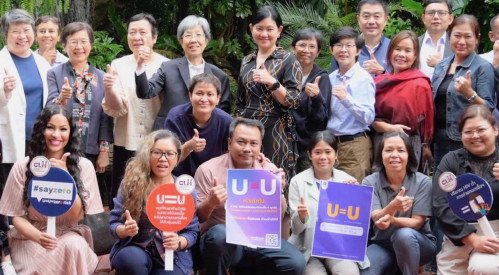
Advancing U=U in Thailand at the National Dialogue Meeting in Bangkok, 2024Courtesy of Monique Carry
As the organization gears up to celebrate its 10th anniversary, POZ spoke with the Atlanta-based Carry about her experience in global health and behavioral science—including nearly 15 years at the Centers for Disease Control and Prevention (CDC)—as well as PAC’s past successes and future goals.
Let’s start with your backstory. How did you first become involved in the HIV space?
I grew up in the era of HIV and AIDS, at a time when the epidemic was deeply present in my community, even if it was rarely named out loud. I watched a whole generation of my “play” aunties and uncles—people who helped raise me and shaped my early life—slowly disappear. There were whispers, silences and stigma but very few answers. What I understood early on was that this epidemic was not random. It was deeply shaped by who you are, who you love and where you live.
That understanding stayed with me. Even before I had the language for it, I could see how structural barriers, isms, phobias and silence shaped who was protected and who was not. Over time, that awareness guided my academic path and my career, where I have focused on how these forces influence health, access and trust.
What continues to draw me to this work is the possibility of repair. At its best, HIV work is about restoring dignity, agency and truth to people and communities that have been marginalized for far too long. The U=U movement captures that beautifully by bringing science and humanity together in a way that both protects health and affirms dignity.
This work has never been abstract for me. It is personal and communal and rooted in a responsibility to honor those we lost by ensuring future generations grow up with knowledge instead of fear and compassion instead of silence.
In 2026, U=U celebrates its 10th anniversary. Why do you think it’s such a transformative message and campaign across the globe?
U=U is transformative because it tells the truth and because it gives that truth back to people who were denied it for far too long. At its core, U=U affirms that people living with HIV who are on effective treatment and have an undetectable viral load cannot sexually transmit HIV. That scientific fact has profound implications for public health and for how people see themselves, their relationships and their futures.
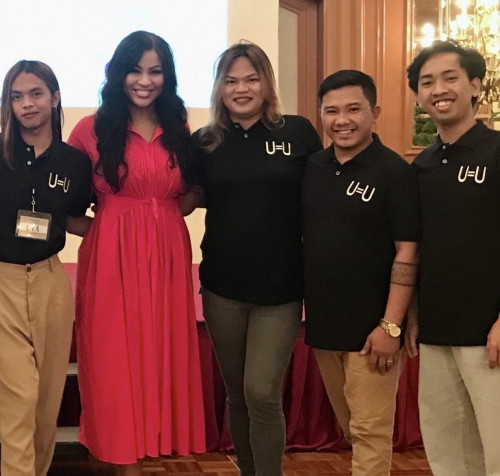
Community-led U=U Message Development Workshop in Manila, Philippines, 2024Courtesy of Monique Carry
What makes U=U especially powerful is that it emerged from people living with HIV demanding that science be communicated honestly and without fear. In doing so, U=U challenged decades of stigma, misinformation and moral judgment that have shaped the epidemic since its earliest days.
Over the past 10 years, U=U has helped people reclaim their sense of agency. It has changed how providers counsel clients, how partners understand risk and how communities talk about HIV. It has also opened the door to conversations about trust, disclosure, intimacy and dignity in ways that traditional prevention messages never could.
U=U reminds us that ending the HIV epidemic happens when we pair biomedical advances with truth and compassion. That is why this campaign still matters and why it continues to be a cornerstone of both effective public health and human rights.
Can you share any on-the-ground stories you’ve witnessed that illustrate the power of U=U and why you’re motivated to work in this arena?
In my entire career, I have never seen a message resonate so profoundly or so immediately transform how people see themselves and their worth.
I have sat with young people living with HIV who shared poems, songs and skits they had written about what it meant to finally understand U=U. For some of them, learning that they could live full lives, love freely and not transmit HIV quite literally saved their lives. I have had friends tell me that learning about U=U was the moment they chose sobriety, sought stable housing and began to imagine a future they did not think was possible before. And I have held babies born to mixed-status couples who were once told that having a family was too risky or out of reach but who now know otherwise because of U=U. I see how U=U changes lives.
What stays with me is the relief, hope and joy people feel when they learn the truth and the heavy burden of fear is lifted.
Those experiences also make me think about what is still possible. What would it look like if every person learned about U=U at the moment of diagnosis? If families, partners and communities truly understood it? If laws, policies and practices were shaped by what the science tells us is true? U=U opens the door to all of that. It pushes us toward a space where people living with HIV are supported, loved and able to thrive. That is why this work matters so deeply to me.
Please tell us about U=U University, the series of online training courses (a sample video is below).
For years, people living with HIV, health care providers, advocates and community organizations told us they wanted accurate, affirming information about U=U but needed ways to learn that felt accessible, supportive and grounded in real life. U=U University was created in response to that need.
U=U University is about building confidence, connection and community. Participants deepen their understanding of the science of U=U and learn how to talk about it with partners, clients, families and peers in ways that reduce stigma and build trust.
U=U University offers live and self-paced courses that blend science, lived experience and practical tools. Because the courses are offered virtually and at no cost, people can participate from home and learn at a pace and comfort level that works for them, with a simple sign-up that allows anyone to get started right away.
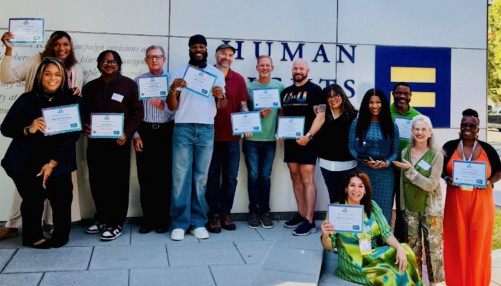
U=U University training of trainers graduates in Washington, DC, 2025Courtesy of Monique Carry
There are many ways to engage, whether someone wants to take a course, join the community of practice or stay connected through PAC’s digital platforms. U=U University is designed to meet people where they are and support them as they bring U=U into their own lives, work and communities.
Can you tell us about your work at the CDC?
My time at the CDC gave me invaluable experience and perspective in public health. While there, I worked in global HIV, partnering with ministries of health, community leaders and advocates across multiple countries. My work centered on shared efforts to communicate the lifesaving and transformative benefits of HIV treatment, including U=U.
I saw both the power of the science and the need for stronger bridges between institutions and communities. U=U was already transforming lives at the grassroots level, but there was a gap in public health systems understanding how to support and scale this community-led movement in a way that stayed true to its origins.
It was through this work that I was introduced to PAC. PAC and CDC’s shared vision of championing U=U and translating it into something people could trust and act on led to a collaboration that included the development of Implementing and Scaling Up U=U: A Resource Guide, designed to support public health leaders in integrating U=U into evidence-based practice while centering community leadership.
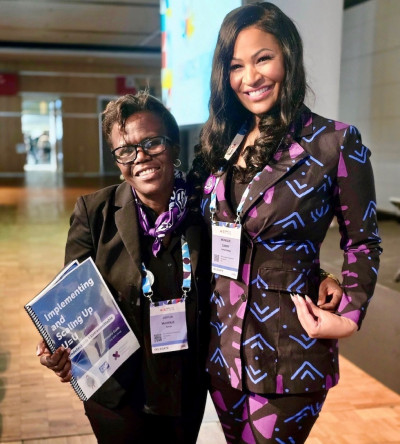
Launching the “Implementing and Scaling-Up U=U: Resource Guide” at AIDS 2024 in Munich, GermanyCourtesy of Monique Carry
That collaboration showed what is possible when institutions partner with community-led organizations. It connected leadership with science and science with lived experience to amplify U=U at scale. Joining PAC felt like a natural continuation of that work.
Obviously, CDC and the entire Department of Health and Human Services (HHS) have taken an extreme turn for the worse under new Health Secretary Robert F. Kennedy Jr. Did that play any part in your leaving CDC? And what would you say to us everyday citizens who are now wondering whether we can trust CDC for health guidance?
After more than a decade working in public health, I was ready to step into a role where I felt I could have the greatest impact—that allowed me to work even more closely with communities and to help guide the next phase of the U=U movement through the Prevention Access Campaign.
It is important for people to understand that the CDC is made up of thousands of dedicated scientists, public health professionals and civil servants who remain deeply committed to evidence, rigor and saving lives. I continue to have enormous respect for my former colleagues and for the work they do every day.
At the same time, trust in institutions is something that must be earned and maintained. In a moment when many people are questioning whether institutions are meeting their needs, I encourage them to look to trusted scientific leaders and credible, evidence-based public health guidance while also staying engaged and asking questions.
As we just wrapped up another year, what are some of the PAC highlights of 2025?
This past year unfolded during a period of real uncertainty for the HIV field, with shifts in funding, changing priorities and many partners navigating difficult transitions. We were very aware of how these changes were affecting organizations and communities on the ground, and we approached the year with a focus on steadiness, responsiveness and staying connected to what people needed most.
Against that backdrop, 2025 marked a turning point for PAC, as we focused on expanding access, strengthening leadership and reenergizing the global U=U movement. One of the most important milestones was the launch of U=U University, which opened new ways for people around the world to learn about U=U, build practical skills and bring this knowledge directly into their communities.
We also welcomed two outstanding new staff members and three new board members whose experience, perspectives and leadership have already begun shaping PAC’s next chapter. Their contributions reflect our commitment to shared responsibility and to ensuring that PAC continues to grow with intention during a time of change.
Over the course of the year, our partnerships expanded in both depth and reach, as global and community-based organizations joined us in advancing U=U across regions. That momentum was especially visible on World AIDS Day, when innovative and locally led U=U exhibits and installations appeared across cities and communities around the world, bringing the message of U=U into public spaces in powerful and creative ways. For example, in London, an art installation in the heart of the city, in King’s Cross, shared the U=U message using personal stories, and in Taipei, the U=U message appeared on one of the city’s busiest MRT [mass rapid transit] lines through a bold “Live Fearless, End Stigma”-themed train!
And looking to 2026, what’s next for you and PAC?
2026 is an exciting year for PAC as we launch the “10 Years of U=U” campaign, marking a decade of a movement that has transformed lives around the world. This campaign is both a celebration and a collective invitation. It honors the extraordinary work of partners and communities across every region, from marching in the streets of Paris to riding bikes across Namibia! At the same time, it brings our global community together to imagine, shape and commit to what the next decade of U=U can become.
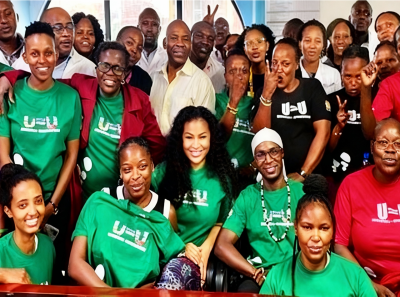
U=U Champions at the CIHEB Connect Program in Nairobi, Kenya, 2023Courtesy of Monique Carry
A central focus of this campaign is creating space for participation and leadership across the movement. We are elevating the next generation of U=U champions and leaders, including young advocates, community organizers, health care providers and people living with HIV who are advancing U=U in powerful ways. At the same time, we are listening closely to our communities by actively spotlighting their stories through digital storytelling and direct engagement, ensuring their priorities, ideas and hopes for the future directly inform PAC’s direction.
We are also inviting new and existing partners and community members to connect with PAC to bring U=U University directly into their own networks and communities. This includes growing our training of trainers program and strengthening the community of practice, creating more ways for people to learn, lead and support one another.
What excites me most is the shared energy around this moment. The “10 Years of U=U” campaign creates space for people everywhere to engage, contribute and help carry this movement forward in ways that are meaningful to them.
I am deeply grateful to everyone who has contributed to this movement over the past decade, especially the diverse communities of people living with HIV whose leadership, truth-telling and advocacy made U=U possible. The U=U movement belongs to the people and communities who have carried it forward with courage, honesty and care.
As PAC moves into its next chapter, my commitment is to steward this work with humility, integrity and deep respect for the communities at its center. We will continue to lead with science, listen to lived experience and build partnerships that expand access and understanding.
I am excited about what lies ahead because the work is not finished and the path forward is being shaped collectively, and I am honored to be part of that journey.


Comments
Comments