


I recently celebrated a birthday. I turned 71. Aquarius, in case you were wondering.
And by the way, some people make a sour face when they find out I’m an Aquarian, and I really can’t understand why. We’re the most fun, passionate, caring beings, all with a little quirkiness thrown in. What’s not to love?
I’m not sure I ever thought about getting to this age. Youth has a way of keeping those thoughts at bay. My HIV diagnosis was also a big factor when it came to thinking about the future.
As optimistic as I’ve always been, I didn’t plan on becoming a long-term HIV survivor. Nobody did. When I was diagnosed in the ‘80s, the word “long-term” wasn’t even on the table. The future was a dark, vague concept, filled with the very real possibility that I wouldn’t be around to see it.
And yet, here I am. Older. Still positive. Still standing. Just like Elton John! (Well, he doesn’t have HIV, but you know what I mean.)
Surviving HIV long enough to age with it is both a privilege and a strange, unadvertised challenge. Medicine did its part, brilliantly–and continues to, thankfully. Life, as usual, got complicated anyway.
Survival Isn’t the Finish Line
For a long time, the goal was simple: stay alive. Make it to the next year. Then the next. When effective antiretroviral therapy arrived, survival shifted from longshot miracle to genuine expectation. And now, according to the U.S. Centers for Disease Control and Prevention (CDC), people with HIV who are diagnosed early and remain on treatment can expect near-normal life expectancy.
That sentence looks neat on paper. Living it is messier.
Aging with HIV means I carry my history in my body. Years of older medications. Chronic inflammation. Trauma that never made it into my medical chart. Many long-term survivors experience higher rates of cardiovascular disease, bone loss, kidney disease, and cognitive changes compared to HIV-negative peers, even when the virus is well controlled. Not to mention the fun stuff that comes with aging in general: high blood pressure, liver disease, cancer risks, etcetera.
Turns out, survival has consequences.
Loneliness Hits Different
A lot of people I started this journey with didn’t make it. I carry those friends with me in my heart.That devastating kind of loss doesn’t politely fade with time. It compounds.
Getting older already thins your social circle. Aging with HIV can hollow it out. Some long-term survivors face isolation due to stigma, fractured families, or decades spent in survival mode instead of relationship-building. Studies consistently show higher rates of depression, social isolation, and drug and alcohol misuse among older adults living with HIV.
For me, it’s an awkward grief. I’m grateful to be alive and angry about it in the same breath.
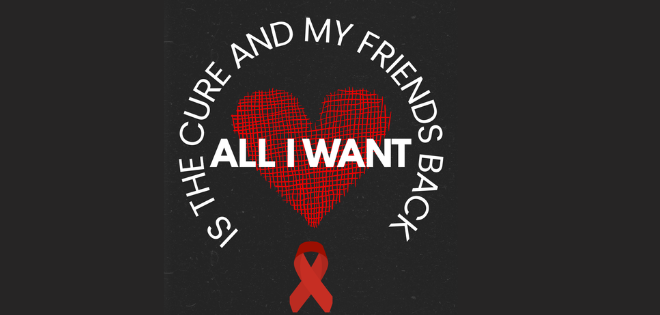
It reminds me of the longstanding rally cry from our community, “All I want is a cure and my friends back.” That phrase that I first heard decades ago hits me with renewed ache today. There are so many people I miss. And why was I among the lucky ones to survive?
Your Body Has Opinions
You can be virally suppressed and still exhausted. You can do “everything right” and still collect diagnoses like unwanted souvenirs.
HIV accelerates certain aging-related processes, a phenomenon researchers often describe as “accelerated aging”–particularly cruel as I’m doing everything in my power to slow down the aging process! This acceleration, specially made for people living with HIV, is driven in part by chronic immune activation. Translation: your immune system never fully stands down, even when the virus is controlled.
Hope (Yes, There Is Hope)
The same science that kept you alive keeps improving. Treatments are simpler, less toxic, and more effective than ever. Long-acting injectables, better management of comorbidities, and growing attention to HIV care for older folks are real and measurable advances.
More importantly, the conversation is changing.
Aging with HIV is finally being acknowledged as its own phase, not an afterthought. Healthcare providers are being trained to treat the whole person, not just the viral load. Mental health, sexual health, and quality of life are no longer parenthetical footnotes.
And there is something quietly powerful about having outlived expectations. There’s a perspective we long-term survivors have that most people never earn. We know what matters because we’ve watched what doesn’t last.
We’re Still Here
Heaven knows, I’ve earned the right to complain about pill organizers, insurance paperwork, and doctors who are younger than my diagnosis. I have to laugh at the absurdity of surviving a global crisis (more than one!) only to have arguments with a pharmacy app.
There is no medal for stoicism. There is, however, a beautiful freedom in saying, “This is hard,” without apologizing. And a strength in moving forward despite it being hard.
What Aging With HIV Really Looks Like
It looks like adaptation. Radical acceptance. Advocacy, always. Choosing rest without calling it weakness. Asking better questions. Building community where none existed before.
It looks like surviving long enough to redefine what survival means.
If you’re aging with HIV, you are not a medical anomaly or a cautionary tale. You are evidence. Of science. Of resilience. Of the deeply human ability to keep going, even when the roadmap keeps changing.
You weren’t supposed to be here. Me neither. And yet, here we are.
Getting older, and doing it in style.



9 Comments
9 Comments