

In the early 1980s, Michael Welch was a young nurse in Vancouver, volunteering at the city’s first AIDS organization, now called Ribbon Community, when the nonprofit was approached by the loved ones of men who had recently died of AIDS. They wanted to plant cherry trees as memorials. Although the tree’s pink blossoms are short-lived, they are remembered long after they have fallen.
Working with the city’s parks department, the organization turned the idea into a reality. In 1985, a small grove of trees were planted in the city’s iconic Stanley Park, marking the earliest known AIDS memorial.
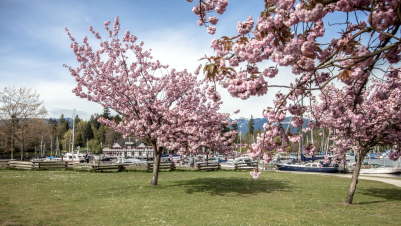
The Cherry Tree AIDS Memorial in Vancouver, Canada, was planted in 1985 and kept a secret nearly 30 years.YouTube/RibbonCommunity
At first, the Cherry Tree AIDS Memorial’s location was shared only within a trusted circle. As local newspapers reported at the time, the media was asked that the exact location of the trees “not be revealed to protect them from vandalism.” So intense was AIDS-related stigma that even a gesture honoring the dead needed to remain private.
For years, the cherry trees were an AIDS memorial hiding in plain sight. Many of the people involved in their planting had themselves died of HIV-related illness, and survivors like Welch found themselves needing to step away from the HIV response due to the trauma of the early years, taking their institutional knowledge with them.
Below, watch the video “1985: Our Cherry Gove (The 30 30 Campaign” by The Ribbon Community (formerly AIDS Vancouver):
In 2018, following a reunion of the city’s early AIDS activists, a plaque was erected to honor the site. As Welch reflected after its dedication, “In spite of what was unfolding back in 1985, there had been a group of us who wanted to do something positive and to look toward the future by planting trees.”
Fast-forward and not only does the HIV crisis persist, but so, too, does the desire to memorialize those lost to the epidemic as a way of moving forward. On World AIDS Day 2025, the Palm Springs AIDS Memorial hosted a groundbreaking ceremony, complete with a scale model placed where the memorial will be installed. It comes after years of hard work, a controversy and a final push to finish the project by 2026.

The groundbreaking ceremony held December 1, 2025, for the Palm Springs AIDS Memorial included a scale model.Jennifer Morton
The decades-long road leading to the unveiling of that California community’s latest AIDS memorial illuminates how far we have come and how far we have yet to go. It also shows how the impulse to commemorate has remained remarkably consistent, even as the form and visibility of memorials have evolved.
• • •
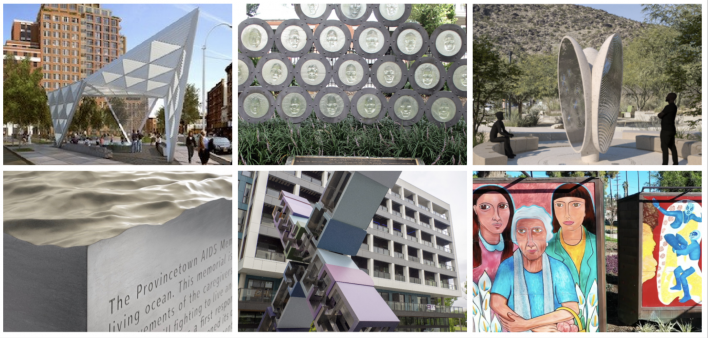
Across the country, the landscape of AIDS memorials is diverse. The Palm Springs AIDS Memorial will be one of more than a hundred AIDS memorials in the United States. Some are stand-alone works of public art, like the horizontal AIDS monument outside city hall in Provincetown, Massachusetts—which stands 3 feet tall and 9-by-9-feet square; the top evokes the rolling tides of the nearby ocean—and the New Orleans AIDS Monument, which features 34 faces cast in glass that are understood to be guarding those remembered at the monument. Others are public gardens, like the National AIDS Memorial Grove tucked into San Francisco’s Golden Gate Park, and the Texas AIDS Memorial Garden in Houston, the nation’s first AIDS memorial, created in 1986.

Provincetown's AIDS memorial monumentCourtesy of Lauren Ewing

The New Orleans AIDS Memorial, designed by Tim Tate, features multicultural cast glass faces. Unveiled in 2008, it’s located in Washington Square Park in the Marigny neighborhood.CC BY-SA 4.0 / Paparazzo Presents

The Light in the Grove at The AIDS Memorial Grove, San Francisco, is held each November 30, the eve of World AIDS Day.Courtesy of National AIDS Memorial
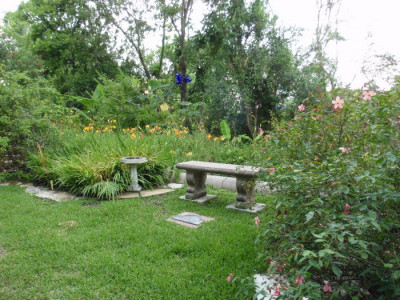
A place of respite within the Texas AIDS Memorial GardenCourtesy AIDS Memorial Garden
Increasingly, U.S. AIDS memorials are being designed as third spaces—intentional outdoor civic places that bring together art, citizens and programming. For example, the AIDS Memorial Pathway in Seattle consists of an outdoor sculpture, andimgonnamisseverybody by Christopher Paul Jordan, and a nearby gallery space.
The New York City AIDS Memorial hosts concerts, readings, short-term art installations and World AIDS Day programming beneath a large white triangular canopy that’s part of the memorial sculpture itself as well as in the adjacent park and the LGBT Center a block away.
Similar public engagement awaits the newly opened Stories: The AIDS Monument in West Hollywood. Previously run by an independent board, the monument is now under the stewardship of the One Institute. This means that, among other things, the AIDS Monument is well positioned to host public events at the nearby One Gallery.

Two artworks in the AMP: “andimgonnamisseverybody,” (the X in the background) by Christopher Paul Jordan, and “We’re Already Here” by CivilizationCourtesy of The AMP

An illustration of the New York City AIDS MemorialNew York City AIDS Memorial

An image of Stories: The AIDS Monument, which opened in West Hollywood on November 16, 2025Courtesy of the City of West Hollywood
The Palm Springs AIDS Memorial is a meaningful amalgam of the different forms an AIDS memorial can take. Located across from the Palm Springs Art Museum, it will feature a large-scale outdoor artwork by artist Phillip K. Smith III, a seating area sheltered by trees and interactive signage leading visitors to online resources.
Unlike early AIDS memorials—like the cherry trees or the Texas AIDS Memorial Garden—which were largely the vision of a small group of people or a single individual, the HIV community played an important role in the development of the Palm Springs AIDS Memorial. This shift from private grief to public collaboration reflects the broader transformation in how the epidemic is acknowledged.
An early version of Smith’s proposed artwork was released in 2023 to a less-than-welcoming community response. As POZ’s own Trent Straube reported, “The originally planned memorial is a 9-foot-tall limestone sculpture that, to put it as G-rated as possible, might remind folks of a giant round doughnut standing on end.”
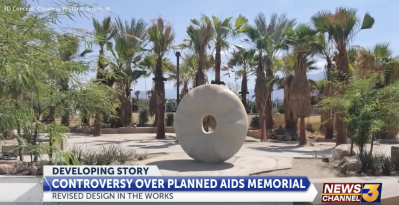
After this proposed AIDS Memorial for Palm Springs, California, sparked controversy, the design was scrapped..Courtesy of KESQ News Channel 3
Smith went back to the drawing board; now, two years later, his vision has been met with approval. Titled Well of Love, the three-sided public art piece is evocative of tears, illustrating the memorial’s guiding slogan: “Forever Remembered, Forever Loved, Forever Celebrated.”
The openness of the tear motif reflects the complexity of Palm Springs—a place where many people diagnosed early in the crisis went to live out what they believed were their remaining years. The introduction of lifesaving medication in the late 1990s complicated those plans. As a result, visitors to the memorial may shed tears for those who died with HIV, and they may also shed tears for what it means to be a long-term survivor living with HIV.

Renderings for the updated Palm Springs AIDS Memorial, unveiled September 2024Courtesy of the Palm Springs AIDS Memorial Task Force
Yet the approval of Smith’s artwork does not mean the work is done. It was recently reported that the artist is changing the memorial’s materials. For the tears, he will be using mirror-polished aluminum in place of the originally planned glass panels—for both aesthetic and safety reasons.
“As we get deeper and deeper into the current political vibe, I started to get more and more nervous about the glass,” Smith told the Palm Springs Post. “It just takes one guy and a hammer.”
Smith’s concern not only echoes fears held by those who planted the AIDS memorial cherry trees but also reflects current events. In January, The Wall Las Memorias AIDS Monument in Los Angeles was vandalized. In a cruel act, someone took a hammer to a wall of names, smashing plaques honoring the dead. A passion project first envisioned by The Wall Las Memorias Project’s current executive director, Richard Zaldivar, the memorial opened in 2001 and was set to undergo renovations even before the recent attack.
Such acts of violence—and the fear of them—are part of, not separate from, the power of and need for the memorials.

Damaged sections of The Wall Las Memorias AIDS Monument in Los Angeles, January 2025Courtesy of thewalllasmemorias.org
Below, take a video tour of The Wall Las Memorias AIDS Monument in Los Angeles’ Lincoln Park:
Taken together, these stories illustrate an ongoing tension between remembrance and vulnerability. The path from Vancouver’s cherry trees to Palm Springs’s Well of Love shows how AIDS memorials have transformed alongside the epidemic itself. What began as discreet gestures of remembrance have become public cultural spaces shaped by community voices and civic investment.
Yet the persistence of vandalism and stigma underscores that these sites remain vulnerable—and necessary. Like the cherry blossoms that fall but are remembered, each memorial carries forward the names and stories of the people who have died, insisting that what was once hidden now endures in the open air. As Palm Springs moves forward building an AIDS memorial, it stands as both a marker of progress and a reminder of unfinished work: honoring those we’ve lost, supporting those who live with HIV today and ensuring that the history of the epidemic is not erased.
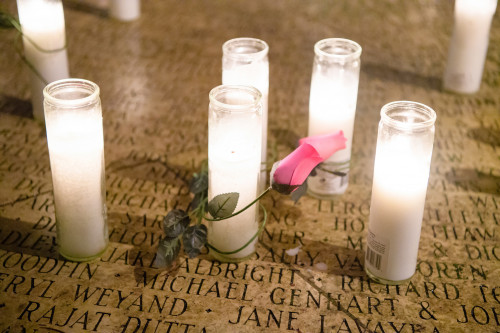
Light in the Grove 2018, at the National AIDS Memorial Grove in San Francisco. The event is held each November 30, the eve of World AIDS Day.Courtesy of National AIDS Memorial





1 Comment
1 Comment