

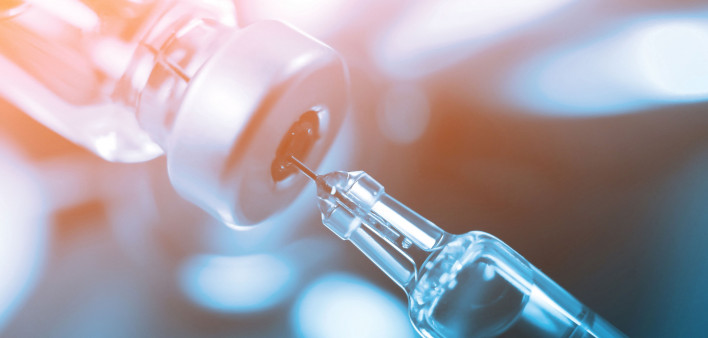
In March 2026, an article in The Australian reported on a tech entrepreneur who used artificial intelligence to create a customized vaccine to treat his dog’s cancer. The idea is news to many people, but researchers have been working on personalized cancer vaccines that help the immune system recognize and attack tumors for at least a decade.
To create customized cancer vaccines, scientists genetically sequence DNA from a patient’s tumor, looking for mutated proteins known as neoantigens. Machine learning algorithms are used to select antigens most likely to provoke an immune response. One method involves creating messenger RNA (mRNA) blueprints that encode instructions for making the neoantigens, which are packaged into lipid nanoparticles for injection—the same technology used for the Pfizer/BioNTech and Moderna COVID-19 vaccines.
Cancer vaccines, often used in combination with checkpoint inhibitor immunotherapy, appear to work best for preventing recurrence by training the immune system to attack residual malignant cells after a tumor is surgically removed. Scientists have reported promising results from studies of personalized mRNA vaccines for melanoma, pancreatic cancer, kidney cancer and glioblastoma brain cancer, and some are now in late-stage clinical trials.
Researchers are also working on “off-the-shelf” cancer vaccines that use common tumor antigens rather than those selected from a specific patient’s tumor, which have the potential to be more scalable and affordable. In the meantime, existing vaccines that prevent human papillomavirus (HPV) and hepatitis B infection can dramatically lower the risk of cancer developing in the first place. The HPV vaccine protects against cervical, anal, oral and other malignancies, while the hepatitis B vaccine prevents liver cancer.


Comments
Comments