

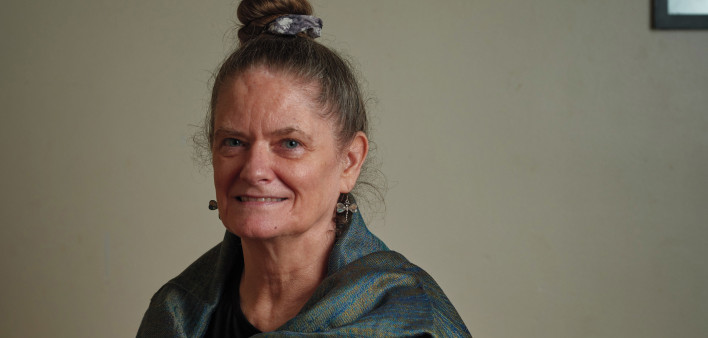
Martina Clark first learned she was HIV positive in 1992. Since then, she’s been changing the face of HIV in America and beyond.
“The initial diagnosis happened over the phone, which, of course, was a no-no,” Clark explains from her home in Brooklyn. “I was by myself, house-sitting in San Francisco, and I just felt like my whole life was erased, and I had to start over—and not in a good way.”
Clark quickly experienced the lack of treatment and support options for women living with HIV.
“I wanted to be the voice to speak for women wherever I could,” Clark tells POZ. “There was very much a gap that women’s needs weren’t being represented as much as men’s, particularly in this country.”
Her desire to advance the concerns of women living with the virus propelled Clark’s rise as an activist. Indeed, in 1995, she made history as the first North American representative to the UNAIDS Programme Coordinating Board and the first openly HIV-positive UNAIDS staffer.
“I was the link between UNAIDS and every nongovernmental organization (NGO) working on AIDS in the world,” she explains. “It was a daunting task. I felt completely overwhelmed, but I tried to set things up so that the NGOs felt truly welcome to approach us and that they had a partner in UNAIDS.”
According to Clark, most women still live in societies where a woman’s worth is determined by her ability to bear children. That was especially true in 1992, when Clark was diagnosed.
“We didn’t have the knowledge we have now,” Clark says. “It was assumed that any baby born to a mother with HIV would automatically have HIV. So society treated us like we were murderers if we dared to have a child. It was a very disturbing and unfair experience to go through because I was 28 years old. I had assumed I would eventually get married and have kids. But it was made clear to me by medical providers that having kids was not what I should do.”
That’s why, she explains, she felt like “damaged goods” after her diagnosis, a sentiment Clark explores in her 2021 memoir, My Unexpected Life: An International Memoir of Two Pandemics, HIV and COVID-19.
“There are interventions that can prevent the transmission from mother to child that are very inexpensive and that people can utilize easily if they have access to good health care,” Clark adds. “I hope that women who test positive today will realize that they have very different options than we did back in the ’80s and ’90s, when we didn’t know yet that you could have a baby safely.”
Thanks in large part to Clark’s decades of advocacy, HIV-positive women can dream bigger and live long, healthy lives; for many women, that includes having healthy children.
“That was one of the things that kept me going,” Clark says. “Even if I only had five years to live, I hoped that whatever I could do at least would help somebody else down the line. I can never reverse this diagnosis, but at least, I can contribute to something that makes it easier for somebody else and hopefully raises visibility so that more women in the future don’t feel alone and isolated like I did.”
Comments
Comments