

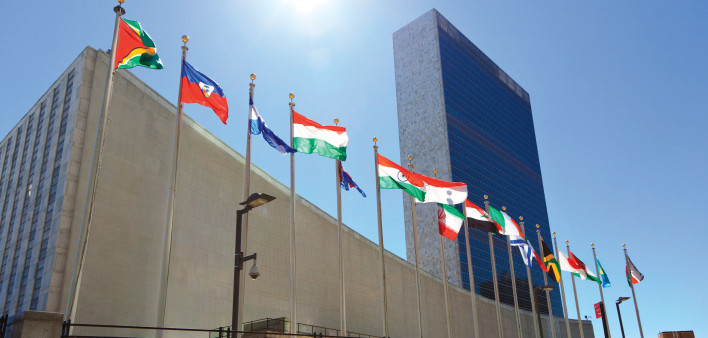
At a moment of growing pressure and roadblocks to international cooperation, the United Nations High-Level Meeting on HIV/AIDS concluded in June with an overwhelming majority of member states adopting a new Political Declaration on HIV and AIDS with strong support. [For the first time, the United States refused to sign such a declaration.] The declaration reaffirms global commitment to ending AIDS as a public health threat by 2030 and sets specific and important new targets.
The outcome followed weeks of negotiations with all member states and engagement with communities, civil society and partners and demonstrates that, even in an environment marked by reduced international financing and multilateralism, countries continue to recognize the urgency of sustaining progress against HIV.
The declaration will serve as an important road map in the global HIV response over the next five years, guiding global efforts to accelerate additional progress despite decreases in funding for HIV and anti-rights headwinds. Notably, the 2026 political declaration reflects the ambitious targets contained in the new Global AIDS Strategy 2026–2031 and committed to convene a high-level meeting in 2031 to review progress against the pandemic after the 2030 milestone.
Setting out an agenda to evolve the global AIDS response for the shifting pandemic, it includes important new and ambitious targets and commitments to increase equitable coverage of HIV testing, treatment and prevention; address funding gaps; protect human rights and gender equity; expand access to HIV medicines and other technologies through sharing of technology and strengthening local production for sustainability; and expand the space for communities and civil society in the AIDS response.
Delegates emphasized the continuing role of the United Nations and the importance of reinforcing the unique, multi-stakeholder coordination of the Joint United Nations Programme on HIV/AIDS (UNAIDS).



Comments
Comments