

On July 24, President Donald Trump signed a new executive order, Ending Crime and Disorder on American Streets, that will limit rights and restrict services for people who are homeless and experiencing mental illness or have a substance use disorder.
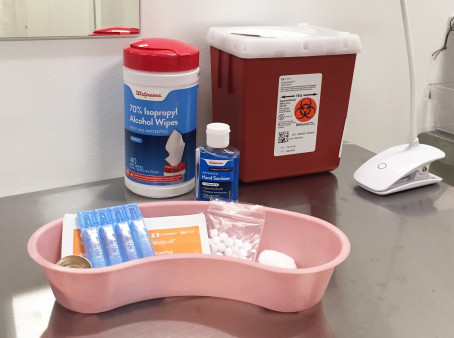
Headlines about the order have mostly focused on its provisions regarding involuntary commitment for psychiatric or substance use treatment, but the order also targets harm reduction, which aims to alleviate the detrimental effects of drug use—including overdose and acquisition of HIV or viral hepatitis—for people who are not willing or able to achieve abstinence.
"The Administration’s executive order issued July 24 calling for the forced commitment of people who are unhoused—and undercutting the highly effective and evidence-based harm reduction approaches proven to prevent overdose deaths, treat addiction and stop the transmission of HIV and other infectious diseases—will be a major setback to efforts to address the synergistic epidemics of addiction, HIV and other infectious diseases,” HIV Medicine Association chair Colleen Kelley, MD, MPH, said in a statement.
Trump’s order reads in part, “Endemic vagrancy, disorderly behavior, sudden confrontations and violent attacks have made our cities unsafe…Shifting homeless individuals into long-term institutional settings for humane treatment through the appropriate use of civil commitment will restore public order.” The broadly written order encourages civil commitment of “individuals with mental illness who pose risks to themselves or the public or are living on the streets and cannot care for themselves.”
The order directs the Secretary of Health and Human Services and the Secretary of Housing and Urban Development (HUD) to end support for “housing first” policies that prioritize getting people into stable housing without requiring that they first stop using drugs. It also seeks to require that people who use HUD programs must receive substance use treatment or mental health services as a condition of participation.
The order further directs that grants issued by the Substance Abuse and Mental Health Services Administration do not fund harm reduction or safe consumption efforts.
The most familiar harm reduction measure is needle exchange or syringe service programs that provide sterile drug injection equipment. First started by activists in the late 1980s in the United States, these programs were once highly contentious, but they became a widely accepted public health intervention thanks to extensive evidence that they reduce the spread of HIV and hepatitis C. People who inject drugs accounted for 7% of the 31,800 estimated new HIV cases in 2022, according to the Centers for Disease Control and Prevention (CDC). Some programs also provide supplies for using non-injectable drugs, test strips to determine drug purity and access to HIV and hepatitis C testing and treatment.
Over the past decade, several U.S. cities have attempted to open safe injection sites, also known as overdose prevention centers, where people can use drugs under the supervision of trained staff who can administer naloxone (Narcan) and provide first aid to reverse opioid overdoses. Although overdose deaths have recently declined, about 87,000 people died from overdoses last year, according to the CDC. The sites provide clean injection equipment and offer an entry point for medical care, addiction treatment and other services for people who use drugs.
More than 100 supervised injection facilities are operating in 11 countries, according to the National Harm Reduction Coalition, but federal law has hampered their implementation in the United States. New York City opened the first two city-sanctioned supervised injection sites in late 2021. The only state-sanctioned site, in Providence, Rhode Island, opened last year.
The first Trump administration threatened prosecution of supervised injection sites under the “crack house statute” of the Controlled Substances Act, which makes it a crime to operate a site where illegal drugs are produced, distributed or consumed. The Biden administration expressed tepid support but never took steps to allow such facilities. Trump’s executive order returns to the hard line against supervised consumption and expands it to other harm reduction interventions.
The order directs U.S. Attorney General Pam Bondi to review whether recipients of federal assistance operate drug injection sites that “knowingly distribute drug paraphernalia or permit the use or distribution of illicit drugs” and to “bring civil or criminal actions” and “freeze their assistance as appropriate.”
The order suggests that the federal government intends to withhold funding from jurisdictions that do not prohibit open illicit drug use and enforce prohibitions against “urban camping and loitering” and urban squatting. It mentions grants to assist state and local governments in carrying out the order—specifying encampment removal and expansion of drug courts and mental health courts—but it does not offer the kind of extensive funding that would be needed to build new mental health and substance use treatment facilities.
Advocates widely criticized the order, arguing that it would hurt rather than help people struggling with homelessness, mental health issues and substance use.
“If this administration truly seeks to reduce overdose deaths and improve community safety, it must embrace and sustainably fund what public health experts and advocates say works: harm reduction programs, overdose prevention centers and widespread access to voluntary, non-coercive treatment and care,” Deborah Reid, LAC, senior health policy attorney at the Legal Action Center, said in a statement.
“At AIDS United, we often frame federal policies within the context of how they will help or hurt our ability to end the HIV epidemic,” the advocacy organization said in another statement. “In this respect, this executive order and its attacks on evidence-based harm reduction and housing-first policies will surely lead to more HIV transmissions and worse health outcomes for people living with and affected by HIV. But the impacts of this executive order cannot be confined to the impact on people who use drugs or those living with HIV.”
“The proposals in this executive order will strip millions of people of their basic human rights and agency,” the statement continues. “We cannot solve the homelessness or overdose crises by providing people with ironclad ultimatums that offer only abstention or incarceration…People need health care. They need affordable and accessible housing. And they need mental health and substance use disorder services that meet them where they’re at and provide the best opportunity for sustained success and a better life. This executive order does not address these needs.”


Comments
Comments