

It wasn’t just his face that was crimson. Ken Baxter dipped his entire head in a pool of blood—or so it looked. The hue of his dress shirt and Windsor-knotted necktie matched the arterial color of blood painted on his skin. A portrait museum of friends killed by HIV-contaminated blood products adorned his black tuxedo jacket, with fist-sized button pins enclosing their smiling faces. Lenny, dead at 40. David, not yet 41. Rocky, only 10.
Ken was a warrior for justice. Under a gradient blue sky on that crisp December morning in 1999, with my Nikon swinging from my shoulders, I joined him protesting outside of the steel gates of the Bayer Corporation in Berkeley, California. He was there to make a statement about how four pharmaceutical companies were allowed to sell the deadly blood clotting medications to people with hemophilia and other bleeding disorders––for an unconscionable amount of time. They sold them long after scientists confirmed the virus causing AIDS spread through blood.
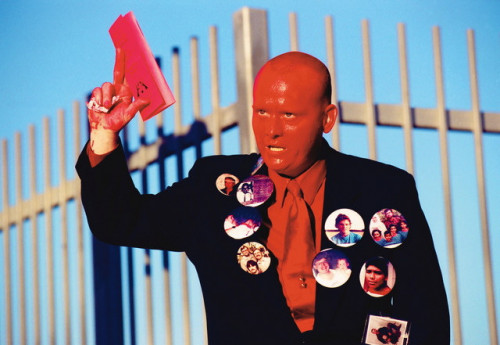
Ken Baxter during one of his protests in Berkeley, California, in December 1999.Kathy Seward MacKay
Ken had HIV. As did my husband, Dave, who’d died two years earlier. I’d traveled from my home in New Hampshire to Berkeley as part of my photographic documentation of the hemophilia community in the wake of the estimated 10,000 HIV infections.
So many of us in the collective HIV/AIDS community suffered and lost loved ones because our government and certain individuals in power had betrayed us––by deception, cruelty and inaction.
I considered Ken’s form of seeking justice as performance art. Educating the public was his gig. Surrounded by plastic skeletons and tombstones painted red and with his band of three fellow protesters––the human kind––he paced the sidewalk before Bayer’s entrance. The song “Angel,” with Sarah McLachlan’s ethereal voice, rose from a boombox on the ground. Ken and the others passed out leaflets explaining the corporate culpability in the contamination of blood products to employees and visitors passing through the gates. Many ignored him. Others listened. A few shook their heads as though shocked by the printed and spoken words. But what I remember most are the moments of humanity sprinkled throughout the morning. Upon our arrival, the security guard greeted Ken with a friendly hello. They chatted as I fine-tuned my camera settings for the early morning light. Ken then told me how the guard had bought him presents to give to his twin daughters. Stuffed bears, or maybe dolls.
One woman in our group, Beatrice, had lost her only son at age 21. Her pain was so palpable that Ken held her against his chest as she broke down in tears. Moments later, a middle-aged man wearing gold corduroy khakis stopped and listened to Ken. Another protester, Ernie, had handed him pages of legal documents––evidence of wrongdoing used in lawsuits against the four drug companies. I clicked away as he flipped through the pages. Beatrice soon approached the trio, her eyes bloodshot and swollen. By the end of the conversation, the man with the gold khakis shook Ken’s and Ernie’s hand. He reached out and embraced Beatrice, giving her the dignity of acknowledging her raw pain.
Ken protested for years in Berkeley and elsewhere. Yes, he rubbed a lot of people the wrong way. His presence at Bayer angered some employees. At the National Hemophilia Foundation conferences, pharmaceutical representatives frowned upon his red-faced presence. Yet Ken stood strong. He embraced his first amendment rights to speak out. To assemble peacefully. To express grievances.
Ken gave me strength. When we first met, I was still reeling from learning my husband’s death was preventable. Distraught and angry, I survived with people like Ken, who wanted the truth exposed. He took no credit for the investigative work in his hands, but campaigned to raise awareness of how a weak regulatory system can lead to companies making harmful decisions for their customers.
Ken believed in my work as a photographer. After the passage of the Ricky Ray Hemophilia Relief Fund (providing a onetime payment to those infected with HIV from FDA-approved clotting factors), he donated a portion of his payment to fund my documentary project. With no strings attached, he stayed out of the editorial process while I created and published my book Dying in Vein: Blood, Deception … Justice.
We kept in touch for years, having bonded over our shared experience and photography. He had amassed his own collection of photographs of AIDS-stricken hemophiliacs in his orbit. Many of the images were of friends on their death beds. All of them haunting.
“Those pictures were hard to take,” Ken said. But the families supported him, and he believed in using his talent to bear witness. He had taken the photographs I didn’t have the guts to take when my husband’s healthy glow turned yellow and grey, and his body dissolved.
I often wished Ken and Dave had been friends. Dave had needed someone like him to talk to. Isolated from the hemophilia community in New Hampshire, Dave had nowhere to turn when despair swallowed him. Oh, how he could have benefited from commiserating with Ken about those damn hemophilia bleeds interrupting life––and the greater threat of HIV. I believe Ken could have helped him grapple with his emotions.
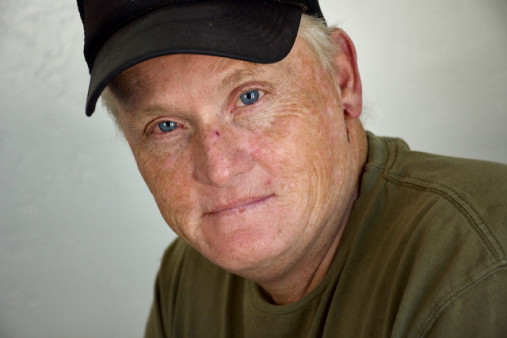
I last met with Ken in May 2017 in Santa Barbara. The only red on his face was a light sunburn on his fair-skinned, freckled face. We leaned against a wooden railing on a pier stretching into the ocean and talked of life and death. I recorded him with my iPhone as seagulls circled and screeched and mewed above. He filled me in on the years since he tossed aside his theatrical paint. He shared news about his grown daughters, who were building their own families. His blue eyes beamed while talking about his new role. Grandpa life suited him.
Ken had stopped taking pictures of death. Instead, he focused his camera on nature’s beauty. Oceanscapes. Textured leaves. Silhouetting sunsets. He was volunteering at a local TV station. He had befriended the homeless population, making sure someone cared for them.
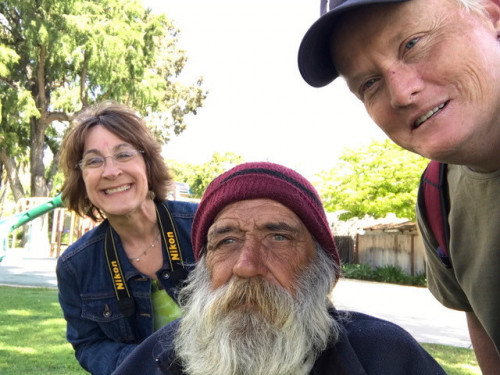
A selfie of Kathy and Ken in Santa Barbara, California, with a homeless person who Ken befriended.Ken Baxter
In a later conversation, I asked, “What would you say to my husband, Dave, if he were here?”
“I’d say, what can you tell me about the other side?” he laughed. “That’s important.” He meant the other side of death. The other side of the physical pain of hemophilia. The other side of HIV and AIDS. The other side of survivors’ guilt.
Ken claimed he was comfortable with death. He must have noticed my worried glare. As if to reassure me, he said, “I can love my grandbabies. I can have passion for life and embrace beauty and still be ready to move on to whatever’s on the other side.
I got that. By then, we’d both learned that opposing forces can reveal one’s truth.
Backtracking to my question about what Ken would say to Dave, he paused and spoke softly. “I would say that your family has missed you and I wish you could have been with them all this time.”
Despite it all, Ken’s sense of humor remained constant. He made lighthearted jokes about me fumbling with my tripod, dropping my equipment, getting tangled with camera straps hanging around my neck. Flash forwarding to his future funeral––date unknown—he expressed the dos and don’ts for the attendees.
“Don’t tell my mother I smiled all the time. If anyone says that, you’ll get slapped. Don’t say he’s in a better place. You’ll get slapped. Don’t say I was the best guy in the world. I wasn’t. Don’t say any of that other crappy stuff. You’ll get slapped. Just say sorry for your loss. That’s enough.”
“Am I invited to the funeral?” I asked.
“Yes. You can be the slapper.” We both cracked up. Having endured those short-sighted, well-meaning comments after Dave died, I gladly accepted my slapper role.
After my Santa Barbara trip, perhaps a year or two later, Ken moved out of California for a while. We drifted apart. Now and then, I’d catch him on social media surrounded by infants and blond curly-haired toddlers—and loving those grandbabies.
The email about Ken’s impending death pinged in my inbox on a recent Friday night, originating from a friend of his in California. Sitting in a soft-cushioned chair, I read the message. It wasn’t AIDS. He was winning that battle. I’m told he’d had a severe brain bleed—perhaps the kind all the clotting factor in the world could not heal. I flopped my head back and sunk deeper into the cushion, imagining Ken, now 59, surrounded by his two daughters, his nine grandbabies, and mounds of love. I heard the children whimper around his bedside, their mothers cradling them.
Ken soon crossed over to the other side. I want so much for it to be a place where he possesses the awareness of his freedom from pain, where he can still love his family, where the spirits of long-gone friends mingle.
The early years of HIV and AIDS brought us so many heroes. That heroism continues today. If I were to go to Ken’s funeral, I would hug his girls and say, I’m sorry for your loss. Then I’d tell them Ken was my hero.
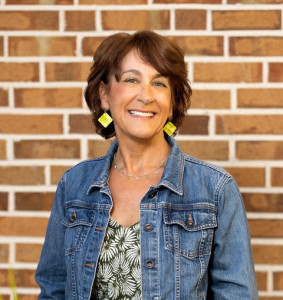
Kathy Seward MacKayMary Stucci
Kathy Seward MacKay is a former newspaper and freelance photographer turned writer. She is currently revising her memoir, which is a story about what happens when love, HIV and betrayal collide.


Comments
Comments