

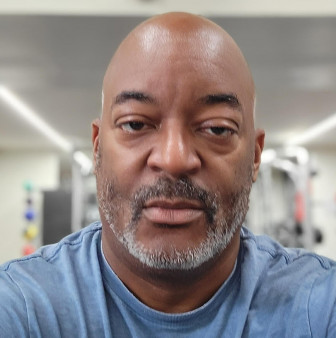
I’ve noticed one thing those of us living with HIV have in common: Most, if not all, of us remember the date we found out. For me, it was January 29, 2002. I thought the phrase “my world turned upside down” was an exaggeration, but the cold sensation that ran down my spine, the flipping of my stomach, the sense of spinning off the ground and the way time seemed to slow down to a painful, grinding halt was all too real. In that moment, I lost all sense of myself. I had to learn who I was all over again, and it was not a good feeling.
One aspect of relearning who I was that terrified me was coming out professionally as HIV positive. For 16 years prior to my diagnosis, I’d given countless lectures, workshops and presentations on how to stay “safe.” Yet I had failed to do so myself. Would I be exposed as a fraud and not be able to do the work I had grown to love? Who would listen to me?
Even though I was scared, I knew I couldn’t keep my diagnosis a secret. One of the first people I told was my former pastor, the current Beatitude Bishop Zachary Glenn Jones. He was quiet for a moment when I shared my status with him, then he said something that forever changed me: “If you decide to stay in this field [HIV prevention], how do you make the messages of prevention stick?”
It took a couple of months for me to realize that the answer was: “Tell the truth.” And if that was the answer, it meant that I had been lying before I became HIV positive.
I look back at my years as an HIV health educator and counselor before HIV came to live with me. I remember how often I insisted that my clients use condoms every time. This was my same message when I spoke at community events. I also remember the vehemence with which I would push this message, especially when someone would push back by stating that they did not like using condoms.
But I didn’t practice my own good advice. I didn’t practice what I preached. I was afraid my HIV diagnosis would expose me as the hypocrite that I was. Some might forgive my hypocrisy because condoms (perhaps the least pleasurable form of protection) were the only form of effective prevention we had at the time.
But it isn’t that simple.
I remember confiding the news of my diagnosis to a friend of mine at the time. After the initial words of support I expected, her next words still resonate with me to this day: “How could you become HIV positive? You knew better.”
You knew better. Those words hit me like a knife. I felt the blame in the blade of those words. The assumption (on both of our parts) was that since I was a health educator and because I worked in HIV prevention, I had the knowledge to protect myself. In her eyes, there was no reason for me to become HIV positive. In my guilt at becoming HIV positive, I agreed with her. But not now.
In her classic essay “Representing Whiteness in the Black Imagination,” bell hooks wrote: “Stereotypes abound when there is distance. They are an invention, a pretense that one knows when the steps that would make real knowing possible cannot be taken or are not allowed.” It’s one of my favorite quotes, and I use it to illustrate the harmful effects of stereotypes. Recently I began to examine this quote through the HIV prevention lens, and I see a parallel experience. I didn’t allow the people in my community to speak honestly about not using condoms. In not allowing this important step, I did not provide the space to explore—to truly know—what potential alternatives there may have been to condom use. Instead, I indulged in the pretense that using condoms all the time was the best way to prevent HIV, so everyone should be using them.
I want to tell my friend the truth. I now understand that I became HIV positive because I didn’t know better. I didn’t know better because I was too busy lying about using condoms every time. I didn’t know better because sexual pleasure was not valued as much as the virus, which had us in its fearful grip.
I didn’t know that HIV prevention is much more than using condoms.
I became HIV positive long before the advent of PrEP [pre-exposure prophylaxis] as well as before the emergence of U=U [Undetectable Equals Untransmittable]. Yet today, there is still an insistence on promoting an industry model of prevention that does not reflect the sexual realities and practices of individuals and does not effectively support their sexual health. There is no difference between my unwillingness to hear people speaking about not liking to use condoms and the resistance of some of my fellow providers to prescribe PrEP and DoxyPEP [doxycycline post-exposure prophylaxis] to individuals and communities who would benefit the most from them.
Just as bell hooks asserted that stereotypes abound when there is distance, I assert that cases of new HIV infections abound in the space of resistance to conversations and interventions that prioritize sexual pleasure alongside safety. We don’t need to shame people who approach their personal prevention differently than we think they should.
I know from painful personal experience that focusing on what someone “should” do is not an effective prevention strategy. Now, I do what I can to ensure that I and others have the space to say honestly what they want and need to experience sexual pleasure safely. I firmly believe this is the space we need in order to see the end of the HIV epidemic…and then there will be no more dates to remember.
What three adjectives best describe you?
Kind, industrious, intelligent.
What is your greatest achievement?
Surviving serious health challenges during my life (childhood seizures, anxiety, HIV infection, two heart attacks) to make it to my late 50s (almost 60).
What is your greatest regret?
Not taking my mother to see Nancy Wilson (her favorite singer) in concert.
What keeps you up at night?
I’ve become a night owl (during COVID and thanks to my partner, another night owl), so I will be up at night working, playing games or surfing the web.
What is the best advice you ever received?
“Let them tell you no. Stop telling yourself no."
What is your motto?
“Say yes to your life.”
If you had to evacuate your house immediately, what is the one thing you would grab on the way out?
My dad’s flag (he passed away earlier this year).
If you could be any animal, what would you be? And why?
An eagle. They’re strong and—most importantly—they can fly.


Comments
Comments