


As an endocrinologist, my work is rooted in the science of hormones—the biological messengers that direct so much of who we are. Yet on the occasion of this Transgender Day of Visibility, I find myself reflecting less on the technicalities of clinical practice and more on the profound human experience that underpins my work. For it has become evident on both sides of the examination table that navigating transgender healthcare in today’s political and cultural climate is both a deeply personal and political act, a quiet stand for freedom and respect at a time when these values are under threat.
For transgender patients, every healthcare visit, every prescription for testosterone or estrogen represents a step in a much larger journey of self-authenticity, one that stretches far beyond the confines of a medical office across years and in some instances decades. This journey requires courage, not only to pursue care but to do so in a climate where one’s very existence can be politicized, misunderstood, or invalidated. Transgender individuals exist, and should not have to fight for basic healthcare access.
For physicians who treat transgender patients, we are called upon to not only apply our evidence-based expertise but also, increasingly, to stand firm against a tide of misinformation, fear, and opposition that threatens to undermine the very care we provide. Transgender healthcare has for too long been cloaked in stigma and misunderstanding in the public consciousness, which has led to overt and insidious barriers to care —ranging from outright transphobia and denials of care to the more subtle, everyday challenges of navigating systems that too often fail to meet trans individuals where they are.
In this fraught environment, the doctor-patient relationship remains still, and sacred—guided by ancient professional oaths to “do no harm” and built on mutual trust, understanding, and a shared commitment to dignity and well-being.
As I reflect on Transgender Day of Visibility, I am reminded that visibility is both a recognition of progress and a call to action.
We recognize the challenges our transgender friends, family members, and patients face as well as their remarkable resilience in a world that has too often chosen to remain silent or, worse, hostile to their existence.
We recognize that the landscape of transgender healthcare has shifted in many ways for the better. We have seen increased access to care, heightened awareness of gender dysphoria, and a growing body of evidence on the benefits of gender-affirming treatment.
On this Transgender Day of Visibility, let us celebrate how far we have come and reaffirm our commitment to keep showing up. To create welcoming spaces for and listen to our patients, who deserve dignity, respect, and care. To ensure that everyone, regardless of their gender identity, should be free to stand in the light of visibility and feel seen for who they truly are.
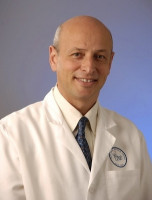
Leonid Poretsky, M.D.
Dr. Leonid Poretsky, Professor, Feinstein Institutes for Medical Research, founded the Friedman Transgender Program for Health and Wellness at Lenox Hill Hospital/Northwell Health, where he is also Chief of Endocrinology. He co-edited Transgender Medicine: A Multidisciplinary Approach (Springer International Publishing, April 2019).




Comments
Comments