

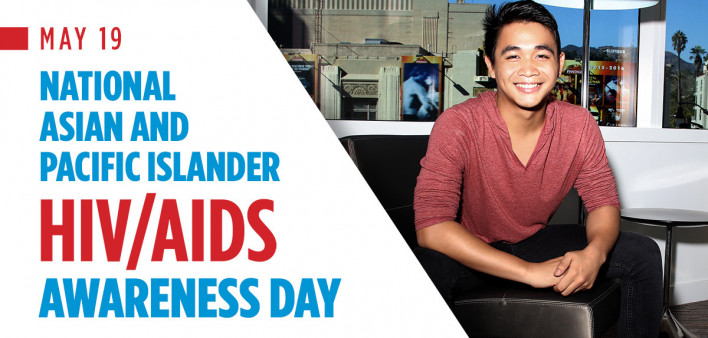
Monday, May 19, marks National Asian & Pacific Islander HIV/AIDS Awareness Day (#APIMay19) 2025. It was launched 20 years ago and is observed during Asian Pacific American Heritage Month.
May 19 is National Asian and Pacific Islander HIV/AIDS Awareness Day. It is a day to break the silence and end the shame about HIV and AIDS in Asian and Pacific Islander communities, and encourage individuals to get tested for HIV.
— Gulf Coast Equality (@gulfcoastequality.bsky.social) May 19, 2025 at 5:41 AM
[image or embed]
#APIMay19 aims to educate, raise awareness and fight HIV stigma among Asian and Pacific Islander (API) communities, including Native Hawaiians. According to federal data, about 2% (814) of new HIV diagnoses in 2021 were among API people, mostly Asian men. Most HIV cases among this community are found in western states as well as New York.
AIDSVu.org, an interactive site that maps and visualizes HIV data on communities and regions across the nation, offers more details about HIV among API people:
- Between 2017 and 2021, HIV diagnoses in the Asian community decreased by 19%, while HIV diagnoses in the Native Hawaiian and Pacific Islander community increased by 65%.
- 89% of Asian people living with HIV in 2021 knew their status, while 81% of Native Hawaiian and Pacific Islanders living with HIV knew their status.
- Asian people had the lowest testing rates among all races/ethnicities in 2021. Only 22% of Asian people in the U.S. had been tested for HIV at least once in their lifetime, compared with 35% of Native Hawaiians and Pacific Islanders and 35% nationally.
- In 2021, 70% of Asian people diagnosed with HIV were virally suppressed. 63% of Native Hawaiians and Pacific Islanders diagnosed with HIV were virally suppressed.
View this post on Instagram
“There are many barriers that lead to negative HIV-related outcomes for Asian, Native Hawaiian and Pacific Islander Americans,” AIDSVu writes. “According to the 2021 American Community Survey (5-Year Estimates), 10.3% of Asians and 16.7% of Native Hawaiians/Pacific Islanders live below the federal poverty level, and 6.3% of Asians and 11.2% of Native Hawaiians/Pacific Islanders don’t have health coverage. These social determinants of health can make it more difficult to access HIV prevention, testing and care resources.”
In related news, POZ recently interviewed filmmaker and actor Timothy Guion Smith, a Filipino American living with HIV in Los Angeles. He wrote, directed and acted in the short film Next of Kin, which he created, in part, to explore HIV from a Filipino perspective.

Poster promoting the short film “Next of Kin”“Next of Kin”
“I think it’s interesting with Filipinos because at a time when all the cases of HIV are decreasing, the Philippines actually has an alarming rise in cases, like exponential compared to other Southeast Asians,” Smith told POZ. “Compared to other Asian-American ethnicities, Filipino Americans are disproportionately affected when it comes to HIV. Filipinos are like nearly a third [of Asian Americans with HIV], and the next closest ethnicity was 10%. I think there’s something to be said about that and even just getting awareness for that and encouraging people to talk to each other as a means of dispelling medical misinformation.”
To read more about Smith, click “Telling a Modern HIV Story.”
Search #APIMay19 and #NAPIHAAD on social media to find sharable graphics as well as local and virtual events related to this HIV awareness day.
Click here to learn more about 2025 HIV and AIDS awareness days, and click here for a printable poster.
View this post on Instagram


Comments
Comments