

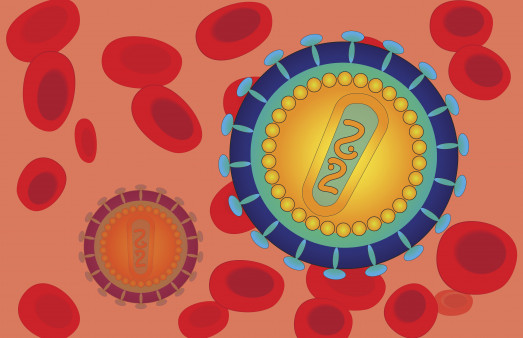
A novel HIV maturation inhibitor showed good antiviral activity in a small Phase II study, according to results presented at the International AIDS Society Conference on HIV Science (IAS 2025). If confirmed in larger trials, the well-tolerated oral drug could offer a new option for people with drug-resistant virus. While this trial used once-daily oral dosing, preclinical data suggest it may have potential as a component of long-acting treatment.
Modern antiretroviral therapy is generally highly effective, but people with extensive prior treatment and resistance to multiple drugs can have trouble maintaining viral suppression. Having additional medications that work in different ways offers more options for building combination regimens that keep HIV under control.
Nagalingeswaran Kumarasamy, MD, of VHS Infectious Diseases Medical Centre and Chennai Antiviral Research and Treatment Clinical Research Site, and researchers from the Indian pharmaceutical company Hetero Labs tested an HIV maturation inhibitor dubbed HRF-10071.
Maturation inhibitors interrupt a late step in the processing of HIV’s Gag polyprotein, preventing the release of proteins that make up the capsid structure surrounding the viral genetic material. This leads to the production of noninfectious immature viral particles. There are currently no approved HIV maturation inhibitors. In contrast, HIV capsid inhibitors, like lenacapavir (Sunlenca and Yeztugo), bind to the capsid and interfere with its function.
In laboratory studies, HRF-10071 inhibited all HIV-1 subtypes, which is important for a drug intended for worldwide use. In prior clinical studies, it demonstrated good safety and tolerability and a favorable pharmacokinetic profile in healthy HIV-negative volunteers.
The new Phase II proof-of-concept study evaluated the drug as a single agent in previously untreated people living with HIV. Antiretrovirals used alone do not maintain viral suppression for long, but they are typically tested for a brief monotherapy period to determine their antiviral activity.
This trial included 30 participants (25 men and five women), with an average age of 28 years, enrolled at 15 sites across India. Most had a viral load below 1,000,000 copies, but five had higher levels. They still had adequate CD4 T-cell counts (around 400 to 500). They were randomly assigned to received HRF-10071 once daily at doses of 20, 30, 40 or 80 milligrams or a placebo for 14 days.
HRF-10071 reduced HIV RNA levels substantially from Day 7 onwards at all dose levels, Kumarasamy reported. Viral load fell by -0.98, -1.56, -1.84 and -1.76 log (approximately 40,000 to 70,000 copies) by Day 14 in the respective dose groups, and all declines were statistically significant compared with the placebo group, which saw no change.
HRF-10071’s pharmacokinetic profile was dose-proportional and similar to that seen in HIV-negative people in prior studies. With daily oral dosing, drug levels reached a steady state by Day 10 and the concentration was maintained for the rest of the dosing period. Three people developed resistance-associated viral mutations during the treatment period.
HRF-10071 was well tolerated with no adverse events considered to be related to the study drug. There were no severe adverse events or deaths, and no one stopped treatment due to side effects.
“This could be a future treatment option for people living with HIV along with other antiretroviral agents,” the researchers concluded.
Hetero now plans to conduct a Phase II dose-ranging study of HRF-10071 in combination with other antiretrovirals to determine an optimal dose. Based on longer-term follow-up data from preclinical studies, Kumarasamy noted that HRF-10071 has potential as a long-acting therapy that might work for six months, and its prodrugs might remain active for up to a year.
Click here for more news about HIV treatment.
Click here for more news from IAS 2025.
POZ is an official media partner of IAS 2025.




Comments
Comments