

Immunocore’s IMC-M113V, an experimental bispecific T-cell engager, may help enable long-term HIV remission. IMC-M113V is an engineered antibody-like molecule that attaches to both CD8 killer T cells and HIV proteins expressed on infected CD4 cells, forming a “bridge” that enables the killer cells to attack the infected cells. In the Phase I/II STRIVE trial, 16 men with viral suppression on antiretroviral therapy received once-weekly infusions of IMC-M113V for 12 weeks and then paused their antiretrovirals in a 12-week analytical treatment interruption. After stopping their meds, laboratory tests showed changes in cytokines and HIV RNA and DNA levels consistent with T-cell activation and reduction of the viral reservoir. Most participants experienced normal viral rebound, but three showed evidence of viral control. They experienced initial viral rebound, but their viral load then fell to a low level. Two remained off antiretrovirals for the full 12 weeks. IMC-M113V was generally safe and well tolerated. The ongoing study is now evaluating higher doses and longer treatment interruptions.
Advertisement
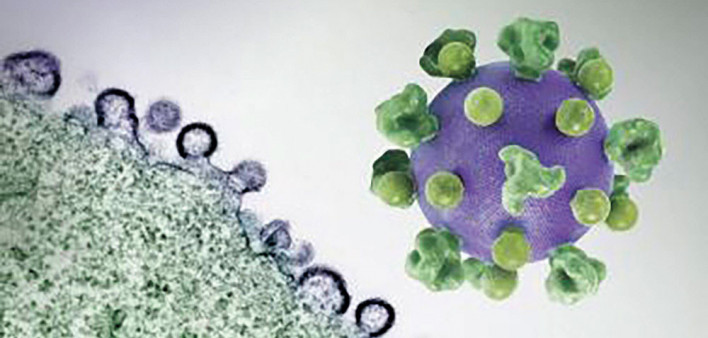
HIV virus particles (purple) budding and replicating from an H9 T cell (green) NIAID
Cure: T-Cell Engager
In a Phase I/II STRIVE trial, IMC-M113V, an experimental bispecific T-cell engager, was generally safe and well tolerated.
Advertisement
Advertisement




Comments
Comments