

On World AIDS Day, Nature magazine published a set of reports providing new details about research on a functional cure for HIV, or sustained remission after stopping antiretroviral treatment, including a man cured after a stem cell transplant and a combination immunotherapy trial. HIV research is often published in peer-reviewed journals a year or more after first being presented at scientific conferences.
Antiretroviral therapy can keep HIV replication suppressed as long as treatment continues, but the virus inserts its genetic blueprints into the DNA of human cells, establishing a long-lasting reservoir that is unreachable by the drugs and usually invisible to the immune system, making a true cure nearly impossible. But experimental approaches may help delay or limit viral rebound after treatment interruption.
“This study is not the endgame, but it is an important step in showing that we can make progress toward overcoming one of the biggest challenges in HIV research—helping a person’s immune system to control the virus without the need for lifelong medication,” Michael Peluso, MD, of the University of California San Francisco (UCSF), lead author of the immunotherapy study, told POZ. “The clinical results are exciting, but even more important is that we uncovered the biology that may explain them—that CD8 T cells became poised to respond earlier and more aggressively to HIV in those who went on to control the virus at low levels.”
Stem Cell Cure
The first report is an analysis of the Next Berlin Patient, a man cured of HIV after a stem cell transplant for cancer treatment. Unlike the original Berlin Patient, Timothy Ray Brown, and six other people who are still in remission after receiving stem cells from donors with two copies of a rare mutation known as CCR5-delta32 that prevents HIV from entering CD4 T cells, the anonymous German man received stem cells from a donor with only one copy of the mutation.
The man received his transplant to treat acute myeloid leukemia in 2015 and stopped antiretroviral treatment in 2018. He has now been in remission for more than six years. He still has undetectable plasma HIV RNA viral load and no apparent replication-competent virus in peripheral blood cells or gut tissue. What’s more, he has declining or absent HIV-specific antibody and T-cell responses, suggesting there may be no remaining virus left to trigger the immune system. As described at the recent European AIDS Conference, he had high antibody-dependent cellular cytotoxicity at the time of the transplant, which may have contributed to clearance of the viral reservoir.
“These results demonstrate that CCR5-delta32-mediated HIV resistance is not essential for durable remission, underscoring the importance of effective viral reservoir reductions in HIV cure strategies,” Christian Gaebler, MD, of Charité University of Medicine, and colleagues concluded.
POZ previously covered the case when it was presented at the 2024 International AIDS Conference. Media reports about the recent Nature paper referred to him as the seventh person to be cured after a stem cell transplant, but three other people have since joined that exclusive club, bringing the total to 10.
Complex Immunotherapy
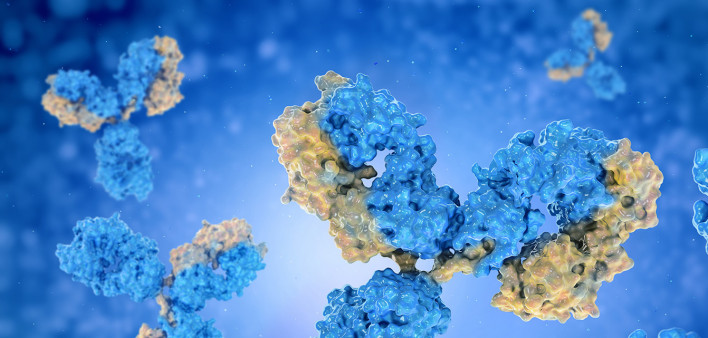
The second Nature report is an in-depth analysis of data from a complex functional cure trial that aims to induce post-treatment control in people who stop antiretrovirals. The trial combines a therapeutic vaccine, two broadly neutralizing antibodies, or bnAbs (10-1074 and VRC07-523LS) and lefitolimod, a toll-like receptor 9 (TLR9) agonist that boosts immune response and may coax HIV out of hiding. In 2022, POZ published an essay by Tom Perrault about his participation in the study.
At the 2023 Conference on Retroviruses and Opportunistic Infections (CROI), Peluso and colleagues reported that seven of the 10 participants in the small study experienced delayed viral rebound to lower-than-expected levels after antiretroviral treatment interruption. Six of them eventually did see their viral load rise after several months—compared with a typical rebound time of a few weeks—but one participant remained off treatment for more than 18 months.
Study author Steven Deeks, MD, of UCSF, told POZ that this person went back on antiretrovirals for a period for personal reasons but is now back off treatment four years later and maintaining viral control. The researchers are still following the participant and “trying to figure out exactly what happened,” Deeks said.
The following year, at CROI 2024, the study team presented further results showing that higher bNAb exposure was associated with later viral rebound. But low virus levels were not attributable to bnAb susceptibility alone, suggesting that changes in anti-HIV immune function likely played a role.
In the Nature paper, they reported that robust expansion of activated CD8 killer T cells early in the response to rebounding virus correlated with lower viral load in the absence of antiretrovirals. Strong HIV-specific CD8 cell response is a hallmark of elite controllers who naturally control the virus without treatment. “These data suggest that combination immunotherapy approaches might prove effective to induce sustained control of HIV by slowing rebound and improving CD8 T-cell responses,” they concluded.
“It turns out the controllers had T cells that were able to expand dramatically once they ran into the virus,” coauthor Rachel Rutishauser, MD, PhD, said in a UCSF news release. “It’s like they were hanging out waiting for their target, kind of like a cat getting ready to pounce on a mouse.” Rutishauser told POZ that while delayed viral rebound is expected until the bnAbs wear off or the virus becomes resistant, the slower rebound rate and ability to sustain a low viral load (below 1,000 to 2,000 copies) for several months suggest the immunotherapies had an additional effect.
Perrault was one of the six participants with delayed viral rebound. He started to get his hopes up after a few months of remission, but about five months after stopping antiretrovirals, his viral load started to rise again.
“No one ever said this was going to work—in fact, they told me it probably wasn’t going to work,” Perrault told the San Francisco Chronicle. “I have a chance to try to cure this thing. Of course, I’m going to do it. They don’t cure this thing unless people do what I did. To have a chance at a cure, and to know that my participation could lead to it—that’s spectacular.”
T-Cell Stemness
The third Nature report, by Zahra Kiani, PhD, and David Collins, PhD, of the Ragon Institute of Mass General Brigham, MIT and Harvard, and colleagues, also looked at T-cell characteristics linked to viral control after receiving the experimental bnAbs 3BNC117 and/or 10-1074 (see previous POZ coverage). In four trials with a treatment interruption, up to 22% of participants were able to control HIV for at least a couple of months after stopping antiretrovirals.
Analyzing data from 12 participants—five with rapid viral rebound and seven with delayed rebound, including one who maintained low-level virus for several years—the researchers found that post-treatment control was associated with superior pre-existing HIV-specific CD8 cell proliferative capacity before the intervention, a stem cell-like memory phenotype and the ability to locate and kill HIV-infected CD4 helper T cells. CD8 cell “stemness” was further increased after bnAb administration. Molecular features associated with CD8 cell stemness included increased metabolic fitness and reduced exhaustion. “These results identify immune features that precede subsequent post-intervention control to inform the development of combination immunotherapies that will elicit durable HIV remission,” the study authors concluded.
“These results identify immune features that precede subsequent post-intervention control to inform the development of combination immunotherapies that will elicit durable HIV remission,” the study authors concluded.
Regarding the combination immunotherapy trial, Deeks told POZ, “We should put this study in the context of several other small studies that have emerged recently. Across these studies, antibodies given to the right people at the right time result in partial virus control in perhaps 25% of cases. By adding a vaccine, we more than doubled this rate.”
While these findings are promising, the study authors said more work is needed to figure out why some people were able to achieve at least partial viral control. What’s more, this trial required some 50 study visits over two years, and a more streamlined regimen would likely be necessary for wide practical use. Many experts fear, however, that federal budget cuts will curtail this kind of research.
“Is this a cure? No way. But this is a first step, sort of like those early very complicated, partially effective combination antiretroviral regimens we were using back in the 1990s,” Deeks said. “With proof that we can actually at least partially make the immune system do what it really should do routinely, we now have a pathway to optimize the approach, just like we have done and continue to do with antiretroviral drugs.”
Click here for more news about HIV cure research.


Comments
Comments