

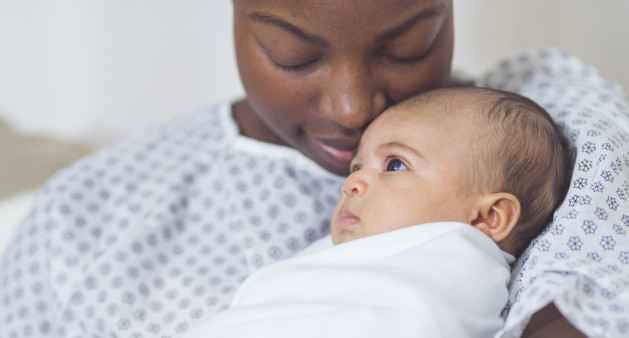
About a third of children with HIV who started antiretrovirals immediately after birth went on to maintain viral suppression for more than three months after treatment interruption, likely thanks to a small viral reservoir, according to research presented at the Conference on Retroviruses and Opportunistic Infections (CROI 2026). Three children were still off treatment at the time of the analysis, with the longest remission lasting more than four years so far.
Taking antiretroviral therapy (ART) during pregnancy can prevent mother-to-child HIV transmission, but some women living with HIV do not receive timely prenatal care and have detectable virus at the time of delivery. Without treatment, rates of HIV transmission during pregnancy, childbirth or breastfeeding range from 15% to 45%, according to the World Health Organization.
At CROI 2013, Deborah Persaud, MD, of Johns Hopkins University School of Medicine, reported the case of the Mississippi Baby, an infant born to an HIV-positive mother who was not on treatment at the time of delivery. Due to the high risk for exposure, the girl started intensive antiretroviral therapy (ART) 30 hours after birth but was nonetheless infected. She continued treatment and achieved an undetectable viral load. Her caretaker stopped her treatment when she was 18 months old, but she maintained viral suppression. News of the Mississippi Baby made global headlines and raised hopes that very early treatment might lead to a functional cure, but the girl’s viral load ultimately rebounded after more than two years off antiretrovirals.
While disappointing, this case spurred intensified research on very early treatment for children with HIV. While antiretrovirals can suppress viral replication indefinitely, HIV inserts its genetic blueprints into the DNA of human cells soon after infection and establishes a long-lasting viral reservoir that makes a true cure nearly impossible. But starting treatment during the earliest stages of infection—when the reservoir is still small—could improve the prospects for a functional cure, or treatment-free remission.
At this year’s CROI, Gabriela Cromhout, MBChB, of the University of KwaZulu-Natal in Durban, presented findings from a small Phase I trial of children in in the South African Ucwaningo Lwabantwana Cohort who started antiretroviral therapy at birth, achieved viral suppression and underwent a carefully monitored analytical treatment interruption.
Three years ago, Cromhout reported that among children in this cohort who started treatment at birth, five boys—but no girls—maintained viral suppression for three to 19 months despite unplanned treatment interruption due to low or no adherence. At CROI 2024, Persaud reported results from the IMPAACT P1115 trial, in which infants at high risk for HIV acquisition preemptively started antiretrovirals within 48 hours after birth. Most of the 54 children did not maintain viral suppression, likely due to poor adherence, but four girls and two boys did so and were eligible for an analytical treatment interruption at a median age of 5 years. Two of them had relatively rapid viral rebound after stopping antiretrovirals, but the other four achieved treatment-free remission that lasted for at least 48 weeks.
Cromhout’s latest study, dubbed Azaphile, saw comparable results. This analysis included 330 pairs of mothers and children living with HIV. All the children started treatment with one or two antiretrovirals at birth and a three-drug regimen within 21 days. Those with a viral load below 30 copies for at least two years, undetectable or very low HIV DNA in peripheral blood cells, an adequate CD4 count and general good health were eligible for an analytical treatment interruption. Treatment was restarted if their viral load rose above 30, their CD4 count fell below a set threshold or they developed HIV symptoms.
Within this cohort, 19 children—10 girls and nine boys—discontinued treatment at a median age of approximately 5 years. Thirteen children experienced viral rebound as expected within six weeks after stopping antiretrovirals. But six children (32%) maintained viral suppression beyond three months. Of these, three eventually rebounded at 5, 18 and 24 months. The other three are still off treatment with an undetectable viral load for 10, 30 and 52 months and counting. In comparison, Cromhout noted, a meta-analysis found that just 6% of adults who started very early treatment during acute infection maintained viral suppression for more than three months after treatment interruption.
“These findings are consistent with the hypothesis that very early ART-treated children have a relatively high potential to achieve HIV cure/remission,” supporting future studies of additional curative interventions, such as broadly neutralizing antibodies, the researchers concluded.
Click here for more news about HIV cure research.
Click here for more news from CROI 2026.


Comments
Comments