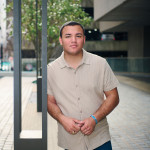



TL;DR: A Wall Street Journal investigation into VA polypharmacy — veterans prescribed anywhere from 3 to 26 medications simultaneously for PTSD — sent Mike Barr back to his own encounter with the VA system: a smart, laid-back East Village veteran whose symptoms were almost entirely caused by his prescribed medications, and who — in one of the most gut-wrenching clinical moments of Mike’s career — chose to stay sick rather than risk losing his disability check.
- The WSJ investigation: Veterans given cocktails of up to 26 psychiatric medications at a time, with outcomes ranging from zombification to suicide.
- The clinical encounter: A VA referral patient on Latuda (lurasidone) whose restlessness, insomnia, choking sensations, and suicidal thoughts were all documented side effects of the drug — not symptoms of an underlying illness.
- The gut punch: At a falafel place in the Village, the veteran explained calmly that his disability payment depends on the complexity of his case. If the VA found something fixable, they’d reduce his check. “I made peace with this a long time ago. This is my life now.”
- The broader question: Are veterans who come home to this system truly free — or are they prisoners of a different kind of war?
[IMAGE: Pill bottles arranged as an American flag — as in the original iStock image — evoking the “Combat Cocktail” theme]
The WSJ Investigation: “Combat Cocktail”
After the Wall Street Journal’s chilling investigation — “Combat Cocktail” — and given that I now have four family or extended family members either active military or in the VA system (plus a former roommate and former ACT UPer working at the Stanford VA as a psych nurse), I felt compelled to share a brief synopsis of their must-read feature, along with my own encounter with the VA system.
But let’s not kid ourselves. This is going on at Callen Lorde and very likely AHF and all kinds of other ostensibly not-for-profit clinics and private doctors’ — and NPs’! — offices all over the city and the country. This, terrifying and arguably criminal as it may be, is the standard of care.
| Veteran | Medications (3 to 26 at a time) | Outcome |
|---|---|---|
| Scott | Cymbalta, Desyrel, Klonopin, Lexapro, Maxalt, Minipress, Prozac, Wellbutrin, Zoloft | Became a zombie. Nightmares, ED, brain fog, incontinence. |
| Lucas | Ativan, Desyrel, Inderal, Librium, Luminal, Maxalt, Minipress, Neurontin, Paxil, Valium, Vicodin, Vivitrol, Zoloft | Some meds put him in a daze; others made him feel like he might want to kill himself. |
| Doug | Aimovig, Ambien (x2), Atarax, Catapres, Celexa, Circadin, Depakote, Desyrel, Effexor, Flexeril, Imitrex, Inderal, Klonopin, Lioresal, Lunesta, Minipress, Neurontin, OxyContin, Prudoxin, Remeron, Robaxin, Seroquel, Wellbutrin, Zanaflex, Zyprexa | Hospitalized after suicide attempt when drug dose was increased. |
| Heather | Ambien, Ativan, BuSpar, Cardura, Cymbalta, Desyrel, Elavil, Flexeril, Inderal, Lamictal, Minipress, Neurontin, Prozac, Remeron, Rozerem, Silenor, Sonata, Vistaril | Became a zombie. Begged VA docs for help weaning off. |
| Erika | Adderall, Aimovig, Ativan, Desyrel, Klonopin, Prozac | Severe bouts of suicidal ideation. Had a friend come take her gun away. |
| Mark | Abilify, Eskalith, Flexeril, Prozac, Seroquel, Ultram, Wellbutrin | Fatally shot himself in the head six days after VA added Seroquel. |
My Own VA Story
As a newly licensed acupuncturist in 2014, I was thrilled to live just blocks from one of the region’s VA Medical Centers. At my very first Society for Acupuncture Research conference — the first conference I had attended in nearly 30 years that wasn’t about HIV/AIDS — Wayne Jonas was a keynote speaker, and was quite inspiring. I picked up his book, "How Healing Works." I applied for VA positions as they were posted across the country. None of the NYC-area VA Medical Centers ever listed one, to my knowledge — until one opened in Huntington, Long Island, just two years ago.
So when my first veteran came knocking earlier that summer, I was elated. Finally, an opportunity to collaborate. Finally, a window into how this organization actually thinks and works.
I was completely unprepared for what I was about to learn.
My father — who I guess served two years in the Army during the Korean War, stationed in Europe, lucky sod — ditched our family doctor for the VA after discovering all their freebies.
My father, in his 60s and 70s, occasionally visited the local VA hospital, I suspect mostly because he was a notorious tightwad and everything there seemed to be free. He’d come home giddy from each visit, showing off a new prescription they’d given him at no charge. I wasn’t all that involved in his clinical care at the time — I was the one with a life-threatening illness. All he suffered from was mild hypertension and what was then considered elevated cholesterol.
(Today, of course, we know — or should know — that for seniors, a total cholesterol between 200 and 220 is actually associated with decreased mortality. It’s really about inflammation and insulin instability. And an elevated LDL is more often than not a sign of stress: psycho-emotional and/or physical.)
A brother-in-law, a Vietnam vet, was a reluctant regular at the Hollywood, FL VA clinic and later the Tampa VA Medical Center. He even got acupuncture there a few times. But even from a distance I could see they were painting by numbers: take this for your cholesterol, that for your anxiety, this for your ED, and your knees hurt? Let’s replace them. Decidedly not my kind of medicine.
The Patient
When this cool, half-hippie, half-surfer dude from the old neighborhood turned up in my office — diagnosed with fibromyalgia — I was determined to help him.
He was a really cool, laid-back, half-hippie half-surfer type who had lived in the old neighborhood almost longer than I had. From a Navy family, he’d spent two years on a ship. At sea. But something snapped that second year, and he was given a medical discharge. Had the food done something to him? The air? The constant vibration? The electromagnetic fields? His diagnoses evolved over time — from a kind of bipolar depression to something characterized as schizoaffective disorder, with weird pains that came and went and then never fully left, eventually settling into the catch-all diagnosis of exclusion: fibromyalgia.
We worked together on as thorough a health and life history as possible. This drug and that drug. This psych admission and that psych admission. The merry-go-round had been going round for ten or fifteen years. How had no one been able to help this smart, thoughtful guy?
As pretty much anyone would do at a first acupuncture visit, I asked him his top five quality-of-life complaints. I noticed he kept shifting position in his chair — switching from left buttock to right, from edge of chair to the back of chair. Even got up at one point and paced. The expression “crawling out of one’s skin” came to mind.
And then he told me the latest drug they had given him: Latuda (lurasidone).
I had never heard of it. I thought I had heard of most psych meds. But there seems to be a new one every month these days — along with a new, focus-grouped diagnosis.
The Latuda Revelation
Back at my desktop that evening, I furiously Googled common Latuda side effects, patient experiences, and potential drug interactions. What came up, virtually verbatim, was the list of nearly everything this man had shared with me as ailing him — down to the constant restlessness, the choking sensation, the inability to sleep, the weird sweating, and the suicidal thoughts.
He had come to me to help him with these things. But it appeared they were all being caused by the drug he had been prescribed.
I felt obligated to explore these connections. Persistent suicidal thoughts alone would seem reason enough to say no to a new medication. But it turned out there was more to the picture — much more. I decided to raise all of this at our second visit.
He emailed on a Friday afternoon, asking if he could come in Monday. I booked the room. He was a no-show. (And I was out sixty dollars.)
I read more. "Disorganized thinking“ and ”impulsivity" were among the documented side effects. Might that explain the late Friday plea for an early Monday visit, followed by the ghost?
The Falafel Place in the Village
Because I had found this client a somewhat unreliable reporter of his own history, I proposed a joint meeting — him, his wife, and me. She had accompanied him to the VA a few times and advocated for him. I needed two heads, two memories.
We met at a falafel place at noon in the Village.
I shared my concerns. That 95% of his complaints were well-documented side effects of this drug — up to and including the suicidal thoughts. “Not only is this drug making your life hell,” I said, "but there’s a very real chance they are missing the real causes of your health complaints. These very likely include neuroinflammation or immune reactions to foods, metals, or other exposures — things that put you at risk for more serious neurodegeneration later in life: Parkinson’s, Alzheimer’s, Huntington’s. Even something as seemingly innocuous as high homocysteine or insufficient glutathione can have serious consequences after years of going undetected. You want to know about these things."
He replied calmly.
“You don’t understand. My disability payment is based on the complexity of my case. If I ask them to rule out all these possible causes, and they discover something fixable, they will adjust my monthly payment. I made peace with this a long time ago. This is my life now. I say what they want me to say. I do what they want me to do. Please — don’t ruin this for me.”
I looked over to his wife several times, expecting her to jump to my defense. Those words never came.
She gave me a look — that look — the kind of look Weeds’ Heylia James gave Nancy Botwin over her spectacles: dude, don’t mess this up for me. I’m busting my ass at a thankless minimum-wage job, and you want to take away our monthly disability check? We’ll deal with the restlessness. The insomnia. The hollow-person syndrome. The impulsivity.
And that was that.
Each time I thought back on our meeting, it was me who began to choke. This is how veterans must live?
I am overly sensitive. I am certainly idealistic. But this was a gut punch. I had to force myself to breathe on the subway ride back to Brooklyn. My stomach ached for two full days.
POWs of a Different Kind
I thought of my nephew — who had just finished Basic Training and was awaiting his first assignment — and his fiancée, not long ago given a medical discharge after a tour in Iraq. With the modest monthly check she gets from the VA, she is able to live independently and even pursue her jewelry-making business, free from the chronic economic terror that plagues 60% of Americans, according to one Vermont senator.
The army turned out to be her ticket to a kind of freedom — a de facto Guaranteed Basic Income. All she had to do was enroll, get injured, and convince the VA she will never, to circle back to Dr. Wayne Jonas, be healed.
I suppose that’s not so different from many other disability cases where the disability isn’t incontestably lifelong — and where the prospect of recovery jeopardizes a new-found, however modest, economic peace of mind. It’s a tough call. But still it makes me incredibly sad.
The service man, the service woman, made it home. But did any better future greet them upon arrival than the prospects that led them to enlist in the first place? Only, in the cases I know of, that monthly disability check. And in order not to lose it, they must prove for the rest of their lives that they are sick. Some forever afraid to be candid with the people entrusted with their care.
They are prisoners of the system they served. They made it home. But they are emprisoned all the same.
Mike Barr, a longtime POZ Contributing Editor and founding member of the Treatment Action Group (TAG), is a science writer, functional medicine practitioner and herbalist in NYC. Reach out to him here. Or sign up for his curated, professional-grade supplement dispensary — 30% off your first order, 25% off all auto-refills — here.